 Save
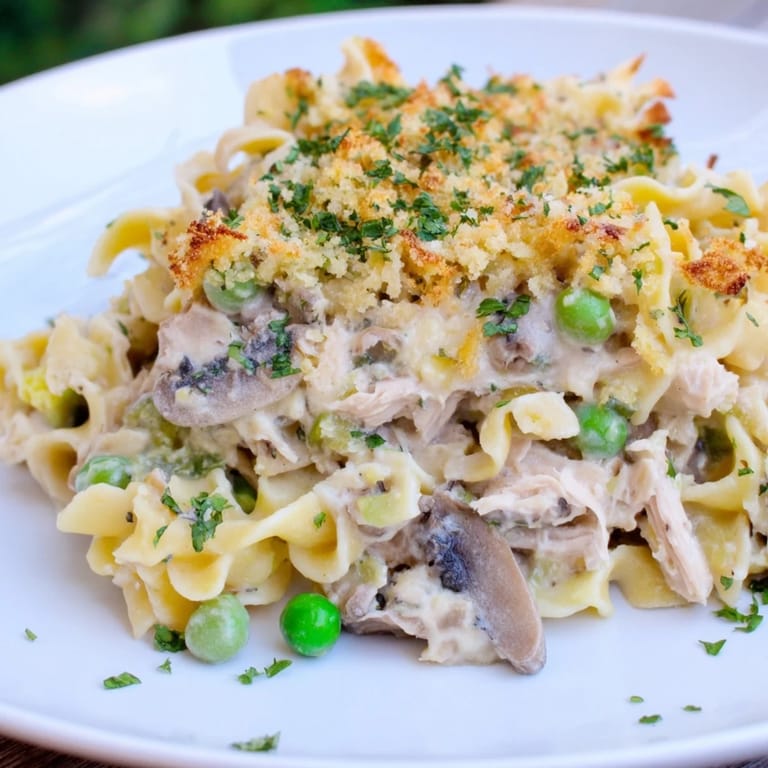
Save My mom called one Tuesday evening asking if I remembered her tuna casserole from childhood, the one with the crispy top that somehow felt both indulgent and homey. I realized I'd been making it the same way for years without ever questioning whether it could be better. That night, I decided to rebuild it from scratch—better broth, fresher vegetables, a sauce that actually tasted like something instead of just binding things together. The result surprised me: it felt like the dish I loved, but grown up.
I made this for a potluck where everyone brought their grandmother's recipes, and I was nervous a reinvented casserole wouldn't fit the theme. Watching people taste it and then immediately ask for the recipe felt like I'd somehow honored the original while making it my own. That's when it clicked that sometimes the best way to respect tradition is to make it better.
Ingredients
- Egg noodles (12 oz): The wider ribbons hold sauce better than thin pasta, and cooking them just shy of tender means they won't turn mushy when they bake.
- Solid white tuna (two 5 oz cans): Skip the chunk style here—solid white gives you cleaner, more delicate pieces that distribute evenly.
- Frozen peas (1 cup): Thaw them first so they stay bright green instead of turning army-drab in the oven.
- Cremini mushrooms (1 cup, sliced): They add an earthy depth that makes the dish feel less one-note and more savory.
- Yellow onion and celery (1 small and 1 cup): The holy combination that builds flavor before anything else happens; don't skip this step.
- Garlic (2 cloves, minced): One minute of cooking releases its sweetness without burning.
- Unsalted butter and flour (3 tbsp each): This roux is your sauce foundation, and unsalted lets you control the salt.
- Low-sodium broth (2 cups): Chicken or vegetable both work, but taste yours first—some brands are saltier than others.
- Whole milk and sour cream (1 cup and 1/2 cup): The milk creates body, the sour cream adds tang that keeps it from feeling heavy.
- Dijon mustard (1/2 tsp): Just enough to sharpen the sauce without announcing itself.
- Panko and parmesan (3/4 cup and 1/2 cup): Toast them together in butter so the topping becomes genuinely crispy, not just breadcrumb-colored.
Tired of Takeout? 🥡
Get 10 meals you can make faster than delivery arrives. Seriously.
One email. No spam. Unsubscribe anytime.
Instructions
- Set your oven and dish:
- Preheat to 400°F and lightly grease a 9x13-inch baking dish. A quick spray of oil or swipe of butter means nothing sticks later.
- Cook the noodles:
- Boil salted water, add noodles, and pull them out when they still have a whisper of resistance. They'll soften more in the oven, and there's no recovering from mushy noodles.
- Build the vegetable base:
- Melt butter in a large skillet over medium heat, then sauté onion and celery for about 3 minutes until they start softening. Add mushrooms and cook another 4 minutes, letting them release their moisture and take on color. Stir in garlic for 1 minute, just until fragrant.
- Make the sauce:
- Sprinkle flour over the vegetables and stir until everything is coated, creating a paste-like mixture. Pour in broth slowly while stirring to avoid lumps, then add milk and let everything come to a gentle simmer. Stir occasionally as it thickens, about 3 to 4 minutes—you're looking for it to coat the back of a spoon.
- Season and finish the base:
- Pull the skillet off heat and stir in sour cream, Dijon mustard, salt, and pepper. The heat is off now so the sour cream stays creamy instead of breaking.
- Bring it all together:
- Gently fold in tuna, peas, and cooked noodles until everything is evenly coated. This is a folding moment, not a stirring moment—you want tuna pieces intact, not shredded.
- Transfer and top:
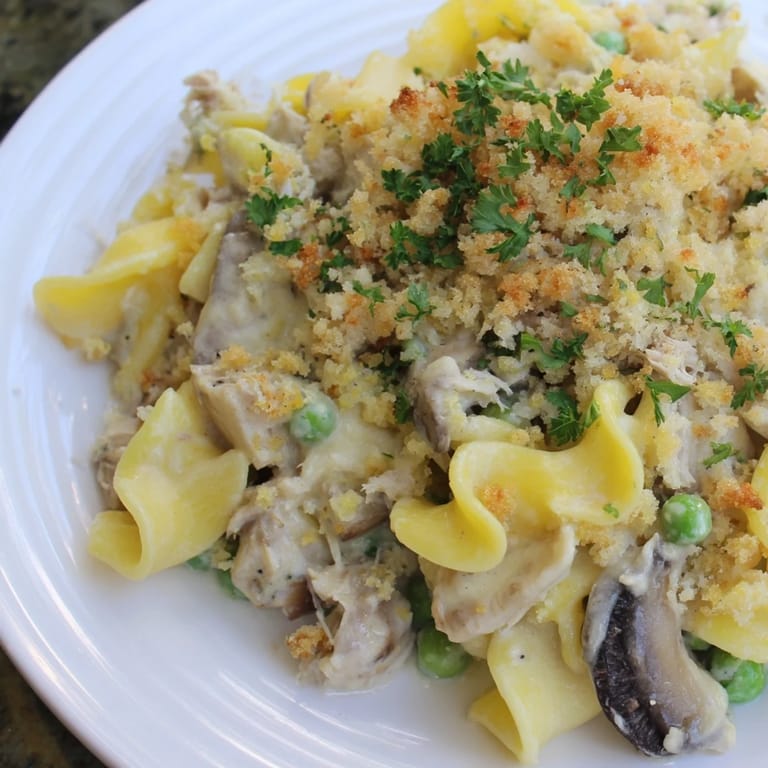
- Pour the mixture into your prepared baking dish. In a small bowl, combine panko, parmesan, and melted butter, then sprinkle this mixture evenly over top. The butter keeps the topping from drying out.
- Bake until golden:
- Bake for 20 to 25 minutes until the top is deep golden and you can see sauce bubbling at the edges. Let it rest for 5 minutes before serving so it holds together, then finish with fresh parsley if you have it.
 Save
Save My neighbor brought over her teenage daughter who said she only ate homemade food, never leftovers. She had thirds. That's when I realized this wasn't just comfort food—it was something that could convince people to sit at the table longer.
Why This Recipe Beats The Original
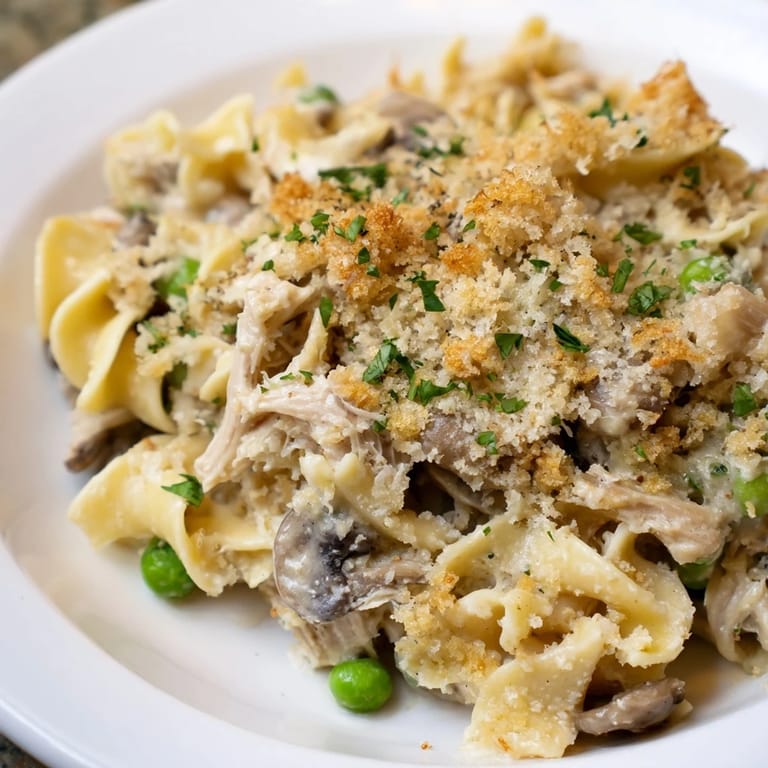
The classic tuna casserole suffers from a few inherited problems: canned cream soup that tastes like absolutely nothing, vegetables that have been boiled into surrender, and a topping that never quite crisps. This version fixes each of those by building a real sauce from butter and flour, sautéing vegetables so they actually taste like something, and using panko that actually crunches when you bite it. You're eating essentially the same dish but reimagined by someone who cares about flavor.
Variations That Work
This recipe is forgiving enough to adapt to what you have on hand or what you're hungry for. If you love sharp cheese, stir grated cheddar or gruyère into the sauce itself instead of just on top. For a lighter version, swap the sour cream with Greek yogurt—you get tang without the heaviness. Some people add frozen corn or diced bell peppers to the vegetable mixture, and that works beautifully. If tuna isn't your thing, poached salmon or canned chickpeas make surprisingly good substitutes.
What to Serve Alongside
A simple green salad cuts through the richness and makes the meal feel complete without much effort. Roasted asparagus or green beans add a vegetable without competing with the casserole. For wine, a crisp Sauvignon Blanc or even a light Pinot Grigio balances the creamy sauce beautifully. Honestly, good bread and butter might be all you need—this isn't a dish that demands anything fancy around it.
- A squeeze of lemon juice over the salad brightens everything.
- Don't bake the vegetables separately; let the casserole be the star.
- Make this on a day you have time to eat it warm from the oven.
 Save
Save This recipe is proof that honoring what you love doesn't mean never changing it. Make it, eat it, and know that you've given yourself something worth sitting down for.
Recipe FAQs
- → What type of noodles works best?
Egg noodles hold the sauce well and provide a tender texture that complements the other ingredients.
- → Can I substitute the tuna with other seafood?
Yes, canned salmon or shredded cooked white fish can be used for a different flavor profile.
- → How can I make the topping crispier?
Sprinkle the panko and parmesan mixture evenly and bake until the topping turns golden brown for max crunch.
- → Is sour cream essential in the sauce?
Sour cream adds tang and creaminess, but Greek yogurt can be used as a lighter alternative without sacrificing flavor.
- → Can I prepare this dish in advance?
Yes, you can assemble it ahead and refrigerate before baking. Just increase bake time slightly if chilled.