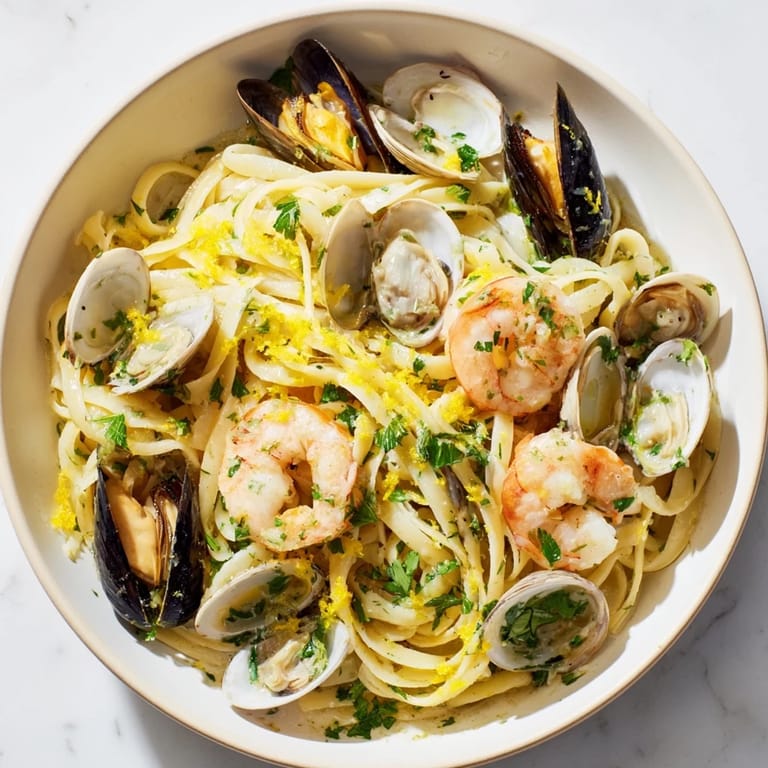
 Save
Save My stove was a mess of steam and garlic when I realized I had forgotten the wine. The clams sat there in the pan, stubbornly closed, and I panicked for a good ten seconds before grabbing the bottle from the fridge. The moment that wine hit the heat, everything opened up, literally and figuratively, and the kitchen smelled like the Italian coast I had never actually visited. That night taught me that seafood linguine doesn't just forgive mistakes, it rewards confidence, even the shaky kind.
I made this for my sister's birthday once, and she still brings it up every time we talk about food. She had just moved into her first apartment and I wanted to cook something that felt celebratory without being complicated. We ate it straight from the skillet with a bottle of cold Pinot Grigio, and she said it tasted like the kind of meal that makes you feel grown up. I think that's the magic of a good seafood pasta, it elevates the moment without trying too hard.
Ingredients
- Large shrimp, peeled and deveined: These cook fast and stay tender if you don't overdo it, pull them early and let carryover heat finish the job.
- Fresh clams, scrubbed: Tap them before cooking, if they don't close, toss them, and if they don't open after steaming, toss those too.
- Fresh mussels, scrubbed and debearded: The beards are those little threads hanging out, yank them off just before cooking so the mussels stay alive and fresh.
- Dried linguine: The flat shape is perfect for catching bits of garlic and seafood, and it twirls better than spaghetti.
- Extra virgin olive oil: Use the good stuff here, it's the base of your sauce and you'll taste the difference.
- Garlic cloves, thinly sliced: Slicing instead of mincing gives you sweet, mellow bites instead of harsh sharpness.
- Small shallot, finely chopped: Adds a gentle onion sweetness that doesn't overpower the seafood.
- Red pepper flakes: Optional but wonderful, just a pinch wakes up the whole dish without making it spicy.
- Dry white wine: This is what coaxes the shells open and builds the sauce, use something you'd actually drink.
- Fish or chicken stock: Fish stock is ideal but chicken works in a pinch, it adds body without muddying the bright flavors.
- Unsalted butter: Stir this in at the end for silky richness and a glossy finish.
- Zest of half a lemon: The zest gives you aromatic oils that brighten everything without adding liquid.
- Fresh lemon juice: Balances the richness and makes the seafood taste even more like the ocean.
- Salt and freshly ground black pepper: Season carefully, the clams and mussels add their own saltiness as they cook.
- Chopped fresh parsley: This isn't just garnish, it adds a grassy freshness that cuts through the butter and wine.
- Lemon wedges: For squeezing over the top at the table, because everyone likes their citrus level a little different.
Tired of Takeout? 🥡
Get 10 meals you can make faster than delivery arrives. Seriously.
One email. No spam. Unsubscribe anytime.
Instructions
- Boil the pasta:
- Get your water aggressively salty, like the sea, and cook the linguine just until it still has a little bite. Reserve some of that starchy pasta water before draining, it's liquid gold for bringing the sauce together.
- Start the aromatics:
- Heat your olive oil over medium and let the garlic and shallot sizzle gently until they smell sweet and look translucent, about two minutes. If you're using red pepper flakes, toss them in now so they bloom in the oil.
- Sear the shrimp:
- Crank the heat up a notch and add the shrimp in a single layer, one minute per side until they curl and blush pink. Pull them out early, they'll finish cooking later and you don't want rubber.
- Steam the shellfish:
- Tumble in the clams and mussels, pour in the wine, and cover the pan fast. Let them steam for three to four minutes, shaking the pan once or twice, until most of the shells have opened wide.
- Build the sauce:
- Add your stock and let it simmer uncovered for a couple minutes to concentrate the flavors. Bring the shrimp back to the party now.
- Toss it all together:
- Add the drained linguine, a splash of that reserved pasta water, the butter, lemon zest, and juice. Toss everything over low heat until the pasta is glossy and the sauce clings to every strand, then taste and adjust your salt and pepper.
- Serve hot:
- Plate it up immediately, shower it with parsley, and set out lemon wedges. This dish waits for no one.
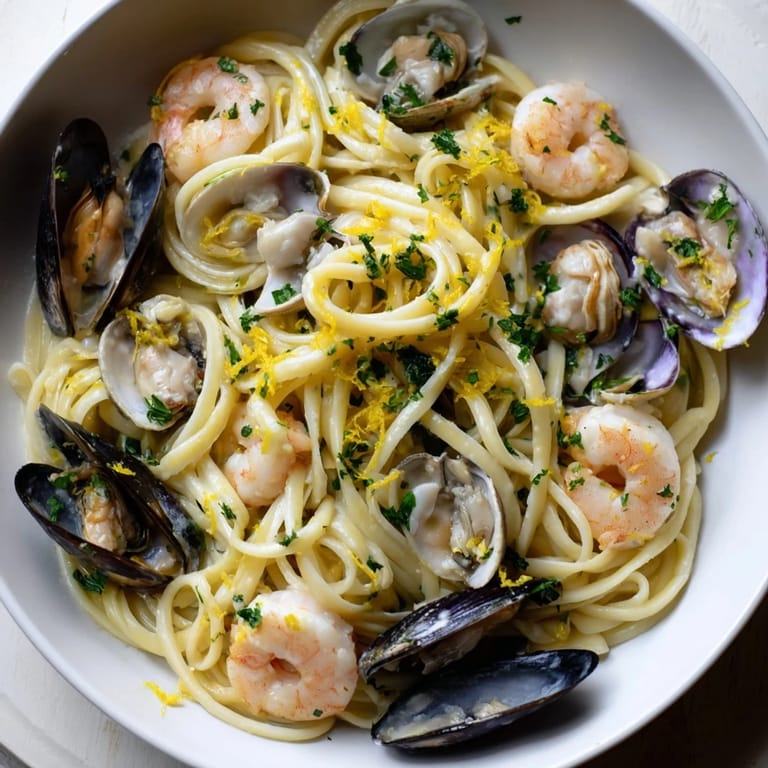 Save
Save There was an evening last spring when I made this for a friend who had just gone through a rough breakup. We didn't talk much while we ate, just twirled pasta and cracked shells and sipped wine, and by the end of the meal she looked a little lighter. Food can't fix everything, but a bowl of garlicky seafood linguine and good company can at least make the world feel a little less heavy for a while.
Choosing Your Seafood
Fresh is always best, but frozen shrimp work beautifully if you thaw them properly in the fridge overnight. For clams and mussels, buy them the day you plan to cook and keep them cold and damp, not submerged in water or they'll drown. If you can't find mussels, double up on clams, and if clams aren't available, calamari rings or sea scallops make excellent stand ins. The key is variety in texture and flavor, so mix and match based on what looks good at the market.
Wine and Stock Choices
I always use a dry white wine I'd be happy drinking, usually a Pinot Grigio or Sauvignon Blanc, because if it tastes good in the glass it'll taste good in the pan. Avoid anything labeled cooking wine, it's loaded with salt and tastes like regret. Fish stock brings a deeper ocean flavor, but chicken stock is more than fine and what I use most of the time because I always have it around. If you want to go wild, a splash of heavy cream stirred in at the end makes this feel like a special occasion.
Serving and Pairing
This dish is best eaten hot, straight from the stove, with crusty bread for mopping up every drop of that garlicky, lemony sauce. I like to serve it family style in the skillet, everyone grabbing their own shells and twirling their own nests of pasta. A crisp, cold Italian white wine like Vermentino or Soave is perfect alongside, something bright and mineral that doesn't fight with the seafood.
- Set out a big empty bowl for discarded shells so the table doesn't turn into a disaster zone.
- Warm your serving bowls in the oven for a minute so the pasta stays hot longer.
- Don't forget napkins, this is delicious but messy, and that's half the fun.
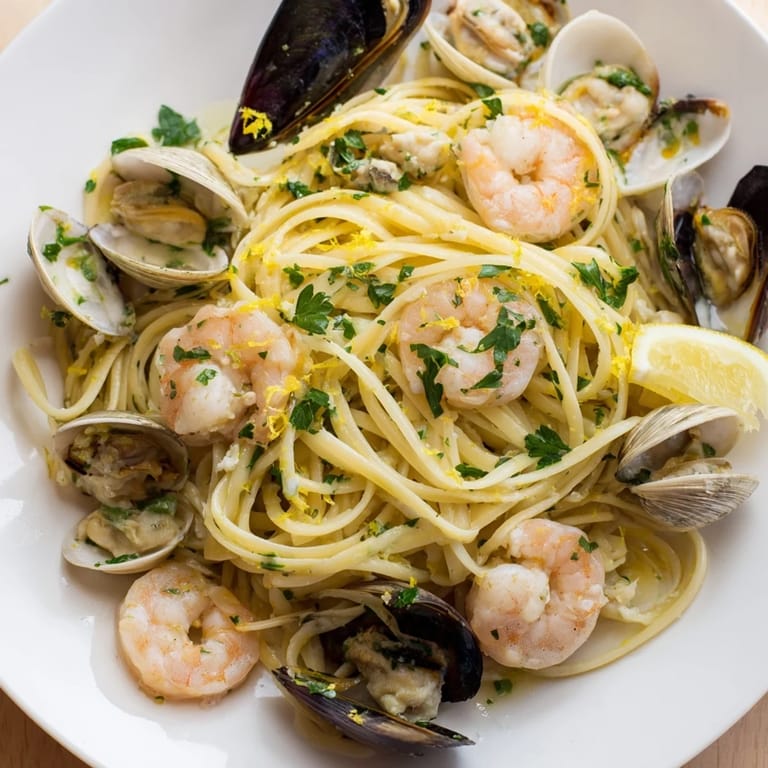 Save
Save Once you get the rhythm of this dish, it becomes one of those recipes you can make without thinking too hard, the kind that impresses people but doesn't stress you out. Keep it in your back pocket for nights when you want to feel like you really cooked something special.
Recipe FAQs
- → How do I know when clams and mussels are done cooking?
Clams and mussels are ready when their shells have opened completely. Discard any that remain closed after cooking, as they may not be safe to eat. This typically takes 3-4 minutes after adding the wine and covering the skillet.
- → Can I prepare this dish ahead of time?
This pasta is best served immediately after cooking. However, you can prepare the sauce components in advance and cook the seafood fresh when ready to serve. Store cleaned clams and mussels in the refrigerator covered with a damp towel for up to one day.
- → What's the best way to clean clams and mussels?
Scrub clams and mussels under cold running water with a stiff brush to remove sand and debris. For mussels, remove the beards by pulling the stringy fibers away from the shell. Discard any with cracked shells or those that don't close when tapped.
- → Can I substitute other seafood varieties?
Absolutely. You can replace some seafood with calamari, scallops, or additional shrimp. Adjust cooking times based on the thickness of each ingredient—scallops and squid cook quickly, similar to shrimp.
- → What wine should I use for cooking?
Use a dry white wine like Pinot Grigio, Sauvignon Blanc, or Vermentino. Avoid sweet wines or cooking wines with added salt. The same wine you use for cooking pairs beautifully as a beverage alongside the dish.
- → Why do I reserve pasta water?
Pasta water contains starch that helps emulsify the sauce and creates a silky coating on the noodles. It also helps balance the sauce consistency if needed, allowing you to thin or thicken as desired.