 Save
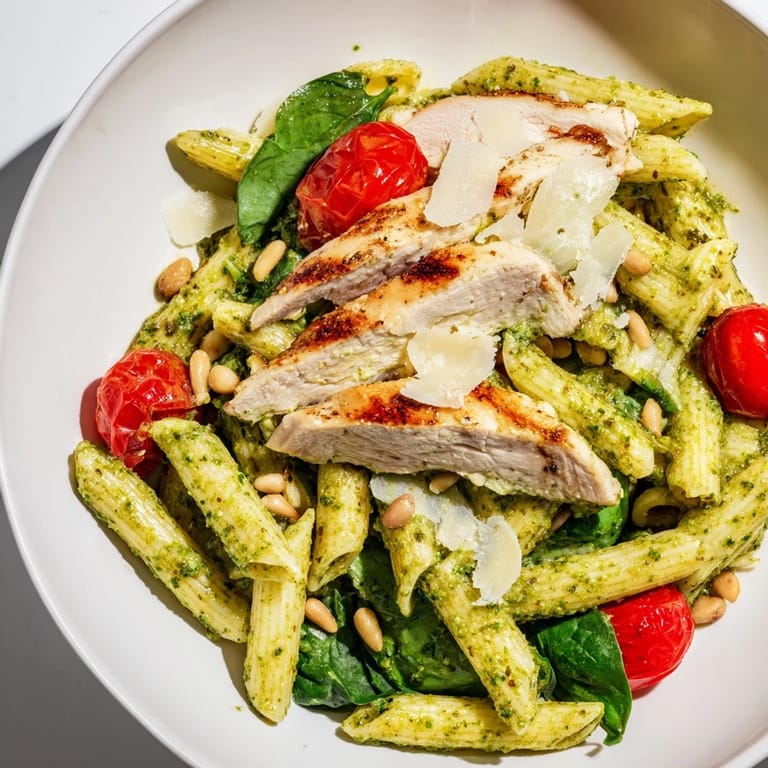
Save My neighbor knocked on the door one Thursday evening holding a jar of homemade pesto, insisting I use it that night. I had chicken thawing and a box of penne in the pantry, so I tossed it all together without much thought. The kitchen filled with the smell of garlic and basil, and by the time I plated it, I realized I'd stumbled onto something I'd make every week. It wasn't fancy, but it felt like the kind of meal that makes you sit down and actually enjoy dinner.
I made this for a small dinner party once, and halfway through cooking, I realized I'd forgotten to buy fresh basil for garnish. No one noticed, or if they did, they were too busy going back for seconds to mention it. We ended up sitting around the table long after the plates were empty, talking and laughing over glasses of cold white wine. That night taught me that good food doesn't have to be complicated to bring people together.
Ingredients
- Boneless, skinless chicken breasts: Halving them horizontally gives you thinner cutlets that cook faster and stay juicy, plus they're easier to slice for serving.
- Penne or fusilli pasta: The ridges and hollows catch the pesto beautifully, making every bite flavorful instead of letting the sauce pool at the bottom of the bowl.
- Store-bought basil pesto: This is your flavor shortcut, so choose one with good color and a short ingredient list for the best taste.
- Extra-virgin olive oil: A little goes into cooking the garlic and tomatoes, adding richness without overwhelming the bright pesto flavor.
- Garlic: Just two cloves, minced fine, give the dish a warm, aromatic backbone that makes the whole kitchen smell inviting.
- Parmesan cheese: Grated fresh, it melts into the pasta and adds a salty, nutty depth that makes everything taste more cohesive.
- Cherry tomatoes: Halved and lightly cooked, they burst into sweet, juicy pockets that balance the richness of the pesto.
- Baby spinach leaves: They wilt into the hot pasta in seconds, adding color, nutrition, and a subtle earthy note.
- Salt and black pepper: Season as you go, tasting and adjusting, because pesto and Parmesan are already salty.
- Fresh basil leaves: A handful torn over the top makes the dish look and taste like you put in more effort than you actually did.
Tired of Takeout? 🥡
Get 10 meals you can make faster than delivery arrives. Seriously.
One email. No spam. Unsubscribe anytime.
Instructions
- Season and prep the chicken:
- Pat the chicken dry and sprinkle both sides with salt and pepper. This simple step ensures the meat has flavor all the way through, not just on the surface.
- Grill the chicken:
- Heat a grill pan or skillet with a tablespoon of olive oil until it shimmers, then lay the chicken in carefully. Let it cook undisturbed for four to five minutes per side so you get those beautiful golden char marks and the meat stays tender.
- Rest and slice:
- Move the cooked chicken to a plate and let it sit for five minutes before slicing. This keeps the juices inside instead of running all over your cutting board.
- Cook the pasta:
- Boil the pasta in well-salted water until it still has a little bite. Before draining, scoop out a quarter cup of the starchy pasta water, it will help the pesto cling to every piece.
- Sauté the garlic:
- In the same pot you cooked the pasta, warm the remaining olive oil and add the minced garlic. Stir it for just thirty seconds until it smells fragrant but hasn't turned brown.
- Cook the tomatoes:
- Toss in the halved cherry tomatoes and let them soften for a couple of minutes. They'll start to release their juices and create a light, fresh base for the pesto.
- Toss with pesto:
- Return the drained pasta to the pot and stir in the pesto, reserved pasta water, and Parmesan. The pasta water loosens everything just enough to coat each piece evenly without being dry or clumpy.
- Add chicken and spinach:
- Fold in the sliced chicken and baby spinach, tossing gently until the greens wilt. The residual heat does all the work here, so no need to keep the burner on high.
- Taste and serve:
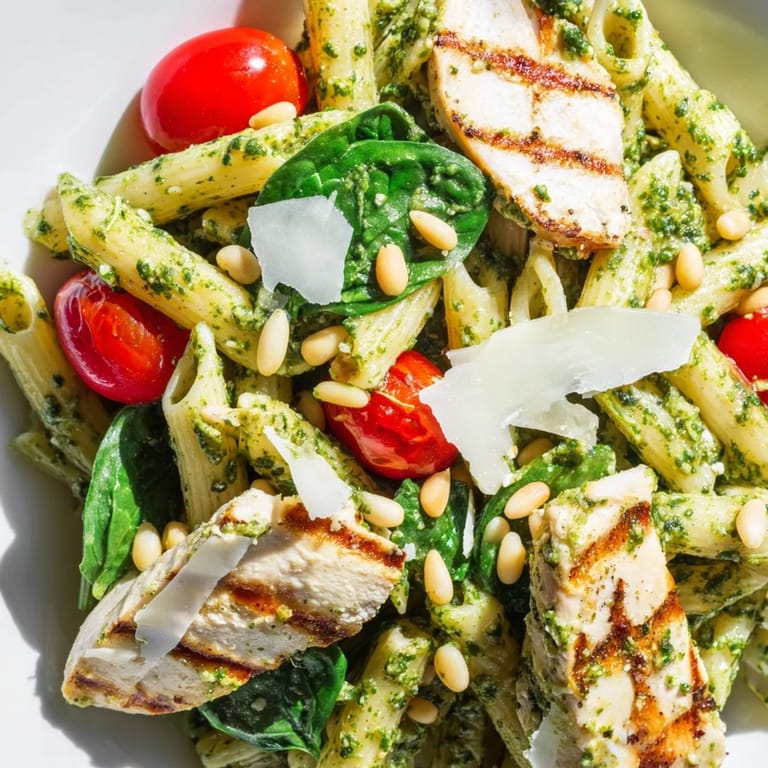
- Season with more salt and pepper if needed, then plate it up. Finish with torn basil leaves and extra Parmesan for anyone who wants it.
 Save
Save One rainy Sunday, I made this for myself and ate it straight out of the pot while standing at the counter, too hungry to bother with a proper plate. The windows were fogged up, the house was quiet, and for those few minutes, it felt like the most comforting thing in the world. Sometimes the best meals are the ones you don't plan, the ones that just happen because you're hungry and the ingredients are there.
Choosing Your Pasta Shape
Penne and fusilli are my top picks because their shapes grab onto the pesto and trap little bits of chicken and tomato in every forkful. I've tried this with spaghetti before, and while it tasted fine, the sauce didn't cling the same way and everything felt a bit slippery. Short, textured pasta makes this dish more satisfying to eat, and it reheats better too since the sauce doesn't separate as easily. If you have rigatoni or farfalle on hand, those work just as well.
Storing and Reheating Leftovers
I store leftovers in an airtight container in the fridge for up to three days, and honestly, they taste just as good cold as they do reheated. When I do warm it up, I add a splash of water or broth to the pan and heat it gently over medium-low, stirring often so the pasta doesn't dry out. The microwave works in a pinch, but it can make the chicken a little rubbery if you're not careful. I usually pack this for lunch the next day and eat it at room temperature, which is surprisingly delicious.
Simple Swaps and Variations
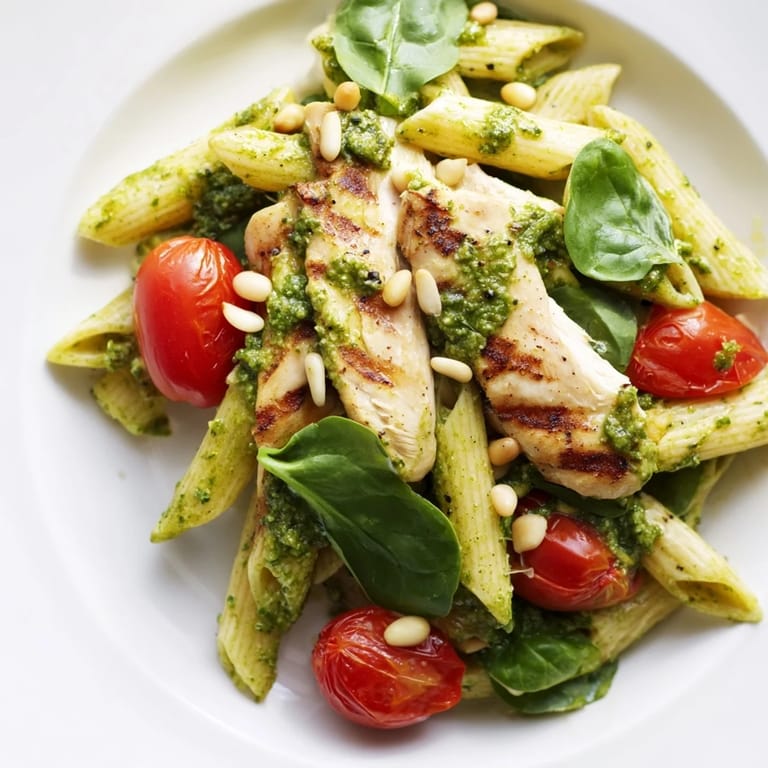
If you're not in the mood for chicken, grilled shrimp or even crispy tofu work beautifully here. I've also swapped the basil pesto for sun-dried tomato pesto when I wanted something a little deeper and tangier, and it was fantastic. Sometimes I throw in a handful of toasted pine nuts or walnuts for extra crunch, or I stir in a squeeze of lemon juice at the end to brighten everything up.
- Try arugula pesto for a peppery twist that pairs beautifully with the Parmesan.
- Add a pinch of red pepper flakes if you like a little heat cutting through the richness.
- Toss in some roasted red peppers or artichoke hearts for extra vegetables and Mediterranean flair.
 Save
Save This is the kind of recipe I turn to when I want something satisfying without spending my whole evening in the kitchen. It's reliable, adaptable, and always tastes like I put in more effort than I actually did.
Recipe FAQs
- → Can I use fresh pesto instead of store-bought?
Absolutely. Fresh pesto will provide a more vibrant flavor. Use the same quantity (120g) or adjust to taste. You may need to add a touch of reserved pasta water if fresh pesto is thicker.
- → How do I know when the chicken is cooked through?
The chicken is done when it reaches an internal temperature of 75°C (165°F) at the thickest part. It should also have no pink inside and the juices run clear when pierced with a knife.
- → Can I prepare this dish without a grill pan?
Yes, use a regular skillet over medium-high heat. The chicken will still cook through beautifully. For charring, increase the heat slightly and don't move the chicken around too much in the pan.
- → What if I don't have cherry tomatoes?
Regular tomatoes work well too. Dice them into bite-sized pieces and use the same quantity. Sun-dried tomatoes are another excellent alternative that adds deeper flavor.
- → How should I store leftovers?
Store in an airtight container in the refrigerator for up to 3 days. Reheat gently in a pan with a splash of water or olive oil. The pasta may absorb more pesto as it sits, so adjust seasoning when reheating.
- → What pasta shapes work best with pesto?
Penne and fusilli are ideal because their ridges and spirals catch the pesto beautifully. Farfalle, orecchiette, or even spaghetti also pair well. Avoid very thick or heavy pastas that don't coat evenly.