 Save
Save The first time I encountered Imam Bayildi, it wasn't in a recipe book but at a neighbor's kitchen table on a warm Istanbul evening. She'd made it the day before, and the eggplants sat cradled in their own amber-tinted oil, still fragrant with garlic and tomatoes that had mellowed into something almost sweet. I was skeptical—eggplant had never won me over before—but one bite of that silky flesh, bursting with its savory filling, changed everything. What stuck with me most wasn't the taste alone, but how she explained it: the imam (a religious leader) had fainted when tasting this dish, supposedly from sheer pleasure. Whether that's true or just a beautiful story, I've never been sure, but I understood the impulse.
I made this for a dinner party once, convinced I'd mess it up because it seemed too elegant, too specifically Turkish for my kitchen. But watching my friends tear into their eggplant halves with crusty bread, loosening the filling with their forks, forgetting their manners entirely—that's when I realized this dish does something almost magical. It transforms a simple night into something that feels considered and special, without demanding you stress over it.
Ingredients
- 4 medium eggplants (about 250 g each): The striped peeling isn't just decorative—it helps them cook evenly and look deliberately elegant, not accidental.
- 3 medium onions, thinly sliced: Slice them thin enough that they soften into the filling rather than staying chunky; they're the backbone of the flavor.
- 4 ripe tomatoes, peeled and diced: Use tomatoes at their peak ripeness, or swap for high-quality canned if it's winter—taste matters more than freshness here.
- 4 garlic cloves, minced: Don't be shy; this is a garlic-forward dish and it needs every bit.
- 2 green bell peppers, seeded and finely chopped: They add sweetness and body to the filling without overpowering it.
- 1 bunch flat-leaf parsley, chopped: Add this at the very end so it stays bright and doesn't turn dark and bitter from the heat.
- 120 ml (½ cup) extra virgin olive oil: This is not a place to use the cheap stuff—the oil becomes a sauce, and it deserves to be good.
- 120 ml (½ cup) water: This keeps everything moist and creates a gentle steam inside the covered dish.
- Juice of ½ lemon: Just enough acid to balance the richness without making it taste citrusy.
- 1 tsp sugar: A small pinch rounds out the tomato's sharpness; you won't taste it directly, just its effect.
- 1½ tsp sea salt, plus more to taste: Season generously—eggplant needs it.
- ½ tsp ground black pepper: Freshly ground if you can manage it.
- 1 tsp paprika (optional): Adds a subtle warmth and the slightest hint of smokiness if you want it.
Tired of Takeout? 🥡
Get 10 meals you can make faster than delivery arrives. Seriously.
One email. No spam. Unsubscribe anytime.
Instructions
- Prep your eggplants with intention:
- Wash them well, then use a vegetable peeler to create alternating stripes of dark purple and pale flesh—it's prettier and signals you know what you're doing. Cut a lengthwise slit down each one, leaving about an inch untouched at both ends so they stay intact.
- Draw out the bitterness:
- Sprinkle the halved eggplants with salt and let them sit for 20 minutes while you get other things ready. This isn't wasted time; the salt is softening them and pulling out moisture and any harsh, bitter compounds. Rinse them well and pat them very dry—excess water is the enemy of browning.
- Build your filling layer by layer:
- Heat half the olive oil in a large skillet and add your sliced onions, letting them soften and turn translucent over about 8 minutes. They should smell sweet, almost candied. Add the garlic and peppers next, giving them 3 minutes to release their perfume into the oil.
- Let the tomatoes mellow:
- Stir in your diced tomatoes along with the sugar, salt, pepper, and paprika if using. Simmer everything together for about 10 minutes until the mixture thickens slightly and the raw tomato sharpness mellows. You'll know it's ready when it looks like a chunky sauce rather than a wet pile of vegetables.
- Finish the filling with fresh herbs:
- Remove from heat and stir in your chopped parsley so it stays vibrant green. Taste and adjust the seasoning—this is your only chance to balance it properly.
- Fry your eggplants until golden:
- In a clean skillet, heat the remaining olive oil and gently lay the eggplant halves in, skin-side down. Let them cook until they're lightly browned and the flesh starts to soften, about 4 minutes per side. They should feel tender when pierced but not falling apart.
- Stuff and arrange:
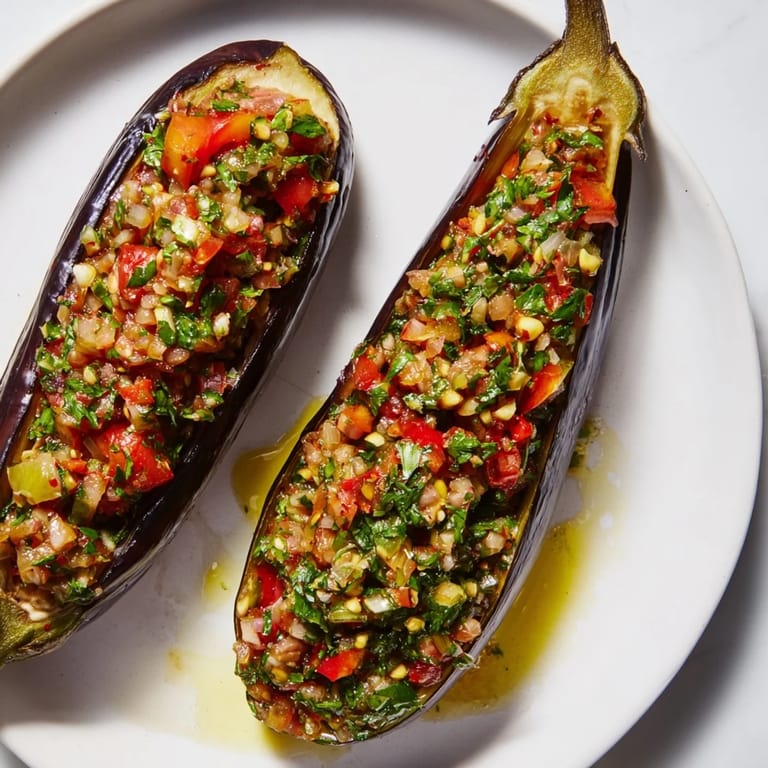
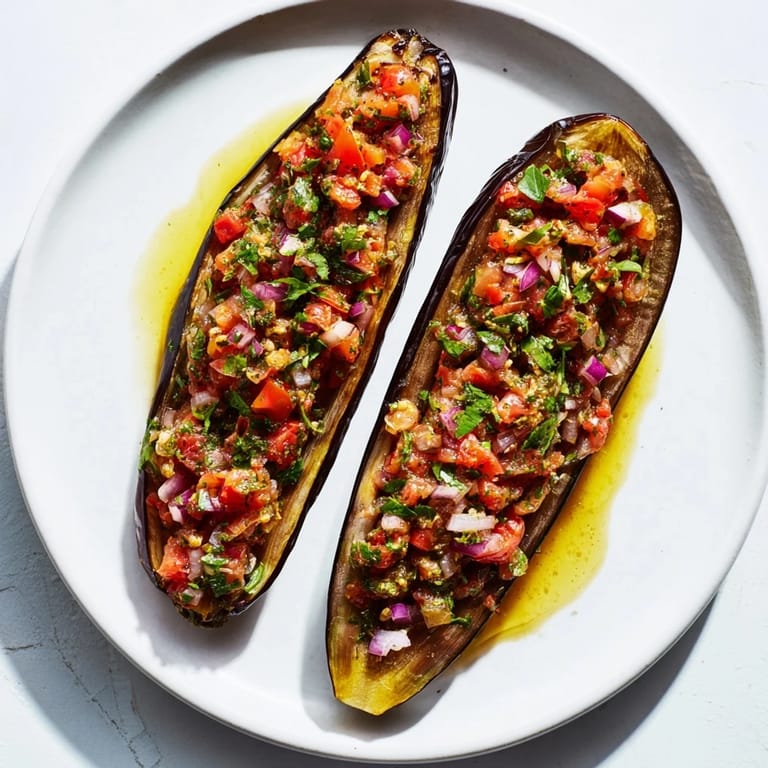
- Transfer the eggplants to a baking dish, slit-side up. Carefully open each slit a little wider and spoon the filling generously into each one, letting it nestle in and overflow slightly. The filling should look abundant, almost careless in its generosity.
- Create the braising liquid:
- Drizzle lemon juice over everything and pour water around (not over) the eggplants. This liquid will keep them moist and become part of the magic.
- Bake covered, then exposed:
- Cover the dish tightly with foil and slide it into a 180°C (350°F) oven for 35 minutes. The foil traps steam and gentle heat, softening the eggplant further. Then remove the foil and bake for another 10–15 minutes until the eggplants are completely tender and the filling is bubbling at the edges.
- Let it rest and cool:
- Remove from the oven and let the dish cool to room temperature before serving. This resting period is when the flavors truly marry and deepen. It's not laziness; it's chemistry.
 Save
Save The most surprising thing about this dish is how it tastes even better the next day, after everything has had time to meld together in the refrigerator overnight. I once made it for a weeknight dinner, reheated it gently the following evening, and realized it had transformed into something richer and more complex than it was fresh. That's when I stopped treating it as a special-occasion dish and started making it regularly, knowing it would only improve with patience.
The Story Behind the Name
Imam Bayildi translates to "the imam fainted," and while we can't verify the historical truth, the legend speaks to something real about this dish—its ability to stop you mid-bite with the perfect balance of soft, fragrant, and richly satisfying. Whether the imam actually fainted from pleasure or just from the shock of vegetables tasting this good, the name has endured for centuries across the Mediterranean, passed from kitchen to kitchen with this same sense of delight.
Variations and Flourishes
Once you've made this dish the traditional way, you'll start seeing possibilities everywhere. A pinch of cinnamon or allspice in the filling adds a warmth that somehow feels both subtle and unmissable. A finely chopped green chili stirred in brings heat without aggression. Some cooks add pomegranate molasses for a tangy brightness, while others finish with a scatter of toasted pine nuts for texture. None of these changes are necessary, but they're all rooted in the same regional cooking traditions that created this dish in the first place.
Serving and Pairing
Serve this at room temperature with crusty bread to push through the silky filling and soak up the olive oil. A dollop of cool, tangy yogurt on the side is traditional and cuts through the richness in the most satisfying way. If you want to turn it into a more substantial meal, serve it alongside rice pilaf or alongside a simple green salad dressed with lemon and olive oil. The dish itself is rich enough that it doesn't ask for much else, just something to balance and ground it.
- Cold yogurt is essential—it's not a garnish, it's a textural counterpoint that makes the whole dish sing.
- Make it the day before if you're feeding a crowd; you'll have one less thing to worry about during dinner.
- Leftovers keep for three days in the refrigerator and taste just as good, if not better, when gently reheated or eaten cold.
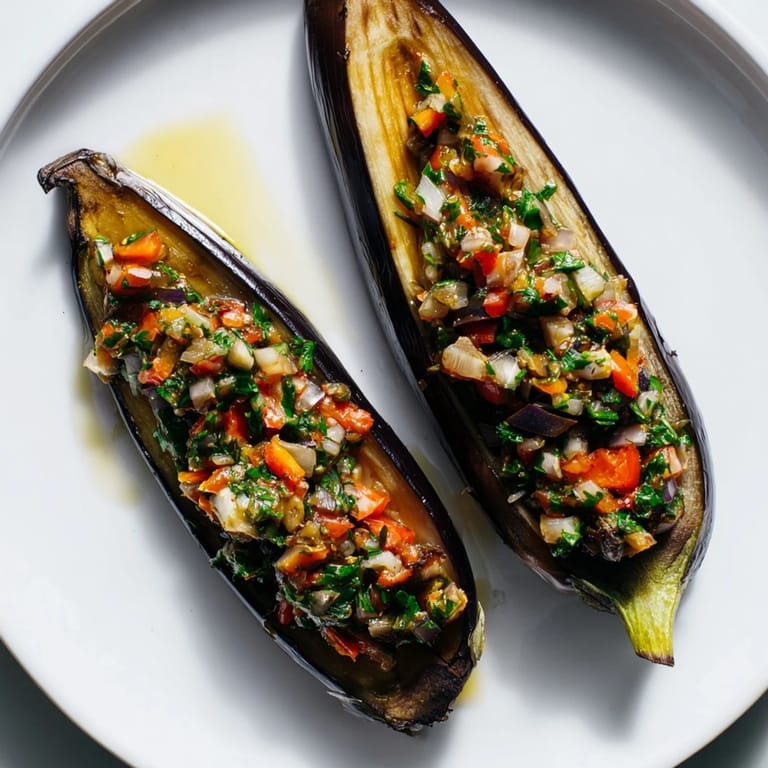 Save
Save This dish reminds me that the best meals don't announce themselves with complexity or difficulty—they arrive quietly, tasting like they've been in existence forever, tasting like someone took time to think about every ingredient and every step. That's what Imam Bayildi is, and that's what makes it worth making again and again.
Recipe FAQs
- → What is the best way to prepare eggplants for Imam Bayildi?
Slice lengthwise stripes from the skin and salt the eggplants to remove bitterness. Pat dry before cooking to ensure a tender texture.
- → Can I make this dish ahead of time?
Yes, flavors improve after resting a day. Store in the refrigerator and serve warmed or at room temperature.
- → Is it necessary to fry the eggplants before baking?
Light frying softens the eggplants and develops flavor, but you can also bake directly if preferred for a lighter version.
- → What sides pair well with Imam Bayildi?
Crusty bread, rice, or a side of yogurt complement the rich vegetable flavors beautifully.
- → Can the filling be customized?
Absolutely, adding spices like cinnamon or allspice, or a chopped green chili, can add warmth or heat to the filling.