 Save
Save There's something about the smell of cumin hitting hot olive oil that transports me to a tiny kitchen in Tel Aviv, where a friend's mother made shakshuka for breakfast without any fuss or pretense. She didn't measure anything—just moved through the steps with such ease that I realized this dish wasn't about perfection, it was about comfort. Now whenever I make it, that same warmth fills my kitchen, and I'm reminded that the best meals are often the simplest ones, built on good ingredients and a little heat.
I made this for a group of friends on a Saturday morning last spring, and I'll never forget how quiet the table got once people started eating. No one was performing or posturing—they were just lost in the food, using bread to soak up every last bit of that tomato sauce mixed with golden egg yolk. That's when I understood shakshuka isn't really a recipe, it's an invitation to slow down together.
Ingredients
- Olive oil (2 tbsp): Use good oil here—it's not hidden under cream or butter, it's a main player in the sauce, so it's worth spending a little extra.
- Yellow onion and red bell pepper: These two build the foundation of your sauce, so don't rush the sauté—let them soften and get a little sweet, about 5 to 7 minutes.
- Garlic and fresh chili: The chili is optional, but it's where your heat lives, so decide your comfort level early and add accordingly.
- Crushed tomatoes and fresh tomatoes: The combination of canned and fresh gives you both body and brightness; canned alone feels flat, fresh alone is too thin.
- Tomato paste (1 tsp): A small amount adds depth and helps the sauce cling to the eggs, but don't overdo it or it turns bitter.
- Cumin, paprika, coriander, and cayenne: These spices do the heavy lifting—they're what make this feel Middle Eastern rather than just tomato sauce, so measure them, especially the first time.
- Salt and black pepper: Taste as you go; you'll season once at the beginning and again after the sauce reduces.
- Large eggs (4): Room temperature eggs cook more gently and evenly, so pull them from the fridge while you're building the sauce.
- Fresh parsley and cilantro: These go on at the very end and make the whole dish feel bright and alive—don't skip them.
- Feta cheese: Crumbled on top, it adds a salty tang that plays beautifully against the warm eggs, but it's entirely optional.
Tired of Takeout? 🥡
Get 10 meals you can make faster than delivery arrives. Seriously.
One email. No spam. Unsubscribe anytime.
Instructions
- Build your base:
- Heat the olive oil in a large skillet over medium heat until it ripples and smells toasty, about 1 minute. Add the onion and red pepper, and let them soften together—this isn't a rush, and you want them to start releasing their sweetness.
- Wake up the aromatics:
- Once the onion is translucent and the pepper is tender, add the garlic and chili and stir constantly for about 1 minute until the smell fills your kitchen. This is the moment you know you're on the right track.
- Build the sauce:
- Pour in the crushed tomatoes, fresh chopped tomatoes, and tomato paste, and stir until everything is combined and glossy. Now sprinkle in your cumin, paprika, coriander, cayenne if you're using it, and a good pinch of salt and pepper.
- Let it simmer:
- Turn the heat down slightly and let the sauce bubble gently for 10 to 12 minutes, stirring every couple of minutes. You're waiting for the sauce to thicken noticeably and for the flavors to marry—you'll notice the oil separating slightly on top, which is perfect.
- Make your wells:
- Using the back of a spoon, gently press down to create 4 small wells in the sauce, spacing them so they won't run together. Each well should be deep enough to cradle an egg.
- Nestle in the eggs:
- Crack each egg directly into a well, being gentle so the yolk stays intact. If you break a yolk, don't panic—it still tastes incredible, it just looks different.
- Cover and cook gently:
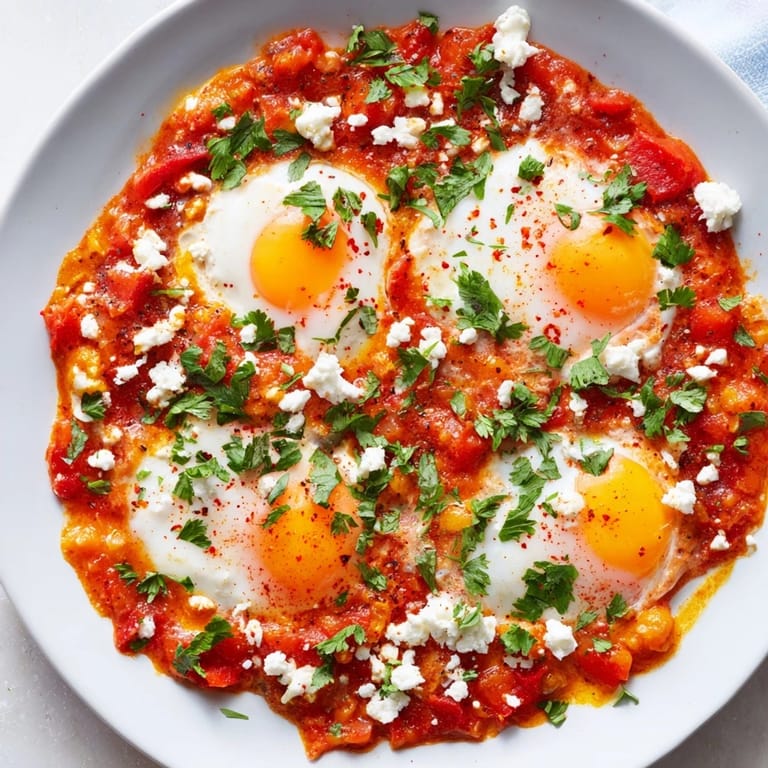
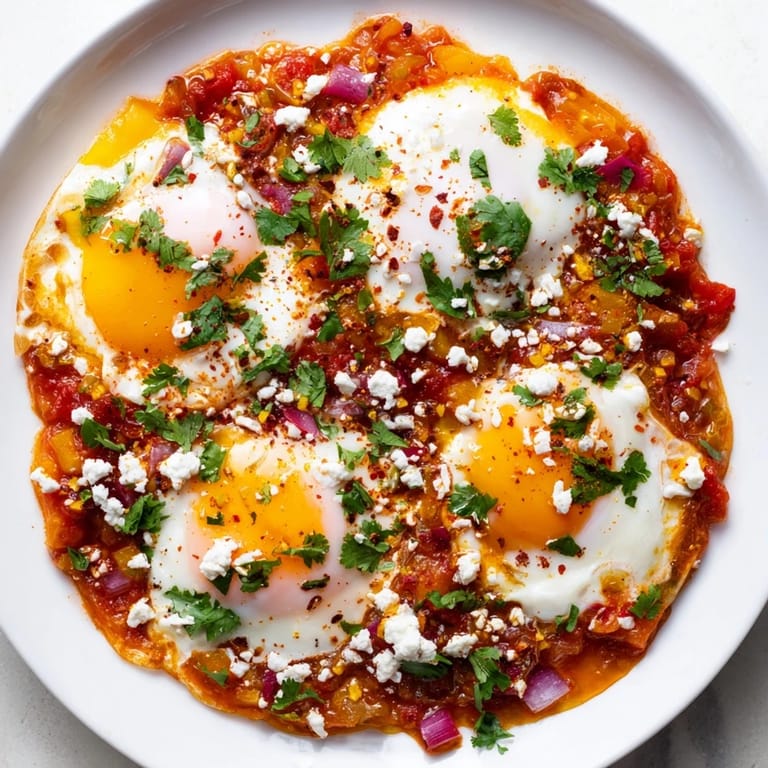
- Put a lid on the pan (or use foil if you don't have one) and cook over medium heat for 6 to 8 minutes. Check around minute 6—the egg whites should be turning opaque but the yolks should still jiggle slightly when you gently shake the pan.
- Finish and serve:
- Remove from heat, sprinkle with fresh parsley and cilantro, and crumble feta over the top if you're using it. Serve immediately with warm pita or crusty bread for scooping.
 Save
Save I once made this for someone I was trying to impress, and I got so nervous about the timing that I lifted the lid every 30 seconds. The eggs took forever to cook, and I almost gave up. But then I stopped fussing, covered the pan, and walked away to set the table—and they were perfectly done when I came back. That's when I learned that shakshuka doesn't need you to watch it, it just needs you to trust it.
Spice and Heat
The beauty of shakshuka is how adaptable it is to your spice tolerance. Some mornings I make it mild and smooth, letting the tomatoes and cumin do the talking—other times I add extra cayenne and fresh chili because I want that slow burn that builds as you eat. The paprika gives it color and a gentle warmth, while the cayenne is the one that brings actual heat, so if you're sensitive, start with a quarter teaspoon and taste as you go. And don't be afraid to adjust the spice balance after tasting the sauce but before you add the eggs—once those are in, you're committed.
Variations and Additions
I've made this recipe a hundred different ways, and it never disappoints. Add sautéed spinach or soft eggplant to the sauce for texture and earthiness, stir in a handful of chickpeas for protein and substance, or add roasted red peppers from a jar when you're in a hurry. Some people swear by labneh or Greek yogurt on the side for creaminess, and a tiny pinch of smoked paprika adds a subtle depth that makes people ask what your secret is. The core—tomatoes, eggs, spices—is unchanging, but everything around it is fair game.
Bread, Timing, and Company
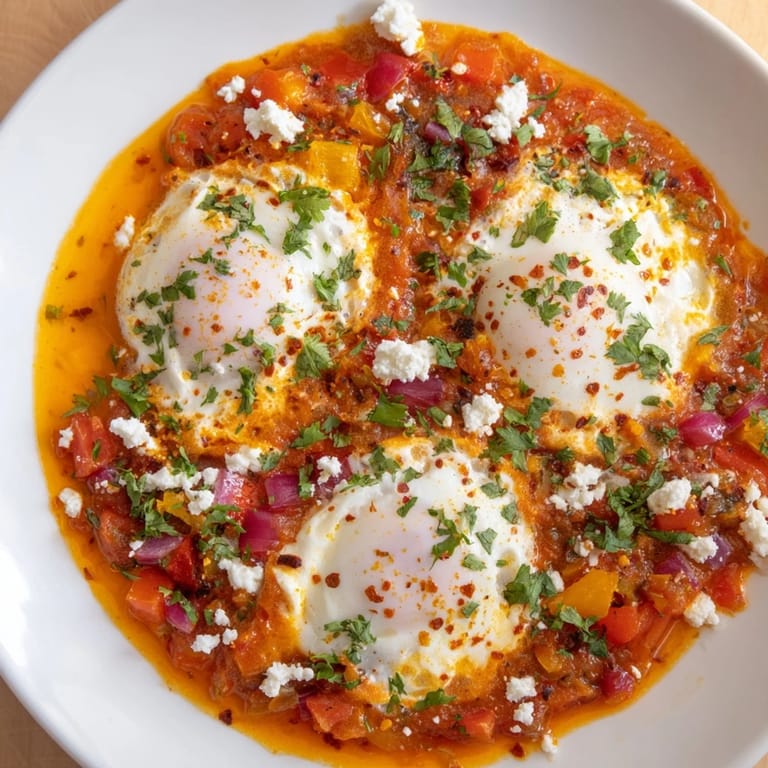
Shakshuka isn't meant to be plated individually and brought to the table—it's a dish you serve straight from the pan, letting people tear off bread and scoop directly. This is food that demands conversation and togetherness, so plan your timing so the shakshuka comes to the table warm and the bread is just out of the oven or toasted. The runny yolks will cool slightly as you're eating, so those first few bites when the yolk is still hot and the sauce is steaming are the ones worth lingering over.
- Use a cast-iron pan if you have one—it holds heat beautifully and you can bring it straight to the table.
- Have your bread ready before you start cooking, so there's no delay between the pan leaving the heat and it hitting the table.
- Make extra sauce if you're feeding people who are serious about soaking up every bit with bread.
 Save
Save This is the kind of recipe that gets better the more you make it, not because it changes, but because you learn to move through it with ease and confidence. That's when the magic happens.
Recipe FAQs
- → What pan is best for cooking this dish?
A large skillet or cast-iron pan with a lid works best to evenly cook the sauce and gently poach the eggs.
- → Can I adjust the spice level?
Yes, add or omit red chili and cayenne pepper to match your preferred heat level.
- → What can I serve alongside it?
It pairs wonderfully with warm pita, crusty bread, labneh, or Greek yogurt.
- → How do I know when the eggs are cooked properly?
Egg whites should be set while yolks remain soft, usually after 6-8 minutes of covered cooking.
- → Are there vegetarian or gluten-free considerations?
The dish is vegetarian and gluten-free by nature, suitable for those dietary preferences.