 Save
Save The first time I made Maqluba, I was standing in my friend's kitchen in Ramallah, watching her mother work with the kind of quiet confidence that comes from making the same dish a thousand times. She layered eggplant and potatoes with practiced hands, never measuring, just knowing. When she flipped that pot onto the platter with a swift, decisive motion, I held my breath—and out came this golden, perfectly intact dome of rice and caramelized vegetables. That moment, the drama of the flip, the aroma of warm spices hitting the air, it all clicked for me then.
I'll never forget cooking this for my neighbors one winter evening when the kitchen filled with such warmth and fragrance that they actually came to the door asking what smelled so incredible. My daughter, who usually picks at her food, went back for thirds. There's something about Maqluba that turns a regular dinner into an event, especially when you're brave enough to flip it and it comes out perfect.
Ingredients
- Lamb shanks or chicken pieces (900 g): Bone-in cuts give you deep, savory broth and meat that falls apart when cooked gently—boneless thighs work if you're pressed for time, but the bones are what make this sing.
- Basmati rice (2 cups): Long grains stay separate and fluffy, not mushy; rinsing removes excess starch and makes all the difference.
- Eggplant and potatoes: Roasting them first gives you caramelized edges that don't get waterlogged in the broth—this step is worth the extra pan.
- Ground spices (allspice, cinnamon, turmeric, cumin): These warm aromatics are what make Maqluba taste like itself; don't skip them or swap them for curry powder.
- Toasted almonds or pine nuts: The final crunch and richness anchor the whole dish; toasting them yourself rather than buying pre-toasted keeps them fresher and brighter.
- Broth (3-4 cups): Use homemade if you can, or choose a good quality stock without too much salt, since you'll be reducing it.
Tired of Takeout? 🥡
Get 10 meals you can make faster than delivery arrives. Seriously.
One email. No spam. Unsubscribe anytime.
Instructions
- Rinse and soak the rice:
- Cold water over the rice three times until it runs clear removes the starchy coating that would make it gluey. That half-hour soak actually matters—it helps the grains cook evenly and stay tender without breaking apart during the flip.
- Season and sear the meat:
- The spice mixture should coat every piece; don't rush the browning step because those crusty, golden bits on the bottom of the pot become part of your flavor. If the pot isn't hot enough, the meat will steam instead of sear, and you lose that savory depth.
- Build the broth base:
- Sautéing the onions in the same pot picks up all those caramelized bits, then the simmered meat infuses the broth with collagen and bone flavor that no stock cube could replicate. You're basically making a light, fragrant gravy that will become the soul of your rice.
- Roast the vegetables while meat cooks:
- The oven does the work here, turning eggplant and potatoes golden and tender without crowding them on the pan. Don't skip this step thinking you can just layer them raw—they'll release too much moisture and throw off the whole balance.
- Layer with intention:
- Tomatoes on the bottom protect the rice and add acidity, then potatoes and eggplant create a barrier of flavor, then meat and onions nestle in the middle, and rice crowns the top. Each layer matters for both taste and the structural integrity of your flip.
- Season the broth and pour:
- The turmeric, cumin, and salt in the broth will flavor the rice as it cooks; pour just enough to cover the rice by a finger's width, not more, or you'll end up with soggy layers instead of that lovely, fluffy grain.
- The plate trick and the cover:
- That small plate or heatproof lid on top of the rice acts like a gentle press, keeping everything compact and preventing the top from drying out while the bottom absorbs flavor. Cover the whole pot tightly so steam doesn't escape.
- Cook low and slow, no peeking:
- Once you bring it to a gentle simmer, drop the heat to low and leave it alone for 35-40 minutes; lifting the lid releases steam and disrupts the cooking. You'll know it's done when you hear no bubbling and any liquid is absorbed.
- Rest it like you mean it:
- That 15 minutes of rest lets the rice firm up slightly and the whole dish fuse together, making the flip infinitely safer and more satisfying.
- The flip—the moment of truth:
- Place your platter over the pot, hold it steady, take a breath, and flip with one confident motion; let it sit for a few seconds before lifting the pot away. If you hesitate or go slowly, the steam escapes and nothing sticks together.
- Garnish and serve:
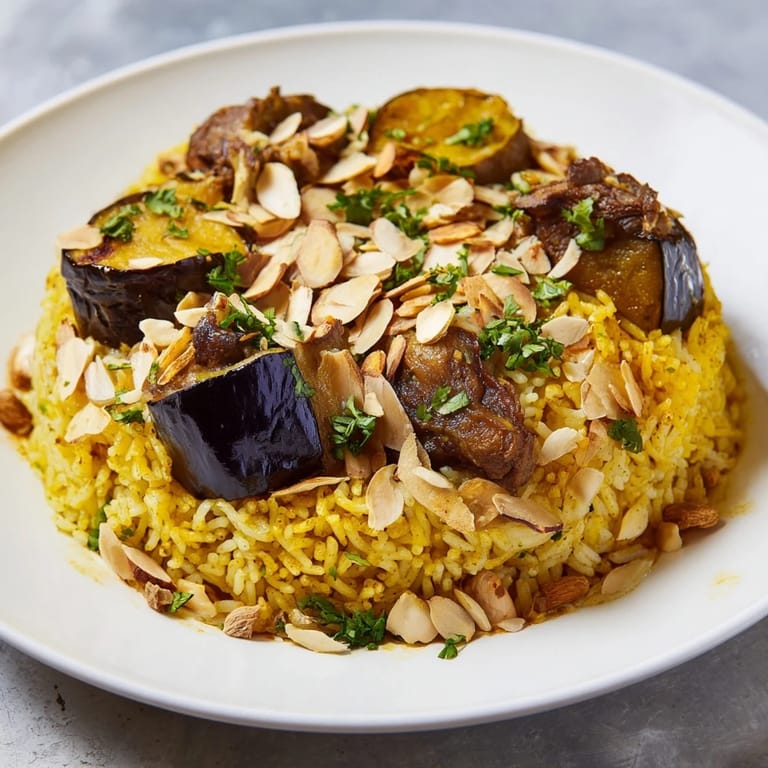
- Scatter toasted nuts and fresh parsley on top while it's warm so the heat brings out the nuttiness and the parsley stays bright green, not wilted.
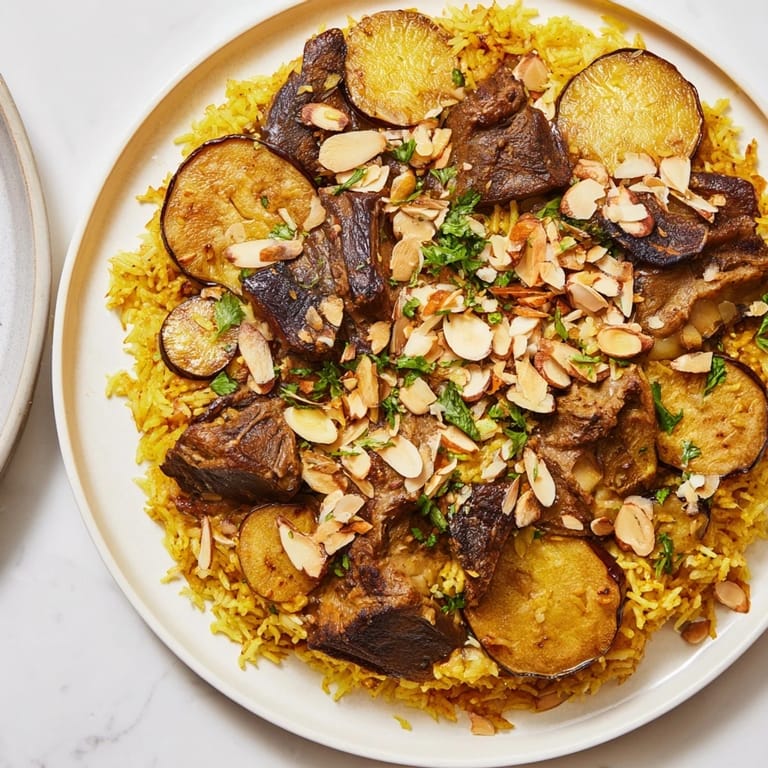 Save
Save I remember my mother-in-law telling me that Maqluba is called the 'upside-down' dish not just because of the flip, but because it turns what seems like a simple stack of ingredients into something greater than the sum of its parts. When she said that, watching her smile as we shared a plate warm from the platter, I understood it wasn't about showing off—it was about transformation, and the joy of feeding people something that tastes like care.
Why the Flip Matters
The theatrical flip isn't just for show; it's what gives Maqluba its identity and its name. The bottom layer of rice, which has been soaking up the savory broth and caramelized flavor from the vegetables and meat directly above it, becomes the top layer when you flip—golden, crunchy, deeply flavored in a way that can't happen anywhere else in the pot. When your guests see that perfect, unbroken dome emerge, they know they're about to taste something special.
Customizing Your Layers
Some families add a layer of cauliflower florets instead of eggplant, others include sliced carrots for sweetness, and some use boneless chicken thighs to speed up the process. The beauty of Maqluba is that it's forgiving about variations as long as you respect the basic structure: a moisture-producing vegetable layer at the bottom, sturdy vegetables in the middle, protein and aromatics tucked in, and rice on top to absorb all that flavor. Experiment, but don't rush the searing, roasting, or resting steps—those are the non-negotiables that make it work.
Serving and Pairing
Maqluba is a complete meal on its own, but a cool cucumber-yogurt salad on the side cuts through the richness and freshens your palate between bites. Some people serve it with a simple tomato and onion salad, or a squeeze of fresh lemon juice if the spices feel heavy. A pot of plain yogurt on the table is always welcome, and if you're serving it during Ramadan or for a special occasion, set the table slowly and let people savor it.
- Make a quick cucumber-yogurt sauce by mixing grated cucumber, yogurt, minced garlic, and a pinch of salt.
- Toast your nuts just before serving so they stay crisp instead of absorbing steam from the hot rice.
- If your flip didn't come out perfectly intact, don't panic—it still tastes exactly as it should, and you can always pile it onto the platter with a spoon and call it rustic.
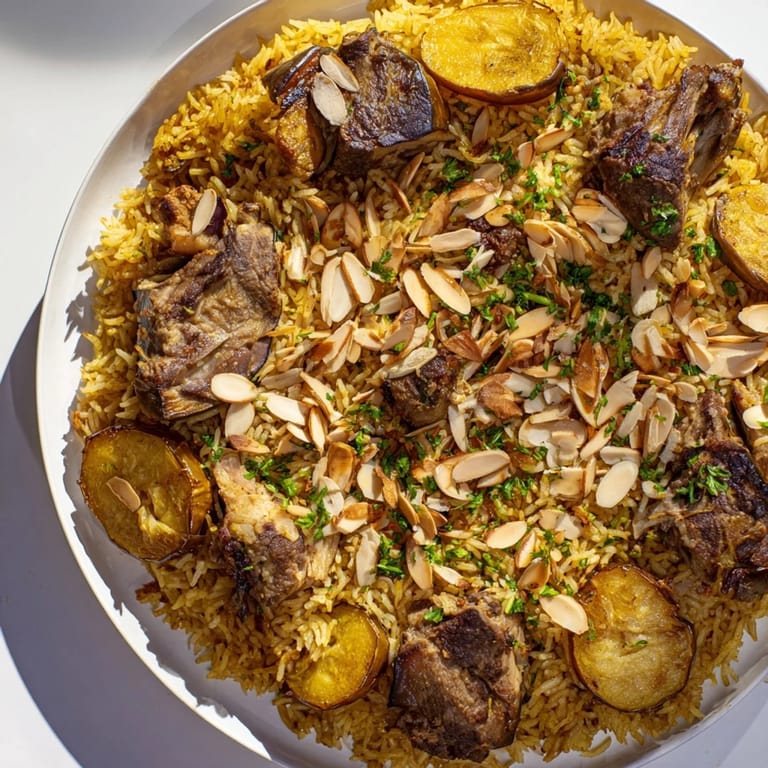 Save
Save Every time I make Maqluba, I'm transported back to that kitchen in Ramallah, and I feel a little less far from that moment. This dish has a way of doing that—it carries stories and warmth in every spoonful, and now it carries yours too.
Recipe FAQs
- → What type of meat works best for Maqluba?
Bone-in lamb shanks provide rich flavor and tenderness, but chicken pieces can also be used for a lighter alternative.
- → How are the vegetables prepared before layering?
Eggplant and potato slices are brushed with oil and roasted until golden and tender to enhance their taste and texture.
- → Why is the pot inverted when serving?
Flipping the pot unmolds the layers, revealing a visually striking presentation where the vegetables, meat, and rice form distinct, colorful tiers.
- → Can the broth be substituted?
Chicken or beef broth adds depth to the dish; using homemade or high-quality broth enhances the final flavor significantly.
- → Are nuts necessary in the garnish?
Toasted almonds or pine nuts add a pleasant crunch and a nutty aroma, rounding out the dish’s texture and flavor profile.