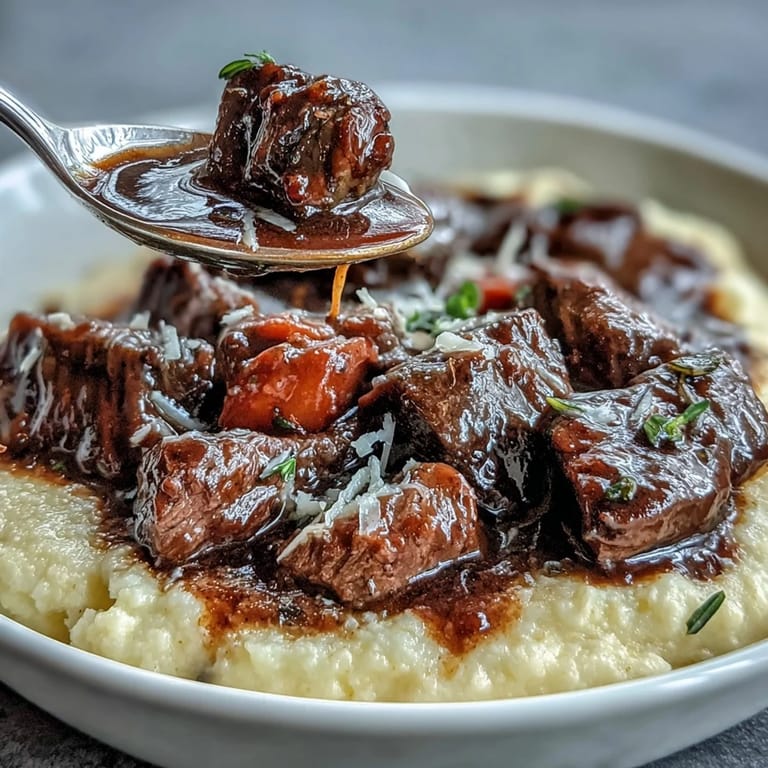
 Save
Save The steam rising from the pot that evening smelled like winter itself, dark and fruited and a little bit wild. I'd never cooked venison before, but a friend had brought me a parcel wrapped in butcher paper, and I wanted to do it justice. The sloe gin was leftover from autumn foraging, still sitting in the cupboard, and something told me the two belonged together. I browned the meat carefully, listening to the sizzle, feeling like I was learning a language I didn't yet speak. By the time the stew had simmered for two hours, the kitchen smelled like a cabin I'd never been to but somehow remembered.
I made this for a small dinner party once, and I remember worrying the whole time that the venison would be tough or the flavors too strong. But when I ladled it over the polenta and set the bowls down, the room went quiet in that good way. Someone said it tasted like something you'd find in a stone house in the hills, and I took that as the highest compliment. We finished two bottles of wine that night, and the stew never once felt heavy, just warm and right.
Ingredients
- Venison shoulder or stewing venison: This cut is perfect for slow cooking, becoming meltingly tender as it brews, and its lean, gamey flavor stands up beautifully to bold ingredients like sloe gin and juniper.
- Olive oil: Used to brown the meat and build the base of flavor in the pot, creating those caramelized bits that make the sauce so rich.
- Onion, carrots, and celery: The classic aromatic trio that adds sweetness, depth, and body to the stew, softening into the background while supporting every other flavor.
- Garlic cloves: Minced and cooked just until fragrant, they add warmth without overpowering the delicate game meat.
- Tomato paste: A small amount intensifies the savory notes and gives the sauce a subtle richness and color.
- Sloe gin: The star here, lending a fruity, slightly tart sweetness that complements the venison and makes the whole dish feel special and seasonal.
- Beef or game stock: The liquid that carries everything together, choose a good quality stock for the best depth of flavor.
- Redcurrant jelly: A classic British touch that balances the gamey richness with a hint of tartness and gloss.
- Bay leaves and fresh thyme: Herbs that infuse the stew with earthy, aromatic warmth as it simmers low and slow.
- Juniper berries: Lightly crushed to release their piney, gin like essence, they echo the botanical notes in the sloe gin beautifully.
- Polenta: Quick cooking or regular, it becomes a creamy, comforting base that soaks up the stew like a dream.
- Whole milk and water: The liquid for cooking the polenta, milk makes it luxuriously creamy while water keeps it from becoming too heavy.
- Unsalted butter and Parmesan cheese: Stirred in at the end, they transform the polenta into something silky, savory, and utterly indulgent.
Tired of Takeout? 🥡
Get 10 meals you can make faster than delivery arrives. Seriously.
One email. No spam. Unsubscribe anytime.
Instructions
- Brown the venison:
- Heat the olive oil in a large, heavy based casserole over medium high heat. Brown the venison cubes in batches, turning them until they develop a deep, caramelized crust, then set them aside on a plate.
- Soften the vegetables:
- In the same pan, add the onion, carrots, and celery, stirring them in the flavorful oil left behind. Cook for 5 to 7 minutes until they soften and start to smell sweet, then stir in the garlic and tomato paste, cooking for another minute until fragrant.
- Deglaze with sloe gin:
- Return the browned venison to the pan and pour in the sloe gin, letting it bubble and reduce for 2 minutes. The alcohol will cook off, leaving behind a fruity, slightly sweet depth that clings to the meat.
- Add stock and aromatics:
- Pour in the stock, then stir in the redcurrant jelly, bay leaves, thyme, and juniper berries. Season with salt and pepper, then bring everything to a gentle simmer.
- Simmer the stew:
- Cover the pot and let it cook gently on low heat for 2 hours, stirring occasionally. The venison will become incredibly tender, and the sauce will thicken and deepen in flavor.
- Prepare the polenta:
- While the stew is cooking, heat the milk and water in a saucepan until just simmering. Gradually whisk in the polenta, stirring constantly over low heat for 5 to 10 minutes until it thickens and becomes creamy.
- Finish the polenta:
- Stir in the butter and Parmesan, letting them melt into the polenta until it's glossy and rich. Season to taste with salt.
- Serve:
- Remove the bay leaves and thyme sprigs from the stew. Ladle the venison over generous spoonfuls of creamy polenta, making sure each bowl gets plenty of sauce.
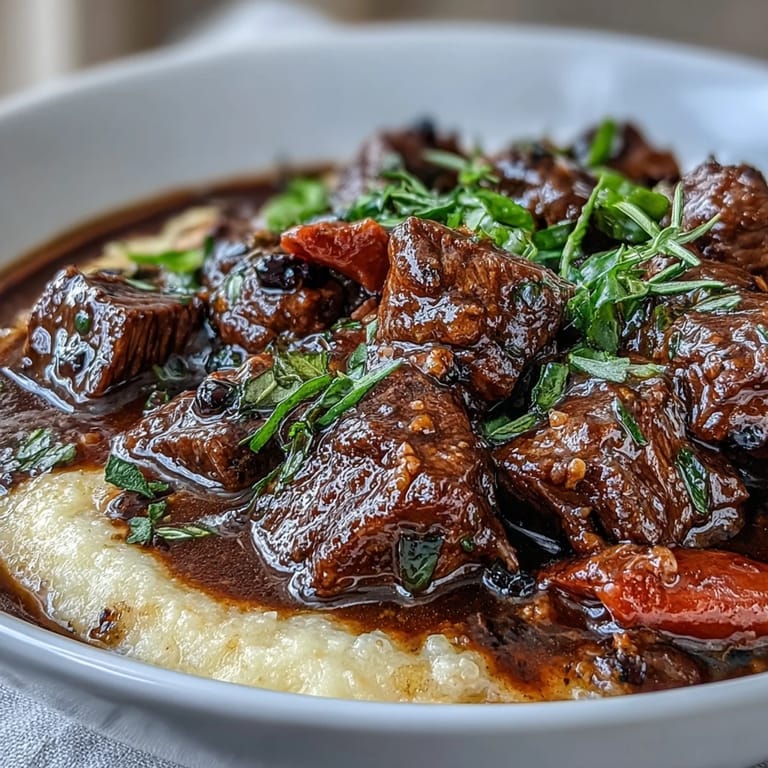 Save
Save I think about that first bowl I made for myself, standing at the counter in my socks, tasting it straight from the ladle. It wasn't just good, it felt like I'd made something that mattered, something that belonged to a table set with candles and good company. That's when I realized cooking isn't just about following steps, it's about trusting your instincts and letting the ingredients speak for themselves.
Choosing Your Venison
Venison shoulder is ideal for slow cooking because it has enough connective tissue to break down into tenderness without drying out. If you can't find shoulder, any stewing cut will work, just make sure the pieces are cut evenly so they cook at the same rate. I've also used diced leg with good results, though it can be a bit leaner, so keep an eye on the liquid levels. If you're new to cooking game, don't be intimidated, venison is milder than you'd think, especially when you treat it gently and let it simmer low and slow.
Making It Your Own
If you don't have sloe gin, a good port or berry liqueur works beautifully, or even a splash of red wine with a spoonful of blackcurrant jam stirred in. I've added chopped mushrooms before, sweated down with the onions, and they added an earthy richness that felt very autumnal. Some people like to thicken the sauce with a little cornflour slurry at the end, but I prefer it loose and glossy, perfect for soaking into the polenta. A handful of fresh parsley or a few thyme leaves scattered over the top before serving adds a bright, herbal lift that cuts through the richness.
Serving and Pairing
This stew feels like it was made for a robust red wine, something with body and a bit of spice, like a Shiraz or Cabernet Sauvignon. I've also served it with crusty bread on the side for mopping up every last bit of sauce, though the polenta really is the ideal partner. If you're feeding a crowd, you can make the stew a day ahead, it only gets better as the flavors meld overnight, and the polenta takes just minutes to whip up fresh before serving.
- Garnish with fresh parsley, thyme, or even a few crushed juniper berries for a striking finish.
- Leftovers reheat beautifully, just add a splash of stock or water to loosen the sauce.
- For a lighter option, serve the stew over mashed potatoes or buttered pasta instead of polenta.
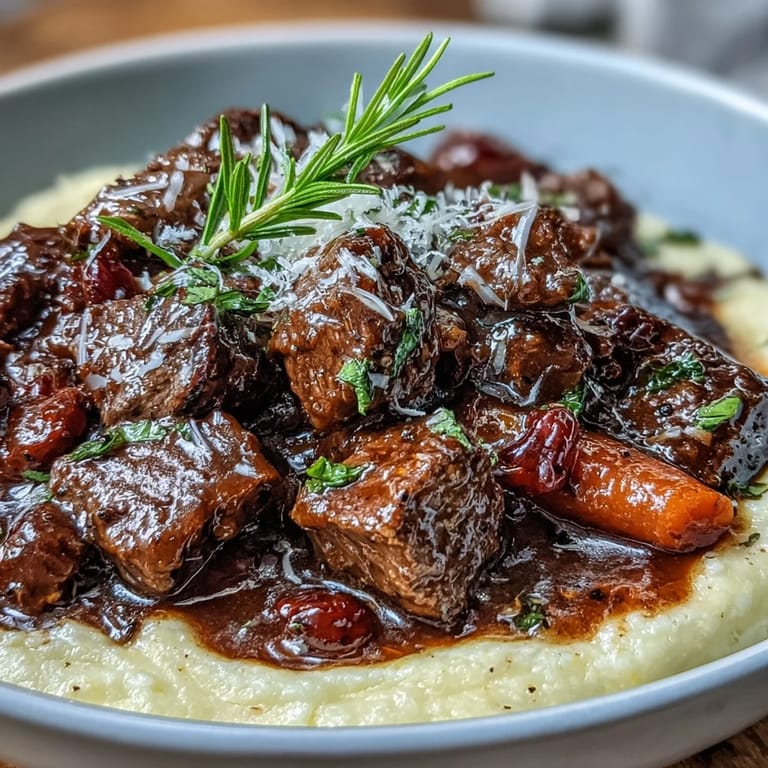 Save
Save There's something deeply satisfying about a dish that takes time, that fills your home with the kind of smell that makes you slow down and breathe deeply. This venison stew is one of those recipes, the kind you make when you want to feel grounded, nourished, and just a little bit proud.
Recipe FAQs
- → Can I use a different cut of venison?
Yes, venison shoulder is ideal for slow braising, but you can also use diced venison leg or haunch. Avoid lean cuts as they may become dry during the long cooking time.
- → What can I substitute for sloe gin?
Port, red wine, or a berry liqueur like cassis work well as alternatives. Each will bring a slightly different flavor profile but maintain the rich, fruity depth of the dish.
- → Can I make this ahead of time?
Absolutely. The stew actually improves when made a day ahead as the flavors develop further. Reheat gently and prepare fresh polenta just before serving for the best texture.
- → What type of polenta should I use?
Quick-cooking polenta works well for convenience and takes 5-10 minutes. Traditional polenta requires longer cooking but offers a slightly better texture. Both work perfectly with this dish.
- → How do I know when the venison is done?
The venison should be fork-tender and easily pull apart after the 2-hour simmer. If it's still tough, continue cooking in 15-minute intervals until the desired tenderness is reached.
- → Can I make this in a slow cooker?
Yes, after browning the meat and sautéing the vegetables, transfer everything to a slow cooker and cook on low for 6-8 hours or high for 4-5 hours until the venison is tender.