 Save
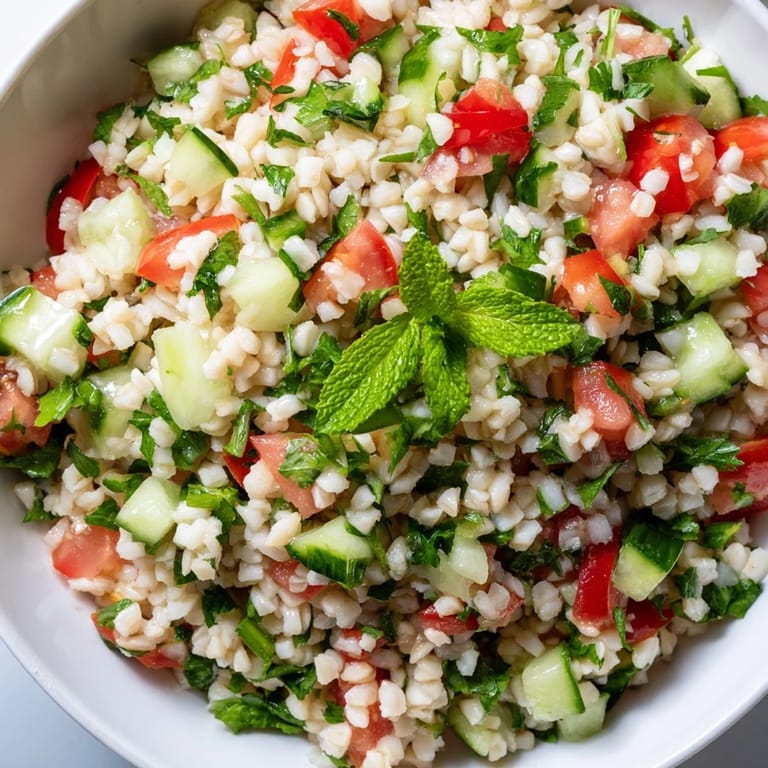
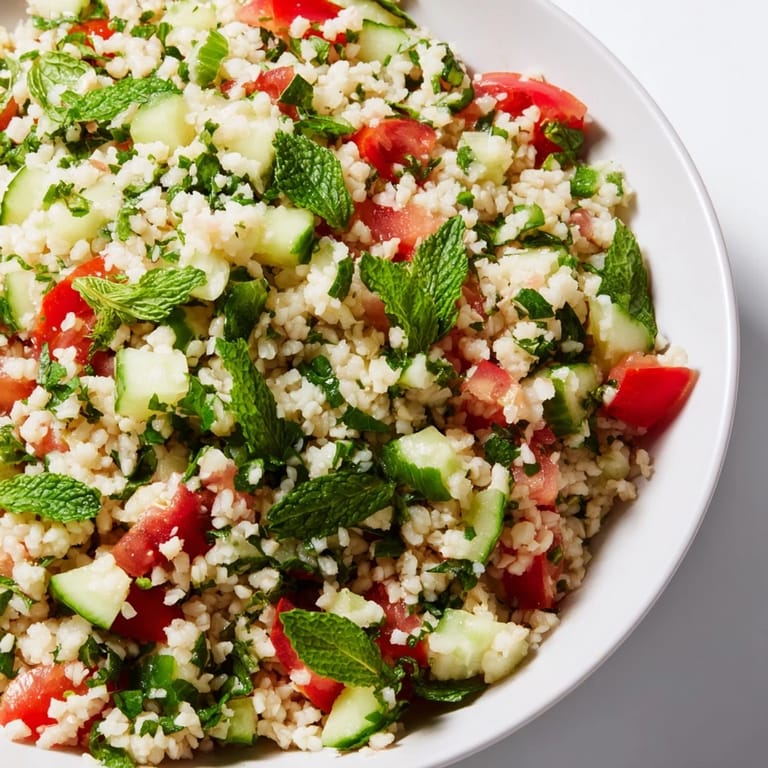
Save The smell of fresh parsley always pulls me back to that cramped kitchen where I first watched someone make tabbouleh properly. My neighbor didn't measure anything, just kept chopping and tasting until the balance felt right. What struck me most was how little bulgur she used compared to the herbs. That's when I realized tabbouleh isn't a grain salad with some green bits, it's a herb salad that happens to have bulgur in it.
I brought this to a potluck once without much expectation. By the end of the night, three people had asked for the recipe and one person admitted they'd gone back for fourths. Someone said it reminded them of a trip to Beirut, and someone else just loved that it wasn't another pasta salad. That's the thing about tabbouleh: it stands out without trying too hard.
Ingredients
- Fine bulgur wheat: Use fine grain, not coarse, because it softens quickly without cooking and keeps the salad light. If you can only find medium bulgur, just soak it a bit longer.
- Boiling water: This hydrates the bulgur perfectly in about 10 minutes, no stove required.
- Tomatoes: Ripe, juicy tomatoes are non-negotiable here. Their sweetness balances the lemon and their juice mingles with the dressing.
- Cucumber: Peeling and seeding prevents the salad from getting watery after it sits, which I learned the soggy way.
- Scallions: They add a mild onion flavor without the harshness of raw onion, and they look pretty too.
- Fresh flat-leaf parsley: This is the star, so buy a big bunch and chop it fine. Curly parsley won't give you the same flavor.
- Fresh mint leaves: Just a handful brightens everything and makes the whole bowl smell incredible.
- Extra virgin olive oil: Use something you'd happily dip bread into, because you'll taste it clearly here.
- Freshly squeezed lemon juice: Bottled lemon juice tastes flat and bitter, fresh makes all the difference.
- Garlic clove: One small clove minced fine adds depth without overpowering the herbs.
- Fine sea salt: Season generously, tabbouleh needs more salt than you think to bring out all the flavors.
- Freshly ground black pepper: Just a little for warmth and complexity.
Tired of Takeout? 🥡
Get 10 meals you can make faster than delivery arrives. Seriously.
One email. No spam. Unsubscribe anytime.
Instructions
- Soak the bulgur:
- Pour boiling water over the bulgur in a large bowl, cover it with a plate, and let it sit for 10 to 15 minutes. You'll know it's ready when the grains are tender and all the water is absorbed, then fluff it with a fork and let it cool completely.
- Prep the vegetables:
- While the bulgur cools, dice your tomatoes and cucumber into small, even pieces and slice the scallions thin. Chop the parsley and mint as finely as you have patience for, the smaller the pieces, the better they coat everything.
- Make the dressing:
- Whisk together the olive oil, lemon juice, minced garlic, salt, and pepper in a small bowl until it emulsifies slightly. Taste it and adjust, it should be tangy and bold.
- Combine everything:
- Add all the chopped vegetables and herbs to the cooled bulgur. Pour the dressing over the top and toss gently but thoroughly until every grain is coated.
- Let it rest:
- Cover and refrigerate for at least 20 minutes before serving. This resting time lets the flavors marry and the bulgur absorb some of the dressing.
- Serve:
- Bring it to the table cold or at room temperature. Taste one more time and add a squeeze of lemon or pinch of salt if needed.
 Save
Save One warm evening I served this alongside grilled chicken for friends, and we ended up eating outside as the sun set. Someone said it tasted like vacation, which made me laugh, but I knew what they meant. There's something about the brightness of lemon and herbs that makes you feel lighter, like you're somewhere else entirely. That's when tabbouleh became my go-to for any meal that needed a little lift.
How to Store and Enjoy Leftovers
Tabbouleh keeps well in the fridge for up to three days in an airtight container. The flavors deepen as it sits, though the herbs may darken slightly, which doesn't affect the taste at all. Before serving leftovers, give it a good stir and taste for seasoning, sometimes a fresh squeeze of lemon or a drizzle of olive oil brings it back to life. I've eaten it straight from the container for lunch more times than I can count.
Ways to Make It Your Own
Once you've made this a few times, you'll start tweaking it to your taste. I've added pomegranate seeds for a sweet pop, diced red bell pepper for color and crunch, and even crumbled feta when I'm feeling less strict about keeping it vegan. Some people like more mint, others want extra lemon, and honestly, all versions are good as long as you keep the herb-to-grain ratio high. The recipe is forgiving and actually wants you to play with it.
Serving Suggestions and Pairings
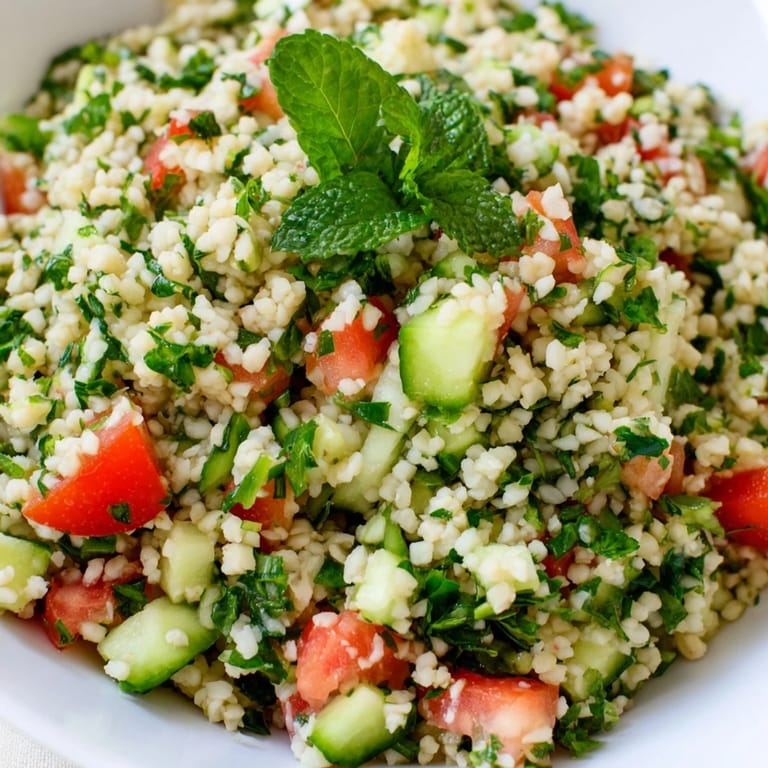
Tabbouleh shines as a side dish next to grilled meats, roasted vegetables, or crispy falafel. It's also substantial enough to eat on its own for a light lunch, maybe with some warm pita and hummus on the side. I've served it at barbecues, picnics, and weeknight dinners, and it always disappears fast.
- Pair it with grilled lamb, chicken, or fish for a complete Middle Eastern feast.
- Scoop it up with pita wedges or stuff it into pita pockets with tahini sauce.
- Serve it as part of a mezze spread with baba ganoush, olives, and stuffed grape leaves.
 Save
Save This salad has become one of those recipes I make without thinking, the kind that feels like muscle memory now. It's bright, it's easy, and it reminds me that sometimes the simplest combinations are the ones that stick with you longest.
Recipe FAQs
- → What is bulgur wheat and where can I find it?
Bulgur is a parboiled, dried cracked wheat commonly used in Middle Eastern cuisine. You'll find it in the grains section of most supermarkets, natural food stores, or Middle Eastern markets. It's different from wheat berries because it's already partially cooked, making it quick to prepare.
- → Can I make this ahead of time?
Yes, tabbouleh actually improves when made several hours or a day ahead. The flavors meld beautifully when chilled. Store it covered in the refrigerator for up to 3 days. You may want to add a squeeze of fresh lemon juice before serving to brighten the flavors.
- → How do I keep the herbs from turning dark?
Chop the parsley and mint just before assembling the salad to minimize oxidation. If preparing ahead, add them closer to serving time rather than at the beginning. Fresh herbs are best enjoyed when they haven't sat too long after cutting.
- → What are good substitutions for bulgur?
For a gluten-free version, cooked quinoa, millet, or farro work beautifully. You can also use couscous if preferred. Adjust the liquid ratio slightly depending on your grain choice, as absorption rates vary.
- → How should I serve tabbouleh?
Serve chilled or at room temperature as a standalone light meal, side dish, or appetizer. It pairs wonderfully with grilled meats, falafel, hummus, or warm pita bread. You can also serve it on a bed of greens for added freshness.
- → Can I customize the vegetables in this salad?
Absolutely. While parsley and mint are traditional, you can add pomegranate seeds, diced bell peppers, radishes, or crumbled feta cheese. Keep the herb-to-grain ratio relatively high and taste as you go to maintain authentic flavor balance.