 Save
Save The first time I assembled a proper Turkish meze platter, I was trying to impress someone at a dinner party and had no idea what I was doing. I'd been to Istanbul once, spent an afternoon in a bustling neighborhood watching vendors arrange tiny bowls of hummus and olives with the kind of care I usually reserved for much fancier dishes. That evening in my kitchen, surrounded by mismatched bowls and ingredients I'd gathered from three different stores, something clicked. A meze platter isn't about perfection or complexity—it's about creating a landscape of flavors and textures that invites people to slow down and explore.
I've learned that meze is less about following rules and more about understanding the rhythm of flavors. One afternoon, my neighbor came over unexpectedly and I threw this together in about thirty minutes. She sat at the kitchen counter watching me arrange things, and halfway through she said something I won't forget: "This is how food should taste—like someone had time to think about it." That comment stayed with me.
Ingredients
- Chickpeas: The foundation of silky hummus—use canned ones to save time, but drain and rinse them properly or your hummus will taste like the tin.
- Tahini: This sesame paste is non-negotiable, and the quality matters more than you'd think; a good tahini makes hummus taste alive.
- Extra-virgin olive oil: Don't skip this or use the cheap stuff; it's the difference between hummus that tastes like something and hummus that just sits there.
- Fresh lemon juice: Bottled will work, but fresh lemon juice brightens everything in a way that tastes noticeably better.
- Garlic: One clove is plenty—overdo it and your hummus becomes an assault rather than an invitation.
- Cumin: Ground cumin adds that warm, earthy note that makes people ask what's in it.
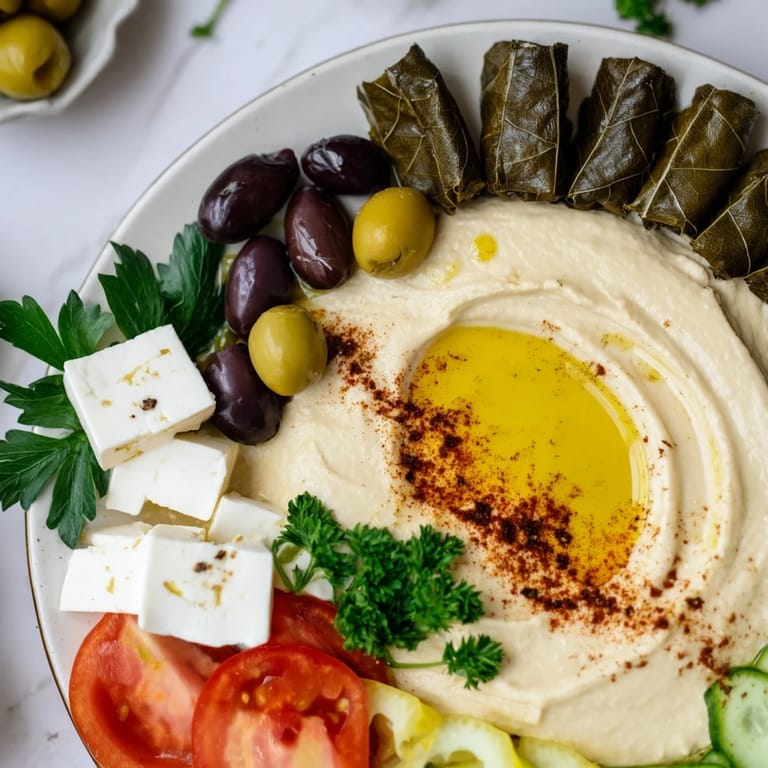
- Stuffed grape leaves: Store-bought dolmas save you hours; there's no shame in that choice, and honestly, some brands are excellent.
- Cheese selection: Feta brings tang, beyaz peynir adds mild creaminess, and kasseri or halloumi give you something with a bit of bite—mix them for complexity.
- Turkish olives: Hunt for a good mix of green and black; they should taste alive and briny, not flat.
- Fresh vegetables: Cucumber, tomato, and lemon aren't just garnish—they're the palate cleansers that make you reach for more.
Tired of Takeout? 🥡
Get 10 meals you can make faster than delivery arrives. Seriously.
One email. No spam. Unsubscribe anytime.
Instructions
- Blend the hummus:
- Pulse your chickpeas and tahini together first to break things down, then add oil and garlic while the machine is running so the garlic distributes evenly. The moment it goes from chunky to silky—usually about two minutes of processing—you'll know it's right.
- Season thoughtfully:
- Taste as you go; lemon juice and salt are your controls here, and you want the hummus to taste bright without being sour. A tiny pinch of cumin at the end brings everything into focus.
- Arrange the dolmas:
- They look best when you stand them seam-side down or roll them slightly as you place them, creating gentle curves across one section of your platter.
- Dress the olives:
- Toss them with just enough olive oil and oregano to coat; you want them glistening, not swimming, and the oregano should whisper its presence rather than shout.
- Build your platter:
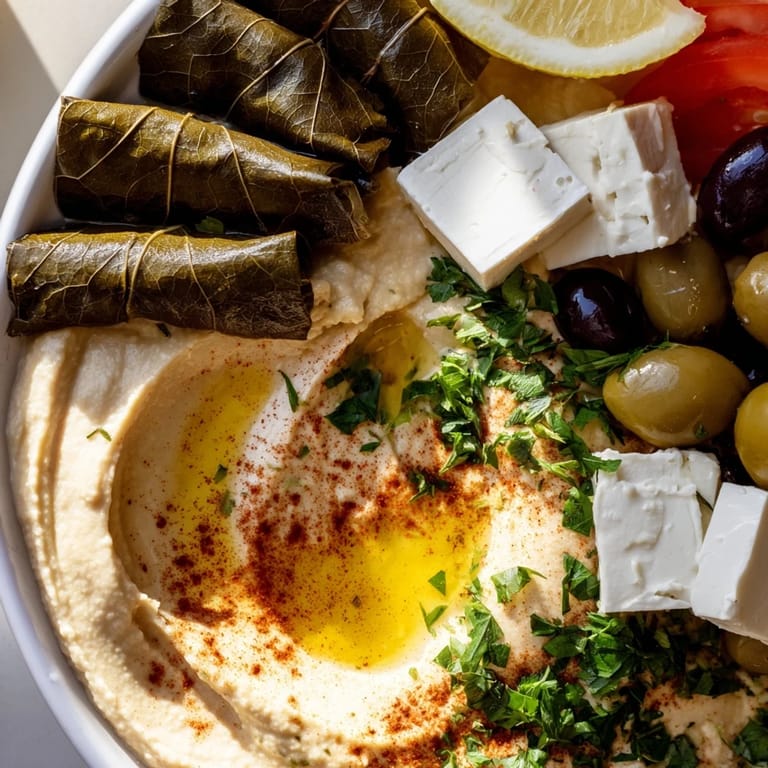
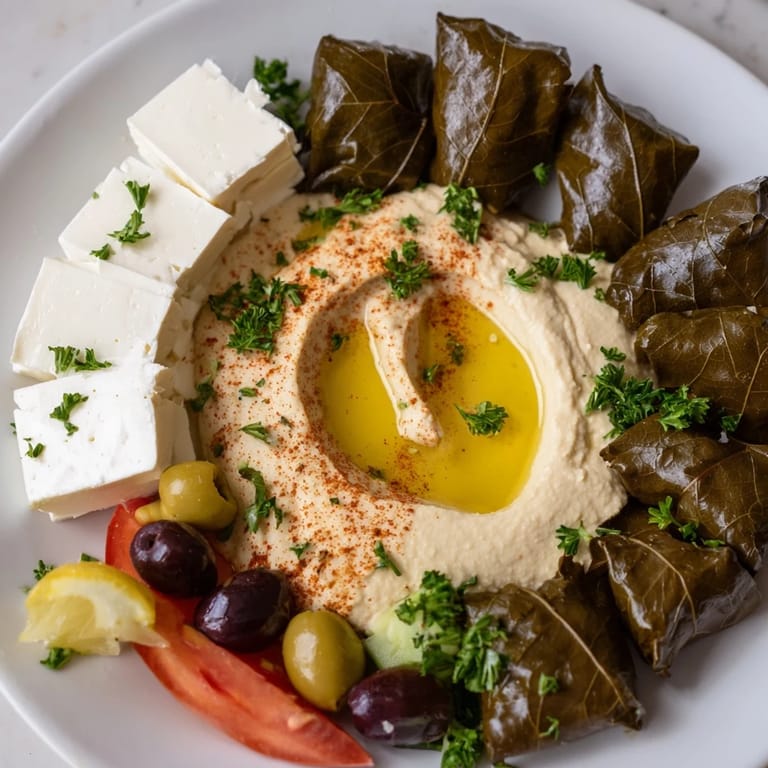
- Place the hummus bowl in a central or corner spot, then build around it with clusters of cheese, olives, and vegetables—think of it like arranging a still life where every element has breathing room.
- Finish and serve:
- Scatter parsley over the top just before serving to add color and a hint of freshness; warm your bread and cut it into triangles that feel substantial enough to cradle something.
 Save
Save There's a moment when a meze platter stops being separate ingredients and becomes something whole—that's when the olives' brine mingles with the hummus, when someone tears a piece of bread and uses it to collect a bit of everything at once. That's the moment you know you've gotten it right.
The Art of the Platter
Meze isn't structured the way a normal meal is; it's more of a conversation between flavors. The beauty is that you're not locked into proportions or perfect technique—you're inviting people to graze and discover. A good meze platter should have rhythm: something creamy, something tangy, something salty, something fresh. Think about color too; the deep olives, white cheese, green herbs, and red tomato should look intentional together. I've noticed that when a platter has visual balance, people spend more time eating slowly instead of just grabbing and moving on.
Making It Your Own
The ingredients I've listed are a foundation, not a law. I've added roasted red peppers when I had them, scattered crushed walnuts for texture, and once threw in some grilled eggplant just because I wanted to use up what was in the fridge. The point is to respond to what's available and what your guests might enjoy. Turkish meze has survived centuries because it adapts—it meets you where you are in that moment, in that kitchen, with what you have.
Timing and Preparation
One of the greatest gifts of this recipe is that almost everything can be done ahead. Make your hummus in the morning, store it covered in the fridge, and it actually gets better as the flavors settle. Your cheese can be cubed and your vegetables sliced hours before guests arrive. The only thing that needs to happen close to serving time is arranging the platter itself, which takes maybe ten minutes if you're moving at a normal pace. This is food that lets you breathe instead of stressing.
- Store hummus with a drizzle of olive oil on top to keep it from drying out and to make it look beautiful when you serve it.
- If your bread won't be warm when you serve, wrap it in foil and warm it in a 350°F oven for five minutes just before people arrive.
- Keep a small bowl of extra olives and lemon wedges nearby to refresh the platter if it starts looking sparse.
 Save
Save A meze platter is an act of generosity disguised as simplicity. It says: I took time to think about what might make you happy, and I'm inviting you to slow down and enjoy it with me.