 Save
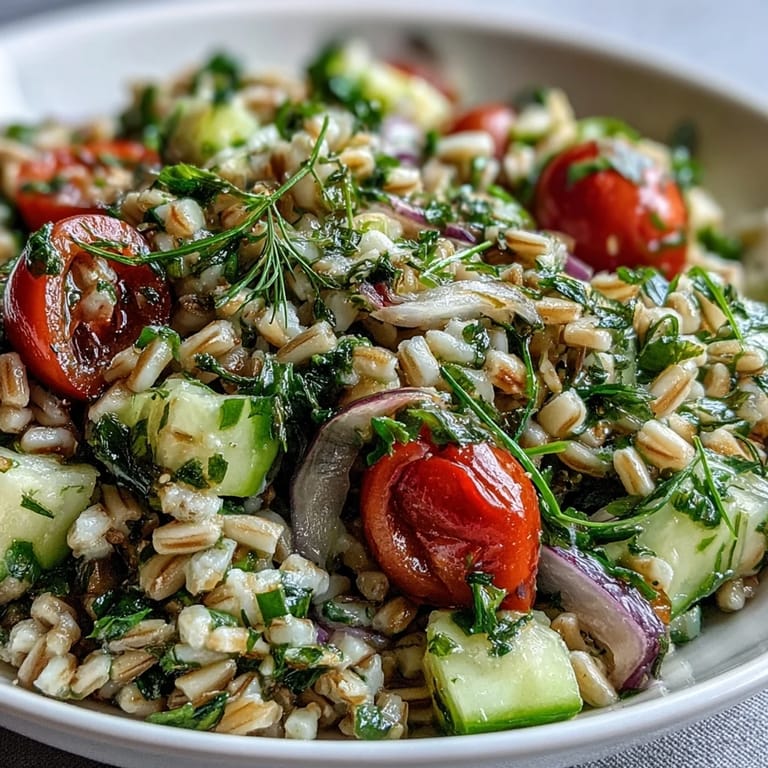
Save My neighbor Maria stopped by one summer afternoon with a container of pearl barley salad she'd made for a potluck, and I watched her set it down on my kitchen counter like it was something precious. The way the herbs caught the light and the lemon scent wafted up when she opened the lid made me understand instantly why people get excited about simple food. She let me taste it straight from the container—still cool from her fridge—and that nutty barley mixed with bright herbs and tangy dressing became the reason I learned to make this for myself.
I made this the week before my daughter's first day of school, needing something to bring to a staff potluck that would survive the drive and still taste bright and alive. I packed it in a mason jar with the dressing settled at the bottom, and when the principal tossed it just before serving, it came back with compliments I didn't expect from a grain salad. That's when I realized this dish has a quiet confidence about it—it never tries too hard, but it always impresses.
Ingredients
- Pearl barley, rinsed: Rinsing removes the dusty coating and helps it cook more evenly; this small step makes a noticeable difference in texture.
- Water: Use a 3-to-1 ratio for barley that's tender but still has a gentle chew—too much water and you'll end up with mush.
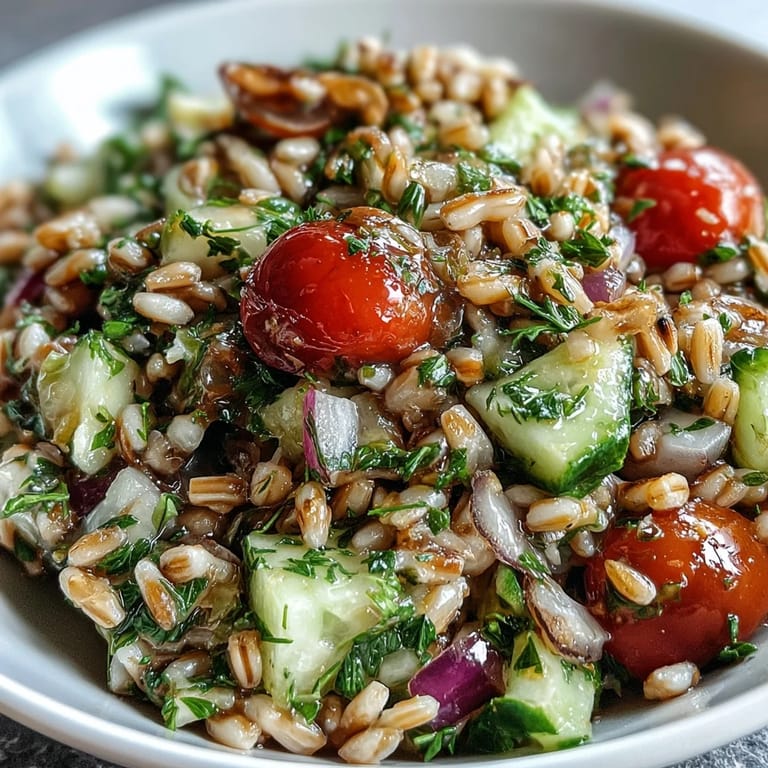
- Fresh parsley, mint, and dill: These three together create the soul of the dish; don't skip any of them or substitute with dried herbs, which lose their brightness.
- Red onion: Finely diced and raw, it adds a sharp note that cuts through the richness of the oil and keeps everything feeling fresh.
- Cherry tomatoes and cucumber: These add juiciness and crunch; halving and dicing them releases their flavors into the salad as it sits.
- Extra-virgin olive oil: This is not the place to use regular oil—the fruitiness of good olive oil matters here and carries the whole dressing.
- Fresh lemon juice: Bottled lemon juice won't give you the same brightness; squeeze it fresh and your taste buds will thank you.
- Dijon mustard: Just a teaspoon acts as an emulsifier, helping the oil and lemon juice bond into something creamy and cohesive.
Tired of Takeout? 🥡
Get 10 meals you can make faster than delivery arrives. Seriously.
One email. No spam. Unsubscribe anytime.
Instructions
- Boil the barley until tender:
- Bring salted water to a rolling boil in a medium saucepan, add your rinsed barley, then lower the heat and cover it. The gentle simmer will take 25 to 30 minutes; you'll know it's ready when the grains are soft enough to bite through but still hold their shape, not falling apart.
- Cool your barley completely:
- Spread it on a plate or in a shallow bowl if you're in a hurry—warm barley will wilt the herbs and make your dressing separate. Give it at least 15 minutes to reach room temperature before you toss it with anything else.
- Chop your herbs and vegetables:
- This is the meditative part—fine chopping releases the essential oils in the herbs and creates small, even pieces that distribute flavor throughout. Keep everything separate until the barley is cool, then combine in a large bowl.
- Make your dressing by whisking:
- Start with the oil and lemon juice, whisking them together while you slowly drizzle, as if making a tiny vinaigrette. Add the mustard and minced garlic, which help hold everything in emulsion, then season with salt and pepper.
- Toss everything together gently:
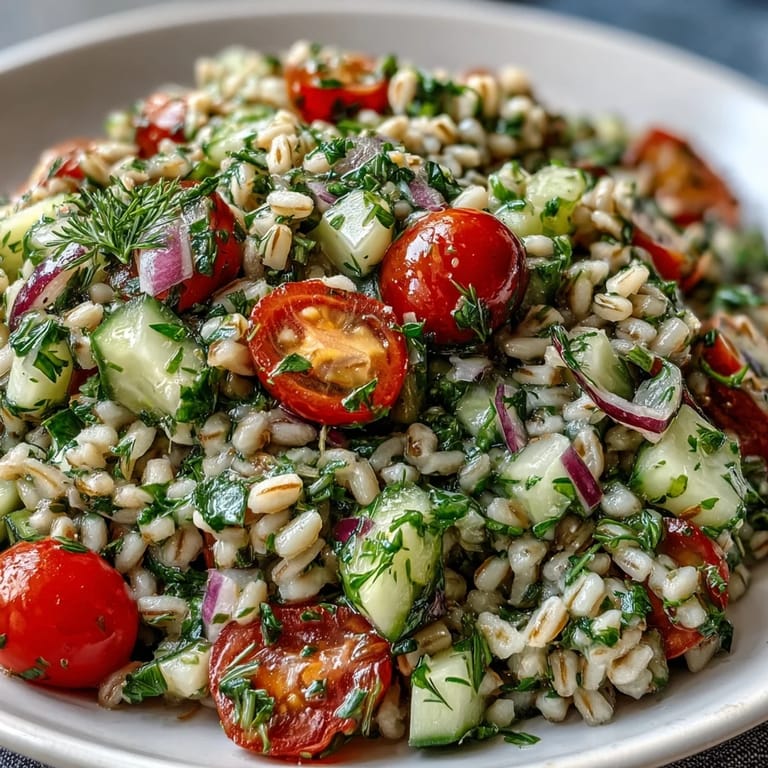
- Pour the dressing over the barley and herb mixture and use a fork to toss, not mash—you want to coat every grain but keep the vegetables intact and their edges crisp. Taste and adjust your salt, pepper, or lemon juice before serving.
 Save
Save My son sat at the kitchen counter one evening while I was assembling this, stealing cherry tomatoes from the cutting board and asking why this salad tasted nothing like the lettuce salads his friends' parents made. I told him it was because barley was building something in his mouth—texture and chew and nuttiness—instead of just disappearing on his tongue. He nodded seriously and stole another tomato, and I knew right then this was a recipe worth keeping around.
Why This Salad Works Year Round
In summer, the herbs taste like the garden and everything feels light and cool. In winter, you can make it with herbs you've frozen or dried, add some cooked chickpeas for warmth, and suddenly it becomes a hearty lunch that feels like it's still giving you something of the seasons. The barley doesn't care—it's equally happy being the foundation whether you're eating it on a hot day or bringing it to work in January.
Building Flavor That Lasts
The magic of this salad is that it doesn't demand your immediate attention like some dishes do. If you make it and cover it in the fridge for a few hours or even overnight, the dressing seeps into the barley and the herbs continue releasing their oils, so each bite tastes more cohesive and confident. The first time I made it knowing I could serve it the next day, I felt like I'd discovered a secret about easy entertaining.
What Makes This Taste Like More Than Salad
It's the combination of the nutty grain, the sharp herbs, and the balanced acidity of the lemon that keeps your palate interested—nothing here is boring or one-note. When you eat this, you taste complexity and care, and people notice that. The dill especially does something unexpected, bringing a slight anise note that makes people pause and ask what that flavor is.
- Toasted almonds or pumpkin seeds add a crackling texture that contrasts beautifully with the soft barley.
- Crumbled feta cheese transforms this into something more substantial and adds a salty richness that feels Mediterranean and indulgent.
- A handful of baby spinach or arugula folded in at the last moment brings peppery green notes if you're building this for lunch rather than a potluck.
 Save
Save This salad taught me that sometimes the best dishes are the ones that don't ask for much but give back everything—a quiet, generous kind of food that fits wherever you need it to. Keep it in your back pocket for moments when you want to feel like you've cooked something thoughtful but still have time for everything else.
Recipe FAQs
- → Is pearl barley gluten-free?
No, pearl barley contains gluten and is not suitable for those with celiac disease or gluten sensitivity. For a gluten-free alternative, consider using quinoa or buckwheat groats instead.
- → Can I make this ahead of time?
Absolutely. This dish actually improves after a few hours in the refrigerator as the barley absorbs more of the dressing flavors. It keeps well for up to 2 days, though it's best enjoyed within 24 hours for optimal texture.
- → What proteins pair well with this?
Grilled chicken, shrimp, or white fish complement the fresh flavors beautifully. For a vegetarian meal, add chickpeas or crumbled feta. It also works alongside lamb or roasted vegetables for a more substantial spread.
- → Can I substitute other grains?
Yes, farro, wheat berries, or bulgur work well as substitutes. Cooking times may vary—farro typically takes slightly longer while bulgur cooks faster. Adjust liquid ratios accordingly and follow package instructions.
- → How do I prevent the barley from becoming mushy?
Don't overcook the barley—simmer just until tender but still with a slight bite, about 25-30 minutes. Drain thoroughly and cool completely before mixing with dressing. Adding the dressing to room-temperature (not hot) barley helps maintain texture.
- → Can I use dried herbs instead of fresh?
While fresh herbs provide the brightest flavor, you can substitute dried in a pinch. Use roughly one-third the amount since dried herbs are more concentrated. Rehydrate them in a little warm water before adding for better texture.