 Save
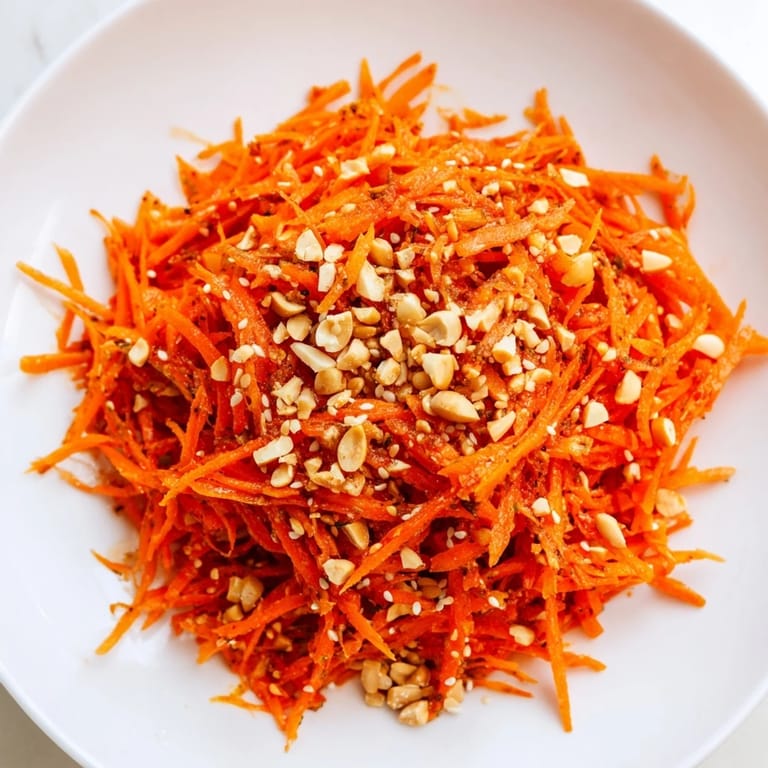
Save I made this salad on a Tuesday night when my fridge felt completely empty, nothing but carrots, a half-empty bottle of sesame oil, and some condiments I'd collected over months. Something about shredding those carrots felt meditative, and when I mixed them with that punchy dressing, it tasted like sunshine and heat all at once. My partner came home, grabbed a fork straight from the counter, and ate half the bowl standing by the sink. That's when I knew this wasn't just a side dish—it was going to be a regular thing.
I brought this to a potluck once and watched people go back for seconds without realizing what they were eating—just grabbing forkfuls between conversations. An older woman asked if I'd made it myself, and when I said yes, she nodded like I'd passed some invisible test. Cooking for other people changes how you think about even the simplest recipes.
Ingredients
- Carrots: Four large ones, peeled and shredded, give you that raw crunch that feels alive on your tongue. Buy the thinnest ones you can find if you're shredding by hand.
- Soy sauce: Use tamari if you need gluten-free, but don't skip it—it's the backbone of the whole thing.
- Toasted sesame oil: The good stuff, not the pale cooking kind, is what makes this taste intentional instead of just tangy.
- Rice vinegar: Lighter and sweeter than regular vinegar, it doesn't overshadow the carrots.
- Honey or maple syrup: Just enough to balance the heat and add body to the dressing.
- Chili garlic sauce or sriracha: Start with one teaspoon—you can always add more heat, but you can't take it back.
- Fresh ginger: Grated right before mixing, not from a jar, makes all the difference in brightness.
- Garlic: One small clove, minced fine, so it doesn't overwhelm.
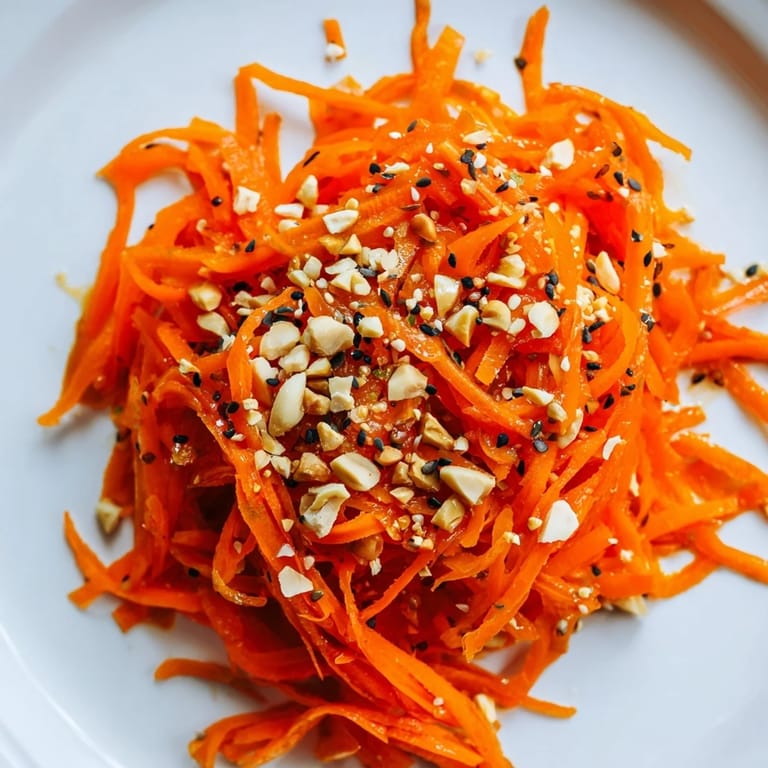
- Sesame seeds: Toasted if you can find them, they add a nuttiness that grounds the whole salad.
- Spring onions: Thinly sliced, they give you little bursts of onion flavor throughout.
- Cilantro: Optional, but it echoes the Asian flavors and feels fresh, almost herbal.
- Peanuts or cashews: Roasted and chopped, they add texture and richness if you want them.
Tired of Takeout? 🥡
Get 10 meals you can make faster than delivery arrives. Seriously.
One email. No spam. Unsubscribe anytime.
Instructions
- Prep your vegetables:
- Shred your carrots and slice your spring onions, getting everything ready in one bowl so you can work quickly. If you're using cilantro, chop it now so it doesn't wilt waiting around.
- Build your dressing:
- Whisk soy sauce, sesame oil, rice vinegar, honey, chili sauce, ginger, and garlic in a small bowl until the honey dissolves and everything looks glossy. Taste it alone if you're brave—it should be spicy, tangy, a little sweet, and make you want more.
- Combine and toss:
- Pour that dressing over your carrots and spring onions, then toss with real energy, making sure every shred gets coated. The salad will soften just slightly as the vegetables release their water and marry with the dressing.
- Taste and adjust:
- This is your moment—if you want it spicier, add more chili sauce; if you want more umami depth, add a splash more soy sauce. Trust your palate here.
- Garnish and serve:
- Sprinkle sesame seeds on top and add peanuts if you're using them, then either eat right away while everything's still crunchy, or chill it for 10 to 15 minutes to let the flavors settle into something even better.
 Save
Save My nephew, who refuses most vegetables, asked for thirds of this at dinner. His mom looked shocked until he mumbled something about the crunch and the spicy part making it taste like an adventure. That's when I realized this salad isn't pretending to be fancy—it's just honest food that happens to be good for you.
Why This Works as a Side Dish
This salad doesn't demand attention or require special plating, which means it fits perfectly next to grilled fish, roasted chicken, or tofu without competing. The acidity and spice actually cleanse your palate between bites of richer food, so you keep wanting more. It's sturdy enough to survive being pulled out of the fridge hours later, but still tastes fresh.
Playing with Heat and Flavor
The beauty of this recipe is that you control exactly how spicy it gets, and you can dial up other flavors too. Some nights I add a teaspoon of lime juice for brightness, other times I swap the rice vinegar for sherry vinegar if that's what I have. The core recipe is flexible enough to bend to whatever mood you're in.
Storage and Make-Ahead Thoughts
This salad actually improves overnight when the flavors have time to settle, though the carrots do soften slightly—some people love that, others prefer to add the dressing just before eating. Keep it in an airtight container and it'll last about 24 hours, making it perfect for meal prep or when you need something ready to go.
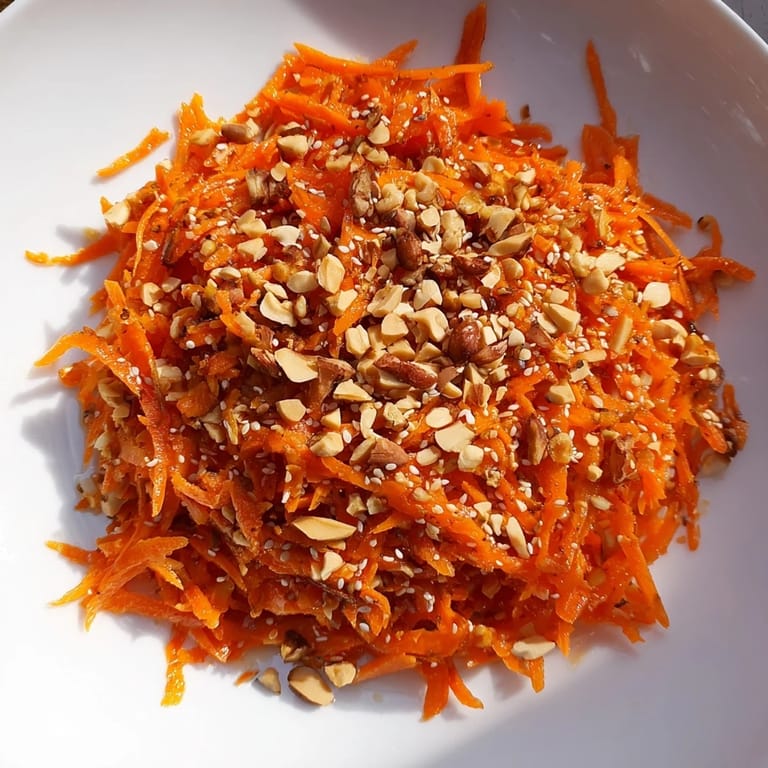
- If you're making this ahead, keep the nuts and extra sesame seeds separate and sprinkle them just before serving so they stay crispy.
- The dressing doubles easily if you're feeding a crowd, and you can make it a day or two in advance.
- If the carrots get too soft, you can always add fresh shredded carrots back in right before eating to restore some crunch.
 Save
Save This is the kind of recipe you make when you're not trying to impress anyone, just feed yourself something that tastes like you actually care. It sticks around in your rotation because it's that easy and that good.
Recipe FAQs
- → What gives the salad its spicy flavor?
The heat comes from chili garlic sauce or sriracha, which can be adjusted to taste for mild to spicy levels.
- → Can I make this salad gluten-free?
Yes, substitute tamari for soy sauce to keep the dish gluten-free without compromising flavor.
- → What nuts are used for garnish?
Roasted peanuts or cashews add a crunchy texture and are sprinkled on top along with extra sesame seeds.
- → How long can the salad be stored?
It keeps well refrigerated for up to 24 hours, but is best enjoyed fresh for optimal crunch and flavor.
- → Can I add other vegetables to the salad?
Absolutely, thinly sliced bell peppers or cucumber can enhance the crunch and freshness.
- → Is this salad suitable for vegan diets?
Yes, all main ingredients are plant-based and dairy-free, making it a vegan-friendly option.