 Save
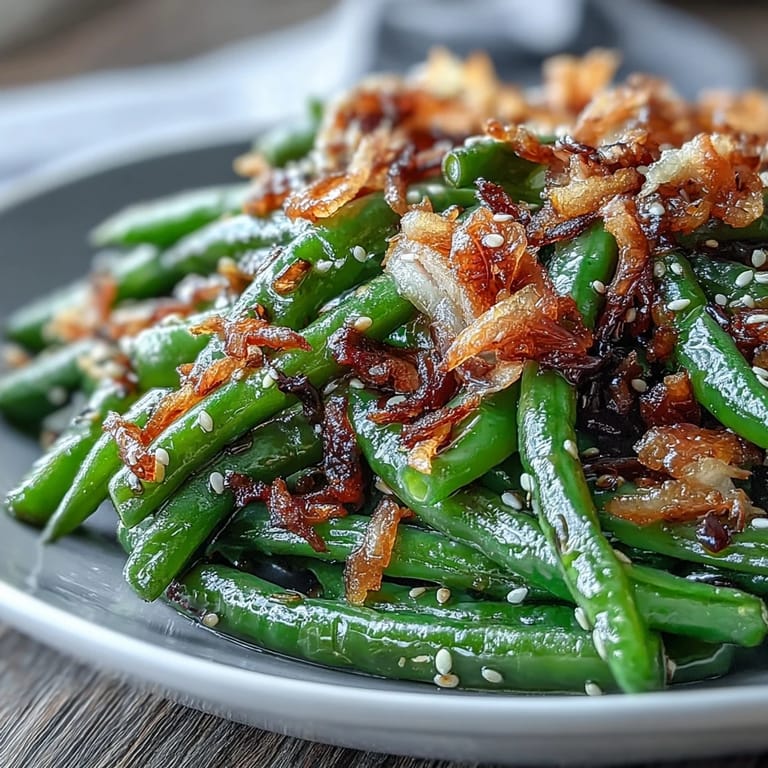
Save My neighbor knocked on my door one evening with a container of these green beans, and I was immediately struck by how the crispy onions caught the light like little golden jewels. She'd made them for a potluck, and they disappeared so fast that people were actually scraping the platter. What surprised me most wasn't just how good they tasted, but how the combination of textures—that tender snap of the bean against the crunch—kept me reaching for more. That night, I asked for her method, and it turned out to be wonderfully simple, the kind of dish that feels elegant but doesn't demand much from you.
I made this for a small dinner party last spring, and there was this lovely moment where everyone went quiet while eating—you know that silence that means the food is actually working. My friend across the table looked up and said the green beans reminded her of something her mom used to make, and suddenly we were all trading stories about side dishes that surprised us. It struck me that something so straightforward could open up a conversation like that.
Ingredients
- Fresh green beans (1 lb, trimmed): Look for ones that snap when you bend them, which signals they're at their peak. Buying them a day or two before cooking gives you flexibility with timing.
- Garlic (2 cloves, finely minced): Don't skip the mincing step—it distributes the flavor evenly and prevents burnt, bitter pieces that can ruin the balance.
- Sesame oil (1 tbsp): This ingredient is the quiet hero; it has a toasty, almost nutty presence that transforms the whole dish. Use a good quality one because a little goes a long way.
- Soy sauce (1 tbsp, low-sodium): Low-sodium lets you control the salt level and taste the other flavors, which is especially important when everything else is so delicate.
- Rice vinegar (1 tsp): This adds brightness without overpowering, a tiny acid note that makes everything taste more of itself.
- Toasted sesame seeds (2 tbsp): Buy these pre-toasted if you can; they're easier and you won't have to worry about burning them in a dry pan.
- Crispy fried onions (1 cup): These go on last, right before serving, so they stay crunchy—this timing detail matters more than you'd think.
- Crushed red pepper flakes (1/4 tsp, optional): If you like heat, sprinkle these on the individual portions rather than adding to the whole pan, so people can choose their spice level.
- Black pepper (to taste): Fresh ground pepper, not pre-ground, makes a real difference in the final taste.
Tired of Takeout? 🥡
Get 10 meals you can make faster than delivery arrives. Seriously.
One email. No spam. Unsubscribe anytime.
Instructions
- Blanch the green beans until they're bright and snappy:
- Boil salted water in a large pot—it should taste like seawater, which seasons the beans from the inside out. Add the beans and watch them turn from dull to vivid green, usually in about 2 to 3 minutes, then immediately shock them in ice water to lock in that color and stop the cooking. This step is what keeps them tender but not mushy.
- Wake up the sesame oil with garlic:
- Heat your sesame oil in a large skillet over medium heat and add the minced garlic, listening for a gentle sizzle. You'll smell it shift from sharp to sweet and toasty in about 30 seconds—that's your cue to move forward before it turns bitter.
- Introduce the beans and let them warm through:
- Add the drained beans to the skillet and stir-fry for 3 to 4 minutes, letting them pick up some light blistering on the edges, which adds a subtle char. This isn't aggressive cooking; it's more about bringing everything together and letting the sesame oil coat each bean.
- Season with soy sauce and rice vinegar:
- Drizzle in both the soy sauce and rice vinegar, then toss everything gently so every bean gets coated. Cook for just one more minute—you want everything warm and flavored, not cooked down.
- Finish with seeds and heat if you want it:
- Remove from heat and sprinkle the sesame seeds all over, then add red pepper flakes and black pepper to your taste. This is where you can adjust the seasoning; don't be shy.
- Top with crispy onions right before serving:
- Transfer the beans to your serving platter and crown them with crispy fried onions at the very last moment. If you add them too early, they absorb moisture and lose that satisfying crunch that makes this dish special.
 Save
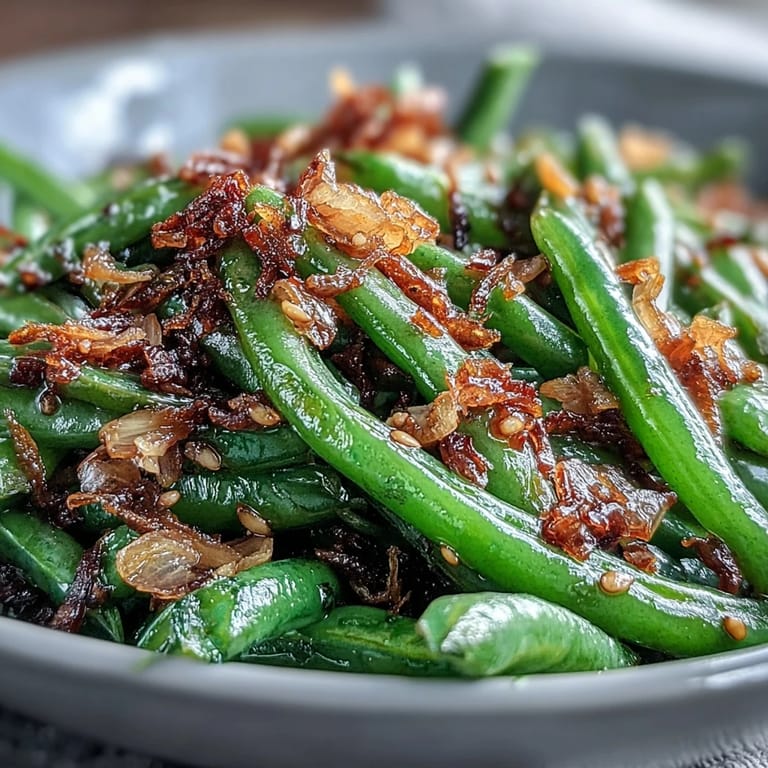
Save There was an afternoon when my daughter helped me make this, and she got so focused on arranging the crispy onions on top that she made them into a little pattern. It wasn't necessary—it was silly, even—but it made the dish feel like something she'd created, not just something she was eating. Those little moments when cooking becomes play rather than task are what stick with me.
Why Sesame Makes All the Difference
Sesame oil is one of those ingredients that feels almost mystical when you understand what it does. It carries a warmth and depth that regular vegetable oil can't touch, wrapping around the green beans and making them taste more themselves rather than less. I learned this the hard way by once substituting it with regular oil, thinking it wouldn't matter, and the dish was flat and forgettable. Now I understand that sesame oil isn't just a fat—it's a flavor investment that changes everything about the final dish.
The Texture Trick That Makes People Ask for the Recipe
The real magic here is the contrast between the silky, yielding beans and those crispy onions that shatter between your teeth. This isn't accidental; it's about timing and intention. If you add the onions too early, they soften and become part of the mushy mass, which defeats the whole purpose. Waiting until the last possible moment is what transforms this from a simple side dish into something people remember and want to recreate.
Adapting This for Different Moods and Meals
This dish is wonderfully flexible once you understand its bones. You can make it more robust by adding a teaspoon of oyster sauce or a small pinch of grated ginger to the garlic stage, which deepens everything without overwhelming it. For a lighter version, use less sesame oil and skip the fried onions in favor of just toasted sesame seeds. The basic technique stays the same, but the flavors can shift based on what you're serving alongside and who you're cooking for.
- If you're serving this with fish or light proteins, keep the seasoning subtle and let the sesame take center stage.
- For heartier meals with grilled meats or rice, you can afford to be bolder with the red pepper flakes and add extra garlic if you like.
- Make sure to taste as you go, since soy sauces vary in saltiness, and you want to adjust before everything comes together.
 Save
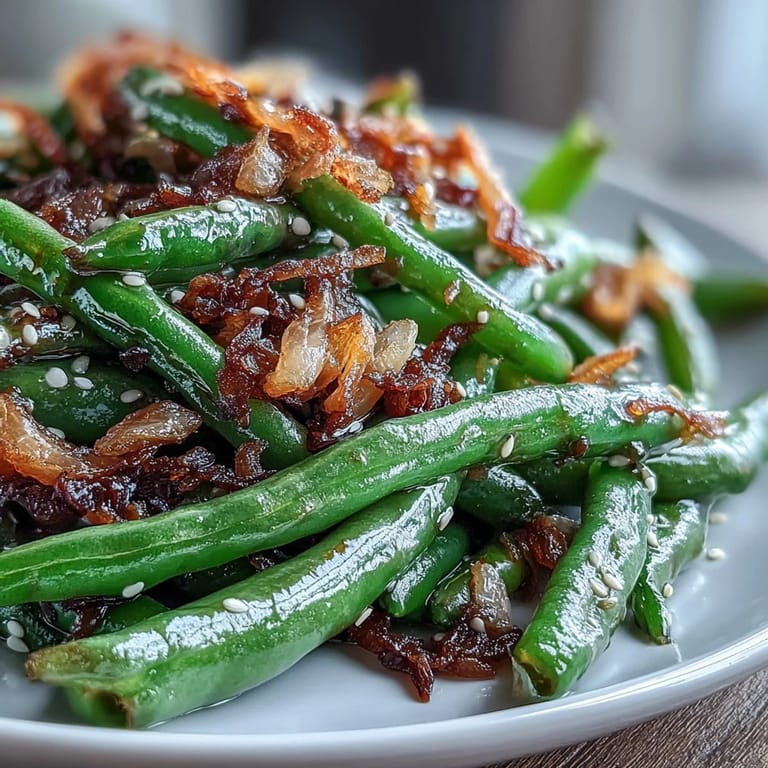
Save This dish has become my go-to when I want to cook something that feels thoughtful without demanding much from me, and I love how it brings people together. There's something about food this simple and honest that just works, every single time.
Recipe FAQs
- → How do I keep green beans crisp when cooking?
Blanch green beans in boiling salted water for 2-3 minutes, then plunge into ice water immediately to stop cooking and maintain their vibrant color and crunch.
- → Can I make the dish spicier?
Yes, adding crushed red pepper flakes during the finishing step brings a gentle heat that complements the sesame and garlic flavors.
- → What can I use instead of soy sauce?
Tamari or coconut aminos are good gluten-free alternatives that maintain the umami depth in the dish.
- → How do I make crispy fried onions at home?
Thinly slice onions, dust with flour, and fry in hot oil until golden brown and crisp. Drain on paper towels before using.
- → Can this dish be prepared ahead of time?
The green beans can be blanched and cooled ahead, but sauté and topping with crispy onions are best done just before serving to keep the texture fresh.