 Save
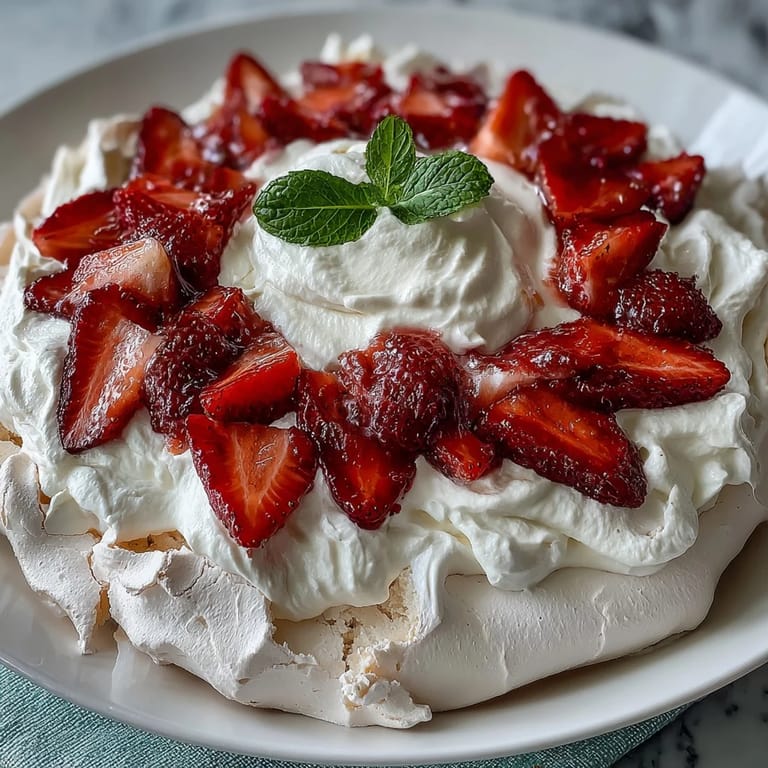
Save My cousin insisted on bringing dessert to the family gathering, then showed up with a pavlova that somehow managed to be both impossibly fragile and absolutely show-stopping. Watching everyone carefully cut into that crispy shell, discovering the chewy center, then biting through clouds of whipped cream and bright strawberries—that moment convinced me this wasn't just a recipe to follow, it was a small edible miracle worth mastering. The elegance feels fancy, but the technique isn't nearly as temperamental as its reputation suggests.
I made this for a dinner party on a humid summer evening when I probably should have been nervous about the weather affecting the meringue. Instead, I found myself oddly calm in the kitchen, letting the oven do its quiet work while I prepped berries and cream. By the time everyone arrived and I unveiled this dessert, the compliments felt less about the cooking and more about having created something that made people genuinely happy, and that shifted how I thought about why I cook.
Ingredients
- Egg whites (4 large, room temperature): Room temperature whites whip faster and create more stable peaks—pull them out of the fridge about an hour before you start, or place the bowl briefly over warm water if you're short on time.
- Superfine sugar (1 cup/200 g): Regular sugar works but dissolves slower, potentially leaving graininess in your meringue; this type dissolves seamlessly into those glossy peaks.
- Cornstarch (1 tsp): This creates a crispy exterior while keeping the center wonderfully chewy—don't skip it even though it seems small.
- White vinegar (1 tsp): Stabilizes the meringue and prevents it from weeping; sounds odd but makes a real difference in structure.
- Vanilla extract (1 tsp for meringue, 1 tsp for cream): Adds warmth without competing with the fruit's natural brightness.
- Heavy cream (1 cup/240 ml, chilled): Coldness is everything here—a warm bowl or warm cream won't whip properly, so chill everything beforehand.
- Powdered sugar (2 tbsp): Dissolves instantly into cream, unlike granulated sugar which can give a grainy texture.
- Fresh strawberries (2 cups/300 g, hulled and sliced): Choose berries that are ripe but still firm; soft ones release too much liquid and make the meringue soggy.
- Granulated sugar for macerating (1 tbsp, optional): Draws out the strawberries' juices to intensify their flavor, creating a light syrup that pools beautifully on the plate.
- Fresh mint (optional): A small garnish that adds visual appeal and a subtle freshness that complements the cream and fruit.
Tired of Takeout? 🥡
Get 10 meals you can make faster than delivery arrives. Seriously.
One email. No spam. Unsubscribe anytime.
Instructions
- Set your stage:
- Preheat the oven to 275°F (135°C) and line a baking sheet with parchment paper, then draw a 9-inch circle as your guide—this becomes your roadmap for shaping. Having everything ready before you start means you're not scrambling while egg whites wait.
- Whip those whites until they're glossy:
- In a bowl so clean it practically squeaks, beat the egg whites on medium speed until soft peaks form (they should look like clouds you could poke your finger through). Gradually add superfine sugar, 1 tablespoon at a time, switching to high speed—this slow addition is the secret to those stiff, glossy, almost-meringue-colored peaks that take about 7-10 minutes total.
- Fold in the magic dust:
- Gently fold the cornstarch, vinegar, and vanilla extract into the whipped whites using a spatula, being careful not to deflate all that air you just captured. You want streaks to just barely disappear; over-folding loses volume and creates a denser meringue.
- Shape your canvas:
- Spoon the meringue onto the parchment, using your drawn circle as a guide, then gently push it into a disc shape with slightly raised edges all around—this creates that nest-like form that cradles the cream and berries. The base should be about half an inch thick, with those edges rising maybe an inch higher.
- Let the oven do the work:
- Bake for 1 hour 15 minutes until pale golden and crispy-looking, then turn off the oven and crack the door open about 2 inches. Let it cool completely inside the slowly cooling oven—this gradual temperature change prevents cracking and keeps that chewy center intact.
- Whip your cream while waiting:
- In a chilled bowl, whip the heavy cream with powdered sugar and vanilla until soft peaks form—stop as soon as peaks form or you'll drift into grainy butter territory. This should happen within 2-3 minutes of vigorous whisking.
- Macerate those berries:
- Toss your sliced strawberries with granulated sugar if using and let them sit for about 10 minutes, which coaxes out their juices and intensifies the flavor. You'll see a light syrup pooling in the bowl—that's exactly what you want.
- Bring it all together:
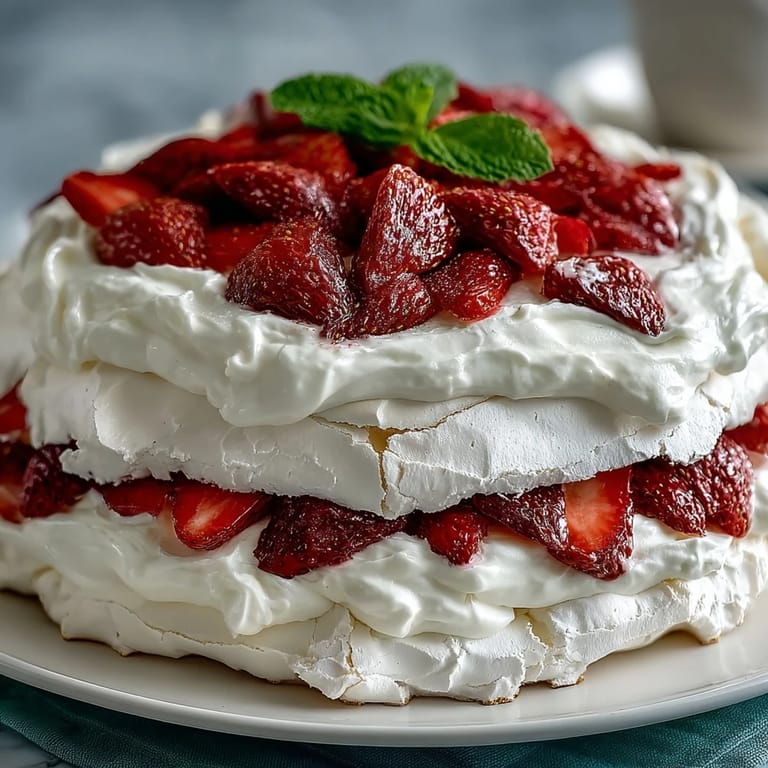
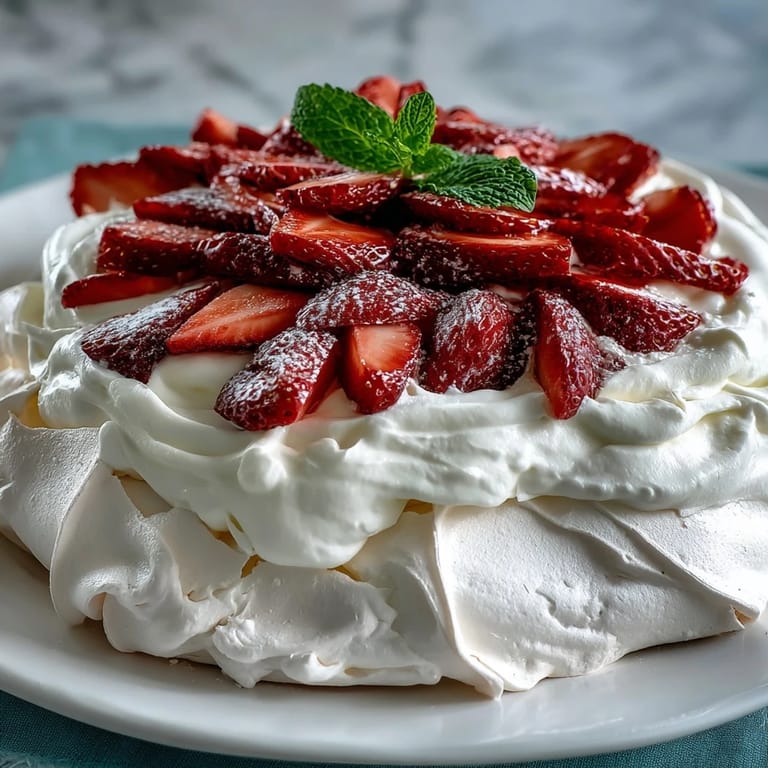
- Once the meringue has cooled completely, carefully transfer it to your serving plate (it's sturdy, so don't be afraid, but handle it gently just in case). Spread the whipped cream evenly over the center, leaving a slight border of meringue showing around the edges.
- Crown your creation:
- Top with the strawberries and their juices, then scatter mint leaves across if you're using them. Serve immediately while the meringue is still crispy and the cream is still cold.
 Save
Save There's something almost meditative about watching an egg white transform from clear and runny into glossy clouds under the mixer's steady rhythm. The first time I made pavlova, I kept checking the oven compulsively, worried it would crack or collapse, only to discover that the anticipation itself was part of the experience—this dish teaches patience in a way that feels pleasurable rather than stressful.
The Science Behind the Swirl
Meringue isn't magic, though it feels like it sometimes—it's egg whites becoming foam when tiny air bubbles get trapped inside a protective protein network. The cornstarch and vinegar work together to stabilize this foam, preventing the weeping (that clear liquid that sometimes pools on meringues) that happens when proteins start breaking down. Understanding this made me less afraid of the process, because I realized I wasn't fighting against science, I was working with it.
Berry Selection Secrets
Not all strawberries are created equal for this dessert—the firm, bright red ones from the farmers market work better than the softer berries that have traveled in a clamshell for a week. Overripe berries release too much juice and make the meringue soggy before you even serve it, which is why choosing fruit that's ripe but still has some structure matters. You can absolutely use raspberries, blueberries, or a mix, though each releases liquid at slightly different rates.
- Slice strawberries just before serving to prevent excessive juice release, or slice them 10 minutes ahead if you're macerating with sugar.
- If your berries taste underwhelming, the granulated sugar for macerating isn't optional—it amplifies their natural flavor intensity.
- Keep the whipped cream and meringue separate until the last possible moment so moisture doesn't have time to soften that crispy shell.
 Save
Save This dessert somehow manages to feel both light and indulgent, like you've created something restaurant-worthy in your own kitchen. Every time I make it, I'm reminded that the most impressive dishes are often the ones that rely on technique and patience rather than complicated ingredients.
Recipe FAQs
- → How do you achieve the perfect meringue texture?
Whip egg whites until soft peaks form, then gradually add superfine sugar while beating at high speed until stiff, glossy peaks develop. Gently folding in cornstarch and vinegar helps stabilize the meringue.
- → Why cool the pavlova in the oven with the door ajar?
Cooling slowly inside the oven prevents cracks and helps maintain a chewy, crisp texture by allowing gradual temperature change.
- → Can the strawberries be prepared in advance?
Yes, tossing sliced strawberries with sugar and letting them macerate for 10 minutes enhances their natural sweetness and juiciness.
- → What cream is best for whipping?
Use chilled heavy cream with powdered sugar and vanilla extract, whipped to soft peaks for the smoothest texture and flavor balance.
- → How should leftovers be stored?
Store in the refrigerator, but note the meringue will soften over time, so it’s best enjoyed fresh.