 Save
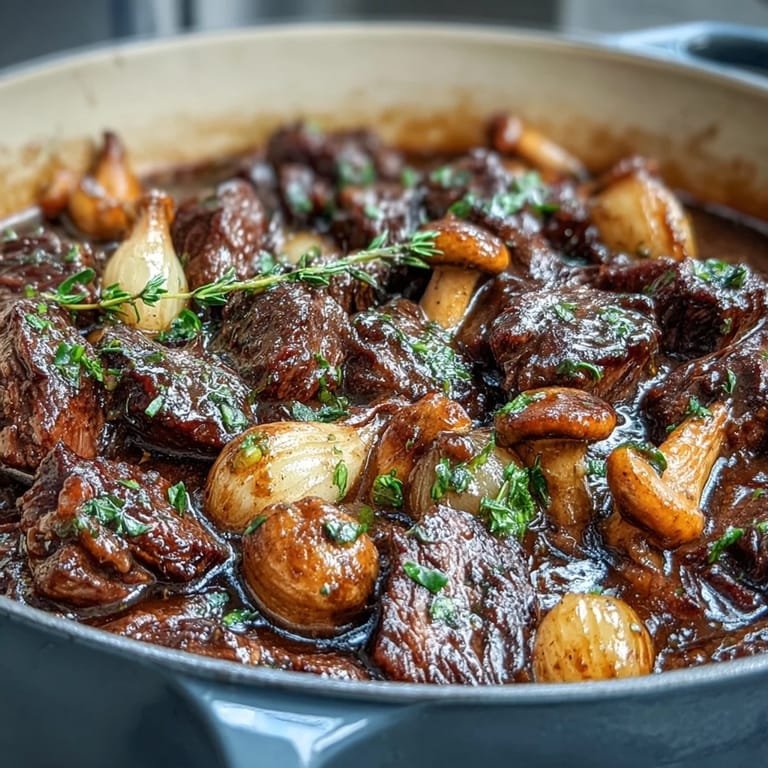
Save There's something about the smell of beef browning in a hot pot that makes you understand why the French spent centuries perfecting this dish. I stumbled into beef bourguignon during a particularly cold November when a friend handed me her grandmother's dog-eared cookbook and said, "Try this when you want to feel less alone in your kitchen." The first time I made it, I burned the garlic, forgot to scrape the pan properly, and somehow ended up with a sauce that tasted more like sadness than wine. But then I added those wild mushrooms halfway through, and something shifted—the whole pot suddenly smelled like a forest after rain, and I understood the appeal.
I made this for my sister's birthday dinner last year, right after she'd gone through a rough breakup, and she spent the entire meal just quietly eating with her eyes closed. When she finally looked up, she didn't say much, just asked for seconds and then helped me clean the kitchen without being asked. Food doesn't always fix things, but sometimes it gives you permission to sit with someone without needing to say anything at all.
Ingredients
- Beef chuck (1.5 kg, cut into 2-inch cubes): Chuck has enough marbling to stay tender through a long braise without turning to mush, and the fat dissolves into the sauce creating that glossy, luxurious texture that makes everything taste intentional.
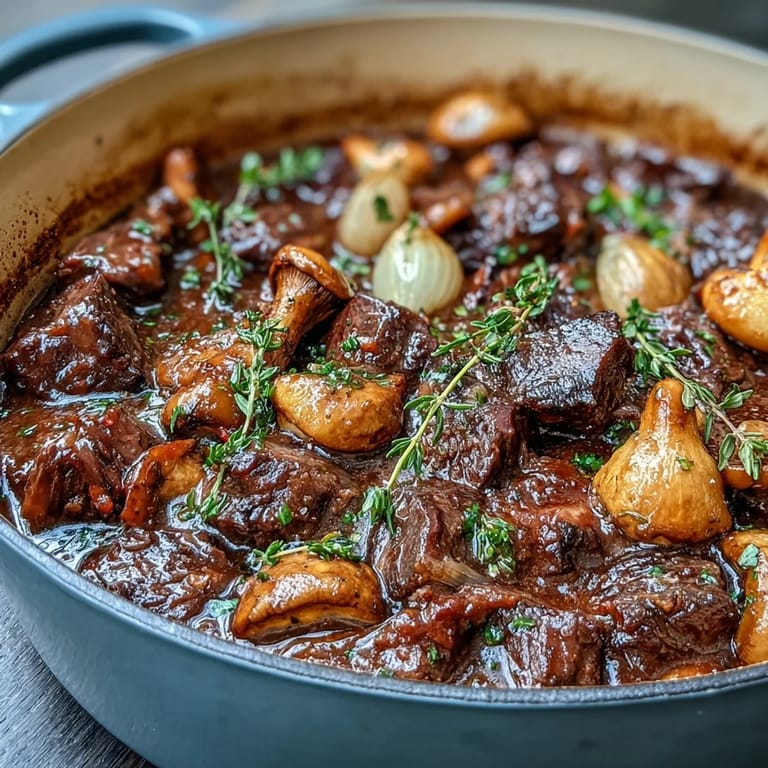
- Wild mushrooms (250 g, cleaned and sliced): Chanterelles, porcini, or cremini each bring their own earthy personality—porcini taste like a forest floor in the best way, while chanterelles add a subtle sweetness that rounds out the wine.
- Pearl onions (200 g, peeled): Their sweetness caramelizes beautifully and provides little bursts of tenderness that contrast with the beef.
- Carrots and celery (2 carrots sliced, 2 celery stalks diced): These build the flavor foundation and become soft enough to melt into the sauce by the end.
- Dry red wine (750 ml, Burgundy or Pinot Noir): Don't use anything you wouldn't drink—the wine becomes the soul of this dish, and cheap wine will taste cheap in the pot too.
- Beef stock (500 ml): Quality matters here, so if you can make your own, your future self will thank you.
- Tomato paste (2 tbsp): Just a small amount adds umami depth without making the sauce taste tomato-forward.
- Olive oil and butter (3 tbsp oil, 2 tbsp butter): The oil gets hot enough for proper searing, while the butter adds richness when you cook the mushrooms and onions.
- Fresh thyme and bay leaves: These gentle herbs perfume everything without shouting over the wine and beef.
- All-purpose flour or gluten-free (2 tbsp): A light dusting helps thicken the sauce naturally as the beef braises.
- Smoked bacon or pancetta (100 g, optional): If you use it, the smokiness weaves through the entire pot like a secret.
Tired of Takeout? 🥡
Get 10 meals you can make faster than delivery arrives. Seriously.
One email. No spam. Unsubscribe anytime.
Instructions
- Heat your oven and prepare the beef:
- Set your oven to 160°C (325°F)—this low, steady heat is what makes the magic happen. Pat your beef cubes completely dry with paper towels and season generously with salt and pepper, which helps them brown properly rather than steam.
- Brown the beef in batches:
- Get your Dutch oven smoking hot with 1 tbsp olive oil, then add the beef in a single layer without crowding—you want a proper sear, not a steam situation. Work in batches so you're not frantically flipping things around, and listen for that satisfying sizzle that tells you the crust is forming.
- Optional: crisp the bacon:
- If using bacon, add it to the empty pot and cook until the edges curl and the fat renders out, then set it aside with the beef. This step adds a whisper of smoke that lingers throughout the braising.
- Build the flavor base:
- Add another tbsp of oil and sauté your chopped onion, carrots, and celery for 5 minutes until they soften and release their sweetness. Stir in the minced garlic and cook for just 1 minute more—you want fragrant, not burned.
- Dust and cook the flour:
- Sprinkle the flour over everything and stir gently for about 2 minutes, which helps thicken the sauce later and adds a subtle toasted flavor. This is called making a roux, though you're not being too fussy about it.
- Deglaze with wine:
- Stir in the tomato paste first so it can caramelize slightly, then pour in your red wine while scraping the bottom of the pot with a wooden spoon. All those crusty brown bits are pure flavor, and they belong in your sauce.
- Return the beef and add braising liquid:
- Add the beef stock, thyme sprigs, and bay leaves, then nestle the beef (and bacon, if you used it) back into the pot. Bring everything to a gentle simmer, which you'll see as small bubbles breaking the surface rather than a rolling boil.
- Braise low and slow:
- Cover the pot with its lid and transfer it to the oven for 2 hours, where the gentle heat will slowly break down the connective tissue in the beef until it's fall-apart tender. You don't need to do anything now—this is the patient part of cooking.
- While the beef rests, prepare the mushrooms:
- Heat the butter and remaining oil in a large skillet over medium-high heat and sauté your wild mushrooms, stirring occasionally, until they're golden and any liquid they release has evaporated—this should take about 8 minutes. Set them aside.
- Cook the pearl onions:
- In the same skillet, add the pearl onions and let them cook undisturbed for a few minutes until the bottoms caramelize, then stir and continue for about 8 minutes total until they're lightly golden and tender.
- Finish braising:
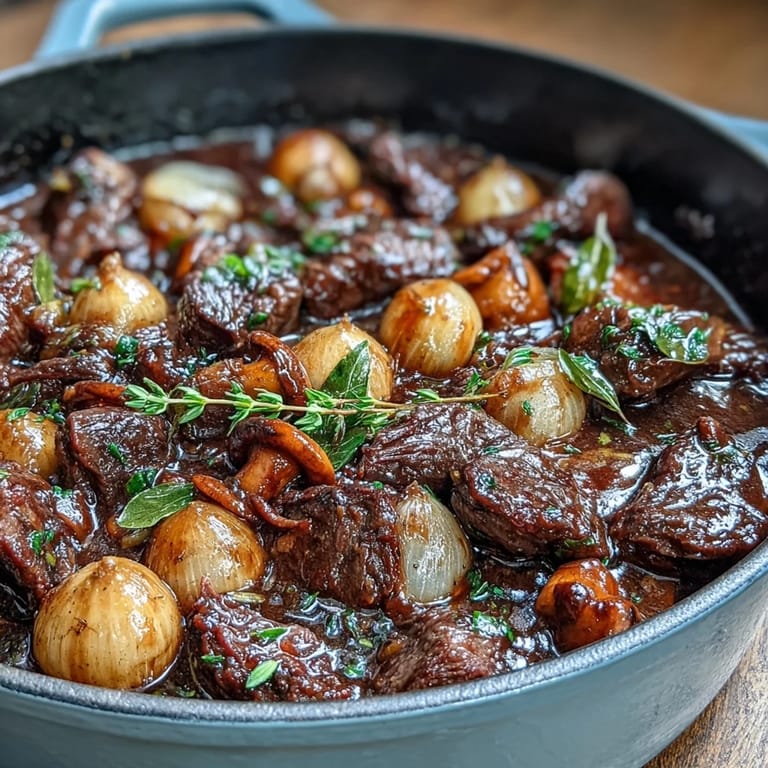
- After 2 hours, remove the Dutch oven from the oven and stir in the sautéed mushrooms and pearl onions. Return it to the oven uncovered for 30 more minutes, during which the sauce will reduce and thicken into something glossy and luxurious.
- Season and serve:
- Remove the bay leaves and thyme sprigs, taste the sauce, and adjust the salt and pepper until it tastes exactly right to you. Serve hot in shallow bowls, garnished with fresh parsley.
 Save
Save My neighbor once tasted this and said it reminded her of traveling through Provence as a young woman, though she'd never been there. That's when I realized the real power of this dish isn't just that it tastes good—it somehow opens a door in people's minds to places they've been or dreamed of going.
Why Slow Cooking Wins
The low oven temperature is doing something beautiful that you can't replicate on the stovetop: it's surrounding the pot with gentle, even heat that slowly coaxes tenderness from the beef without the harsh bubbling that a high heat would create. I learned this the hard way by trying to speed things up on the stove and ending up with tough, stringy meat that tasted like regret. The oven's patience is not a bug—it's the whole point.
Choosing Your Mushrooms Wisely
Wild mushrooms transform this dish from classic to memorable, but they're also the part where you can customize based on what's available and what you love. Porcini are earthy and almost meaty, chanterelles bring a delicate fruity note, and cremini add a gentle umami depth without the premium price tag. I once made this with a mix of whatever looked good at the farmers market, and it turned out better than when I stuck to a single variety.
Serving and Storage Secrets
This dish actually improves overnight as the flavors deepen and meld together, so there's no shame in making it a day ahead and simply reheating it gently before serving. Creamy mashed potatoes, buttered noodles, or crusty French bread all make perfect companions, though honestly it's rich enough to stand alone if you're in the mood.
- Refrigerate leftovers in an airtight container for up to 4 days, and the flavors will only get better with time.
- You can also freeze this for up to 3 months, making it perfect for stressful weeks when you need something elegant but don't want to cook.
- If wild mushrooms aren't available, button or cremini mushrooms work just fine and will still make your kitchen smell incredible.
 Save
Save This is the kind of dish that proves cooking doesn't have to be complicated to be extraordinary. Make it for someone you care about, or make it for yourself on a night when you deserve to feel taken care of.
Recipe FAQs
- → What cut of beef is best for slow braising?
Beef chuck is ideal, as its marbling and connective tissues break down into tender, flavorful meat during long cooking.
- → Can I substitute wild mushrooms if unavailable?
Yes, button mushrooms or cremini can be used though wild varieties add a richer, earthier flavor.
- → How do I enhance the flavor of the braising liquid?
Using dry red wine like Burgundy or Pinot Noir, combined with beef stock, tomato paste, and herbs, builds depth and complexity.
- → Why are the mushrooms and pearl onions sautéed separately?
Sautéing mushrooms and pearl onions intensifies their flavors and texture before adding them back to the braise for a layered taste.
- → How can I make this gluten-free?
Replace all-purpose flour with a gluten-free flour alternative when thickening the sauce.
- → What sides pair well with this dish?
Creamy mashed potatoes, buttered noodles, or crusty bread complement the rich flavors and sauce beautifully.