 Save
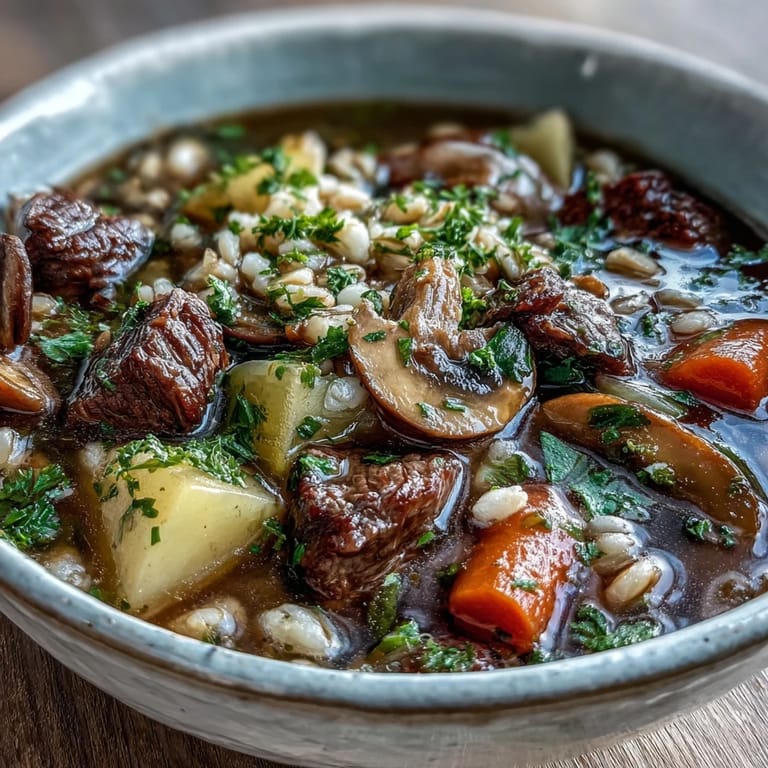
Save The first time I made this Vegetable Beef, Barley, and Mushroom Soup was during a fierce autumn rainstorm that rattled my kitchen windows. My husband had trudged in soaked and chilled to the bone from working outdoors. I remember the steam rising from the pot as I lifted the lid, releasing an aroma so rich and comforting that his face immediately brightened. The kitchen filled with earthy mushroom notes mixed with the savory essence of slow-simmered beef, creating exactly what the moment called for.
Last winter, I brought a thermos of this soup to my daughters outdoor soccer tournament. By halftime, parents from both teams were huddled around me as I poured small cups of the steaming broth. The way their cold-reddened faces softened with that first spoonful cemented this recipe as my go-to crowd pleaser. Even the famously picky goalkeeper asked for the recipe, which felt like winning a culinary trophy.
Ingredients
- Beef stew meat: Look for meat with good marbling as those little streaks of fat break down during cooking, infusing the broth with richness that cant be replicated.
- Pearl barley: Its nutty flavor and tender chew create the backbone of this soup, and I discovered giving it a quick toast in the pot before adding liquid deepens its flavor remarkably.
- Cremini mushrooms: These brown beauties pack more umami than their white counterparts, and I noticed they hold their texture better through the long simmer.
- Beef broth: After years of making this soup, I now use half store-bought beef broth and half water with a spoonful of better-than-bouillon for a cleaner but still rich flavor.
- Bay leaf: It might seem like a small addition, but the one time I forgot it, my husband immediately noticed something was missing from the familiar flavor profile.
Tired of Takeout? 🥡
Get 10 meals you can make faster than delivery arrives. Seriously.
One email. No spam. Unsubscribe anytime.
Instructions
- Brown the beef properly:
- Heat olive oil in your Dutch oven until it shimmers, then add beef in a single layer without crowding the pan. Let it develop a deep brown crust before stirring, about 2-3 minutes per side.
- Build the flavor base:
- Once the beef is set aside, those browned bits stuck to the bottom are pure gold. Add your onions, carrots, and celery, letting them pick up all that caramelized flavor as they soften.
- Mushroom magic:
- When adding the mushrooms, resist the urge to stir them constantly. Let them sit undisturbed for a minute or two to develop some color and release their moisture.
- Time for everything else:
- Return the beef to the pot along with potatoes, tomatoes, barley, broth, and herbs. The kitchen will start filling with an aroma that pulls everyone in from other rooms.
- The long, patient simmer:
- This is where the transformation happens as the barley plumps and the beef becomes fork-tender. I like to half-cover the pot, letting just a bit of steam escape to concentrate the flavors.
- Final adjustments:
- Taste before serving and be generous with the black pepper. Sometimes I add a splash of Worcestershire sauce at this point if the flavor needs a little boost.
 Save
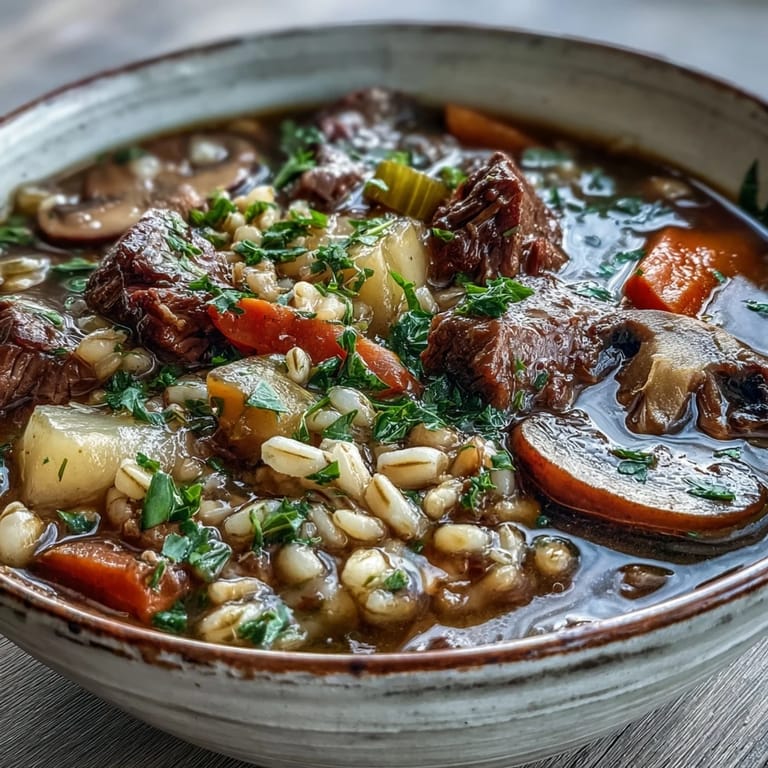
Save The year my father was recovering from surgery, I made large batches of this soup and portioned it into containers for his freezer. Months later, he confessed that on particularly difficult days, the ritual of heating this soup and tearing off pieces of crusty bread became a kind of meditation that marked his turning point. Food has always spoken in our family where words sometimes fail, and this hearty soup carried messages of care and healing when they were most needed.
Make It Your Own
As much as I love the classic version of this recipe, Ive learned that it welcomes adaptation beautifully. Sometimes I swap the beef for chunks of browned lamb shoulder, which pairs wonderfully with the earthy mushrooms and barley. During summer months when my garden is overflowing, I might throw in a handful of green beans or zucchini in the last fifteen minutes. The recipe has evolved alongside my confidence in the kitchen, each variation still somehow carrying the essence of that first rainy day comfort.
Storage and Reheating
This soup develops an almost magical transformation in the refrigerator overnight. The barley continues to absorb flavors, the broth thickens to a silky consistency, and what was delicious becomes extraordinary. When reheating, I do it gently on the stovetop rather than the microwave, adding a splash of broth if needed, and sometimes a fresh crack of pepper or pinch of herbs to awaken all those settled flavors. The richness that develops reminds me why grandmothers worldwide insist their soups taste better the next day.
Serving Suggestions
Through countless dinner parties and family gatherings, Ive discovered that this soup creates its own kind of atmosphere around the table. Conversations slow down, spoons clink quietly against bowls, and there's a particular kind of contentment that settles over everyone. The hearty nature of this soup means it needs little accompaniment beyond good bread with salted butter, though a simple green salad with a sharp vinaigrette provides nice contrast.
- A chunk of crusty sourdough bread for dipping is non-negotiable in our house, as its perfect for catching the last bits of broth.
- For unexpected elegance, try floating a small spoonful of creme fraiche on top just before serving, which melts into beautiful creamy swirls.
- If serving for a dinner party, prepare a day ahead and reheat slowly, allowing you to focus on your guests rather than cooking.
 Save
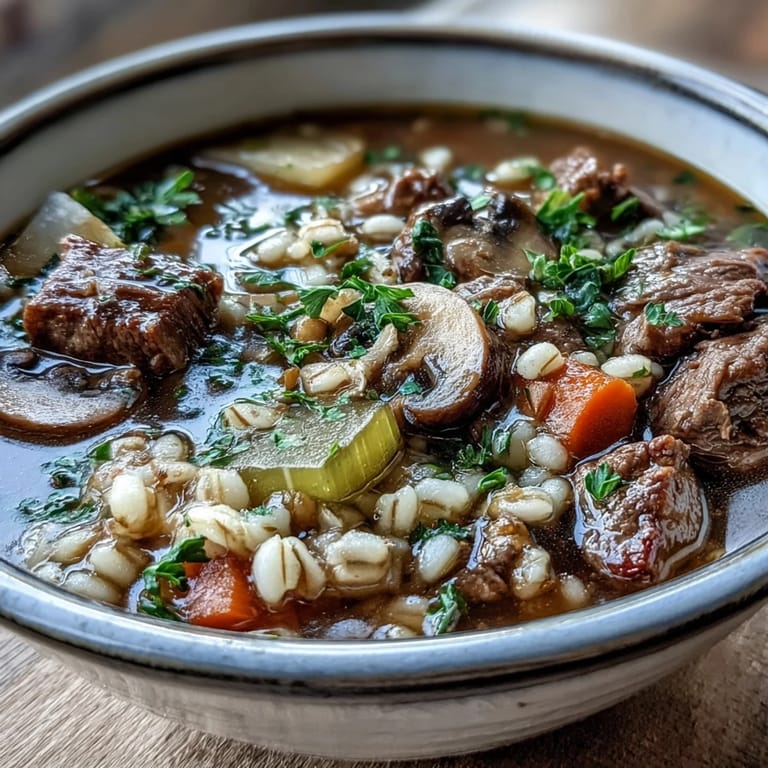
Save This Vegetable Beef, Barley, and Mushroom Soup has seen me through celebrations and hardships, everyday dinners and special occasions. As the seasons change and the first cool breeze hints at fall, my family knows this soup will soon return to our table, bringing with it all the comfort and connection a shared meal can offer.
Recipe FAQs
- → How long does it take to cook pearl barley in soup?
Pearl barley typically takes about 45-60 minutes to become tender in soup. In this recipe, it simmers for 1 hour with the beef, which ensures the barley is fully cooked and has released its starch to naturally thicken the broth.
- → Can I use quick-cooking barley instead of pearl barley?
Yes, you can substitute quick-cooking barley, but add it during the last 15-20 minutes of simmering. Quick barley cooks much faster and may become mushy if cooked for the full hour. Keep in mind that quick barley won't thicken the soup as much as pearl barley.
- → What cut of beef works best for this soup?
Beef chuck or stew meat is ideal because it becomes tender during long simmering. The connective tissue breaks down, adding richness to the broth. Avoid lean cuts like sirloin as they can become tough and dry when cooked for extended periods.
- → Can I make this soup in a slow cooker?
Absolutely. Brown the beef and sauté the vegetables first, then transfer everything to your slow cooker. Cook on low for 7-8 hours or high for 4-5 hours until the beef and barley are tender. Add the barley in whole; it will cook perfectly during the long slow cooking process.
- → How should I store leftovers?
Refrigerate in an airtight container for up to 4 days. The barley will continue to absorb liquid, so you may need to add more broth when reheating. This soup also freezes well for up to 3 months—thaw overnight in the refrigerator before reheating gently on the stovetop.
- → Can I make this gluten-free?
Yes, substitute the pearl barley with rice, quinoa, or gluten-free grains like buckwheat. Adjust cooking time accordingly as these alternatives may cook faster than barley. Ensure your beef broth is certified gluten-free as well.