 Save
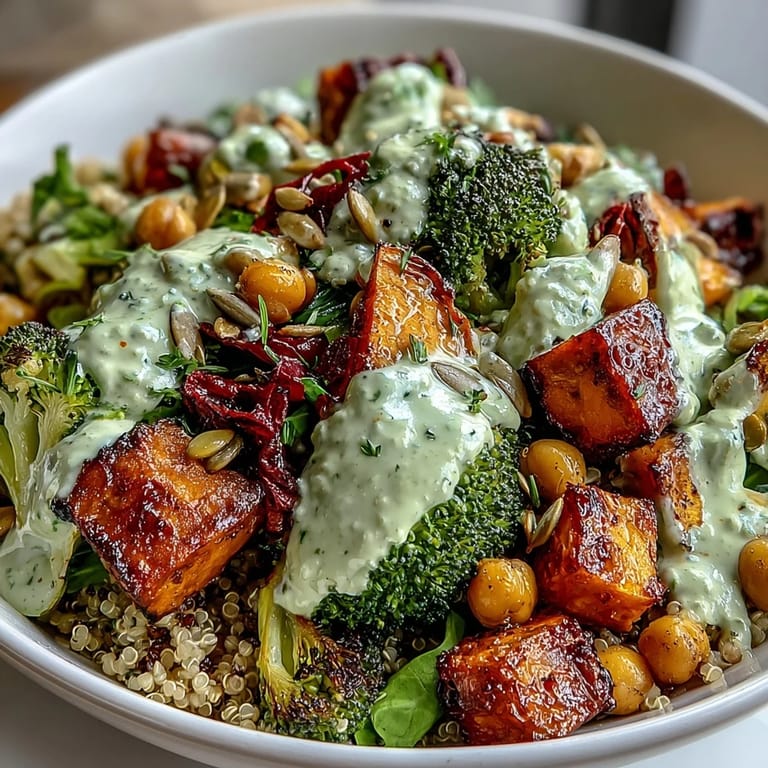
Save There's something about assembling a Buddha bowl that feels less like cooking and more like creating edible art. One Tuesday afternoon, I was standing in my kitchen with a pile of roasted vegetables still warm from the oven, and my roommate wandered in asking what smelled so good. By the time I'd drizzled that vibrant green goddess dressing over everything, they were already pulling up a chair. That's when I realized this bowl wasn't just lunch—it was the kind of meal that makes people pause mid-bite and actually taste what they're eating.
I made this for my sister's first day at her new job, packed in containers with the dressing separate so nothing would get soggy. She texted me a photo of her lunch break with just a bunch of heart emojis, and I knew right then this recipe was a keeper. It's become my go-to when I want to send someone off feeling nourished and cared for, which honestly might be the best reason to cook anything.
Ingredients
- Sweet potato, diced: Adds natural sweetness and substance to the bowl—I've learned to cut them slightly smaller than other veggies so they caramelize faster.
- Broccoli florets: They get impossibly crispy at high heat, almost like little crunchy gems if you don't crowd the pan.
- Red bell pepper, sliced: Keep these a bit thicker than you'd normally cut them, otherwise they shrivel up and disappear.
- Zucchini, sliced: Slice on the bias for a more elegant look and better roasting surface.
- Olive oil: Use a good quality one for roasting—it makes an actual difference in how the vegetables caramelize.
- Smoked paprika and cumin: These two together create that warm, slightly smoky flavor that makes people ask what's in this.
- Quinoa, rinsed: Rinsing removes the bitter coating and prevents mushiness—don't skip this step.
- Chickpeas: They're your protein anchor here, and warming them in a skillet with a pinch of cumin takes them from background player to star ingredient.
- Ripe avocado: Choose one that yields gently to pressure—too hard and your dressing becomes grainy, too soft and it darkens quickly.
- Fresh herbs (parsley, cilantro, basil): Buy them loose if possible and use them the same day for maximum vibrant color and flavor.
- Lemon juice: Fresh squeezed, always—bottled just doesn't have the same brightness.
- Extra-virgin olive oil for dressing: Save your good stuff for this—it's tasted raw and makes all the difference.
- Pumpkin seeds: Toast them yourself if you have time; they stay fresher tasting and you can control the salt.
Tired of Takeout? 🥡
Get 10 meals you can make faster than delivery arrives. Seriously.
One email. No spam. Unsubscribe anytime.
Instructions
- Fire up the oven and prep your vegetables:
- Preheat to 425°F and line a baking sheet with parchment paper. In a large bowl, toss your diced sweet potato, broccoli, bell pepper, and zucchini with olive oil, smoked paprika, cumin, salt, and pepper until everything glistens and smells warm and spiced. You're aiming for a single layer on the baking sheet—crowding means steam instead of caramelization.
- Get those vegetables golden:
- Roast for 25 to 30 minutes, flipping halfway through so every side gets a chance at the heat. You're looking for soft interiors and caramelized, slightly crispy edges—when the broccoli starts to look almost burnt, that's actually perfect.
- Cook the quinoa while vegetables roast:
- Rinse your quinoa under cold water, then combine with 2 cups of water or vegetable broth in a saucepan. Bring to a boil, then reduce heat to low, cover, and let it simmer gently for about 15 minutes until the liquid is absorbed and you see those little spiral tails popping. Fluff with a fork and set aside.
- Blend your green goddess moment:
- In a blender or food processor, combine one ripe avocado, fresh parsley, cilantro, basil, lemon juice, one garlic clove, olive oil, 2 tablespoons of water, salt, and pepper. Blend until it's silky and creamy, adding more water if needed to get the consistency you like—you want it pourable but still thick enough to cling to vegetables.
- Warm your chickpeas:
- Heat your drained chickpeas in a skillet over medium heat for a couple minutes with a pinch of cumin if you're feeling it, just to take the chill off and warm them through.
- Assemble your beautiful bowl:
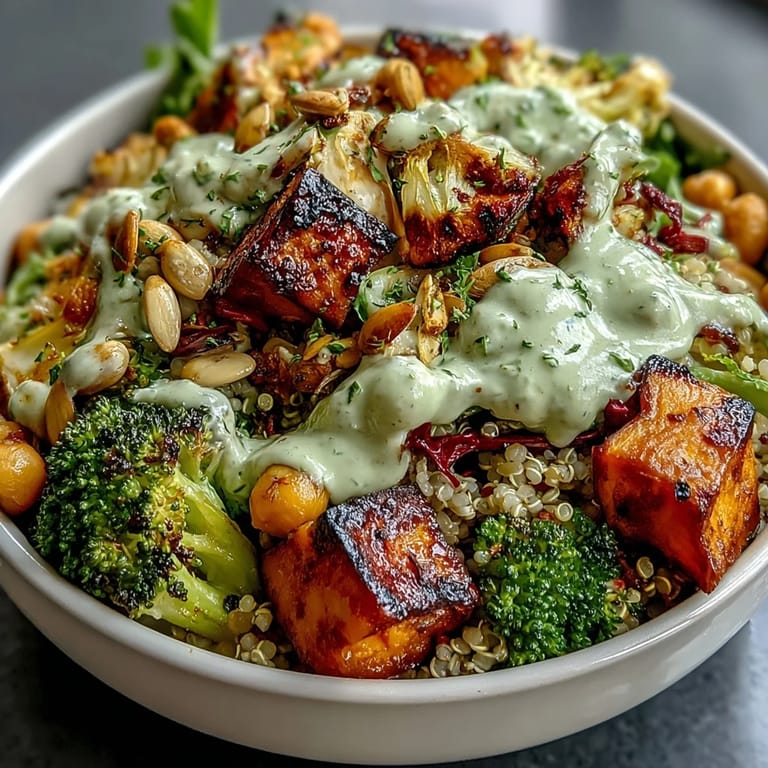
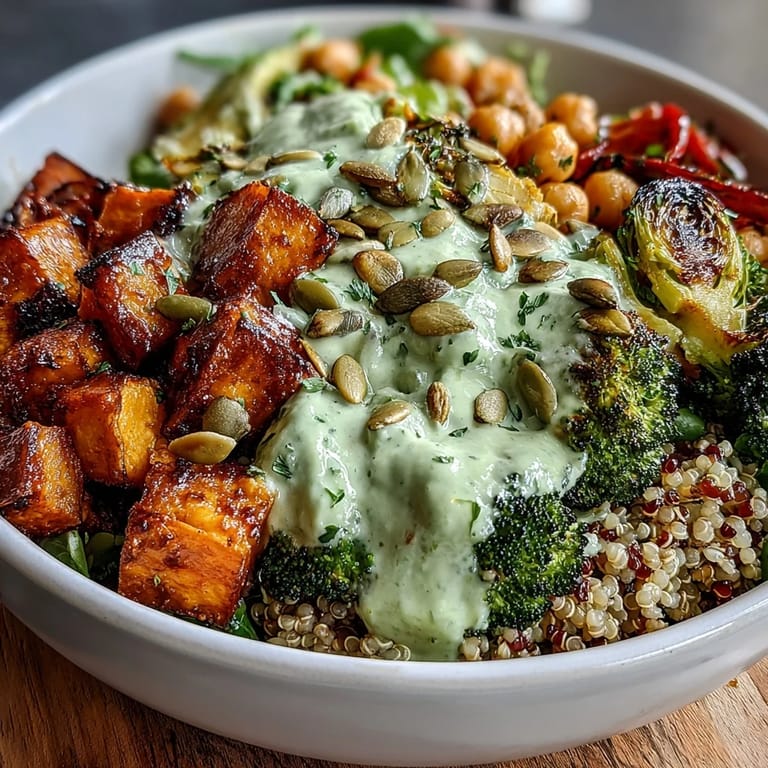
- Divide the fluffy quinoa among four bowls, then arrange roasted vegetables, warm chickpeas, shredded red cabbage, and toasted pumpkin seeds on top. Drizzle generously with that green goddess dressing and serve with lemon wedges for squeezing.
 Save
Save There's a quiet satisfaction in serving something this nourishing and watching people actually eat slowly, savoring each bite instead of rushing through. This bowl taught me that vegan food doesn't have to be complicated or apologetic—it just needs to be delicious and made with care.
The Magic of Roasting Vegetables
High heat and patience are the two secrets I've learned. When you roast vegetables at 425°F instead of lower temperatures, they develop actual caramelization—a slight char that tastes almost sweet and deeply savory at the same time. The key is spreading them out so they're not touching, which creates steam, and flipping them halfway through so they brown on both sides. I used to pile everything on one small baking sheet and wondered why my vegetables came out pale and steamed; now I use two sheets if necessary and the difference is night and day.
Why This Dressing Changes Everything
The Green Goddess Avocado Dressing is honestly what elevates this from a nice salad to something you'll crave. It's herbaceous and bright but also luxuriously creamy from the avocado, so you feel like you're eating something indulgent even though it's pure whole foods. I've started making extra batches to drizzle on grain bowls throughout the week, and it's transformed how I think about dressings—they don't have to be heavy or complicated to be memorable.
Making This Bowl Your Own
One of my favorite things about this recipe is how adaptable it is to whatever's in your produce drawer or what looked good at the farmer's market that morning. Cauliflower, carrots, and Brussels sprouts roast beautifully with the same spice blend, and brown rice or farro work just as well as quinoa if that's what you prefer. If you want extra protein, baked tofu or tempeh crumbles are wonderful additions, and sliced fresh avocado or microgreens on top add another layer of freshness right before eating.
- Swap grains, vegetables, and proteins based on what you have on hand or what's in season.
- Make the dressing in a regular blender rather than a food processor if you want it even smoother and creamier.
- Store leftover dressing separately from the assembled bowl so nothing gets soggy during storage.
 Save
Save This bowl has become one of my favorite things to make when I want to feel good about feeding myself or the people I care about. It's the kind of meal that nourishes both your body and your spirit, which honestly is everything you want from cooking.
Recipe FAQs
- → What vegetables work best for roasting in this bowl?
Sweet potatoes, broccoli, red bell peppers, and zucchini roast evenly and develop rich flavors, but seasonal veggies like cauliflower or carrots also work well.
- → How can I make the avocado dressing creamier?
Add more olive oil or a tablespoon of water while blending until you reach a smooth and creamy consistency.
- → Can I substitute quinoa with other grains?
Yes, brown rice or farro are excellent alternatives that complement the roasted vegetables and dressing nicely.
- → Is warming the chickpeas necessary?
Warming chickpeas is optional but enhances their texture and warmth for better harmony with the bowl's other ingredients.
- → What toppings add extra texture and flavor?
Toasted pumpkin seeds and shredded red cabbage bring crunch and color, while lemon wedges provide a fresh, tangy finish.