 Save
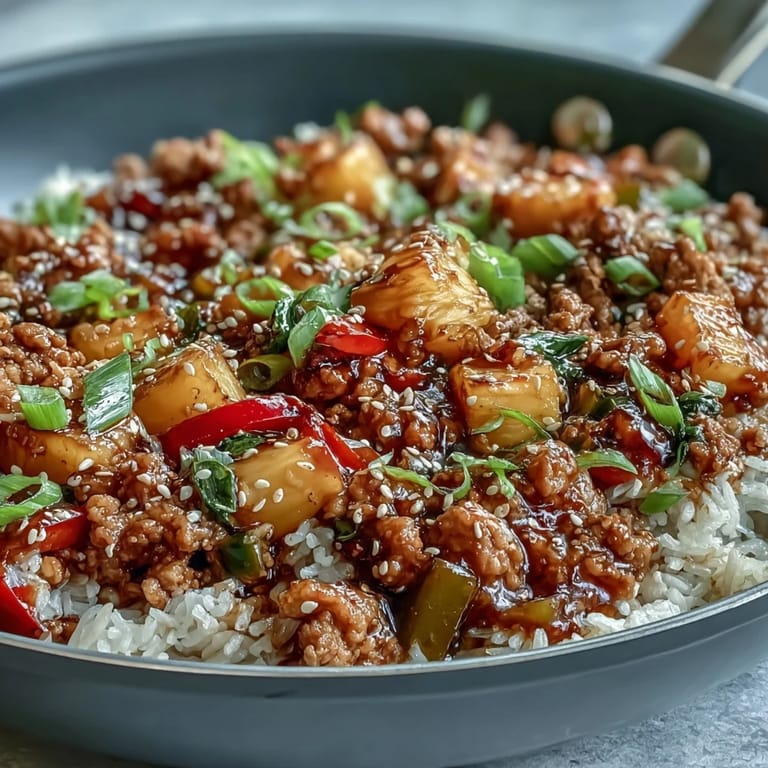
Save There's something about the sizzle of ground turkey hitting hot oil that makes me feel like I'm cooking with intention. One Tuesday night, I was staring into my pantry at a can of pineapple and a bottle of gochujang, wondering if they could possibly work together, and this dish was born from that happy accident. It's become the kind of meal I make when I want something that tastes like it took hours but comes together in less than forty minutes. The sweet-and-sour sauce has this addictive quality—bright, a little spicy, balanced in ways that make you want another bite before you've finished chewing. It's the perfect answer when you're feeding people who want something interesting but you don't have the energy for complexity.
I made this for my friend Marcus on a rainy Friday when he was stressed about work, and watching his face light up when he tasted that first bite of pineapple and chili paste together was genuinely touching. He asked for the recipe immediately, which never happens because he usually just says things taste good. Now it's his go-to dish when he wants to impress someone without announcing that he's trying too hard.
Ingredients
- Ground turkey: One pound keeps this light and wallet-friendly; it cooks quickly and absorbs the sauce beautifully without overpowering the other flavors.
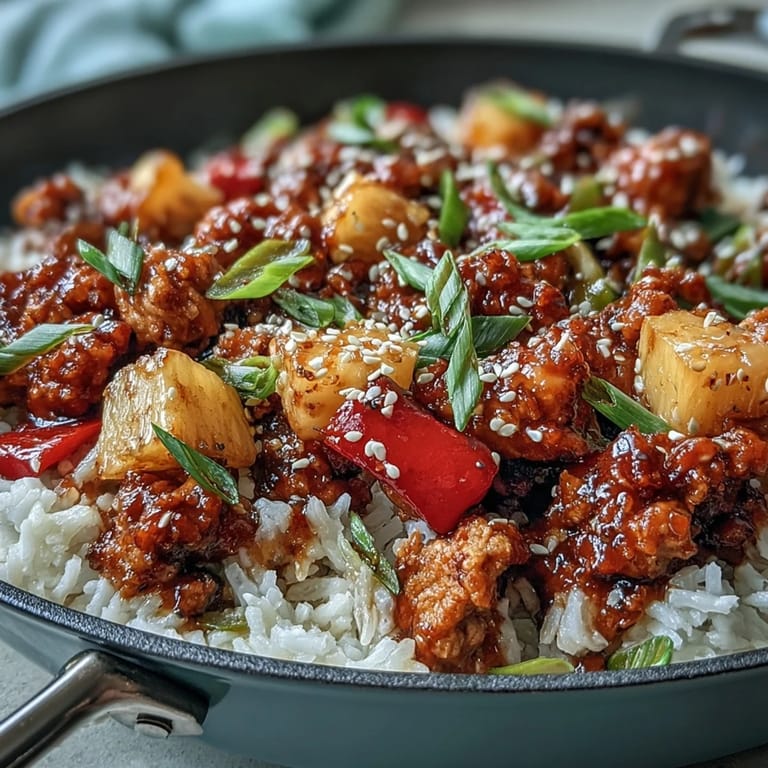
- Red, green, and yellow bell peppers: Use the full rainbow of colors because they cook at different rates and create visual interest that makes people more excited to eat.
- Yellow onion and garlic: These two are your flavor foundation; don't rush the sauté or you'll miss out on that deep, sweet aroma that fills your whole kitchen.
- Fresh or canned pineapple chunks: If using canned, drain them really well or your sauce will be watery and less impactful.
- Day-old cooked white rice: This is the secret—fresh rice will clump up and get mushy, but rice that's been sitting overnight in the fridge stays separate and absorbs the sauce like a dream.
- Soy sauce, rice vinegar, and ketchup: These three create the sweet-and-sour backbone; the ketchup adds umami depth that feels professional and intentional.
- Gochujang: This Korean chili paste is the showstopper; start with one tablespoon and taste as you go because brands vary wildly in heat level.
- Brown sugar and sesame oil: Sugar balances the heat and vinegar, while sesame oil adds a toasted depth that makes people ask what your secret ingredient is.
- Toasted sesame seeds and scallions: These aren't optional garnishes—they're the final layer that transforms a good dish into one worth remembering.
Tired of Takeout? 🥡
Get 10 meals you can make faster than delivery arrives. Seriously.
One email. No spam. Unsubscribe anytime.
Instructions
- Brown the turkey with intention:
- Heat one tablespoon of oil in a large skillet or wok over medium-high heat, then add your ground turkey and break it apart with a wooden spoon as it cooks. You want it cooked through but not gray or compressed into a solid mass—the texture matters because it'll carry the sauce better in a few minutes.
- Build your flavor base:
- Add the remaining oil to the same skillet, then sauté your chopped onion and minced garlic until the kitchen smells incredible and the onion turns translucent. This takes about two minutes and is absolutely worth waiting for.
- Add color and crunch:
- Toss in your diced bell peppers and cook for three to four minutes until they're just tender but still have a slight firmness when you bite them. This is crucial—overcooked peppers become mushy and lose their brightness.
- Bring everything back together:
- Return the cooked turkey to the skillet along with your pineapple chunks, stirring gently so the fruit doesn't break apart. The pineapple should stay in recognizable pieces to give you those bursts of tropical sweetness.
- Make the magic sauce:
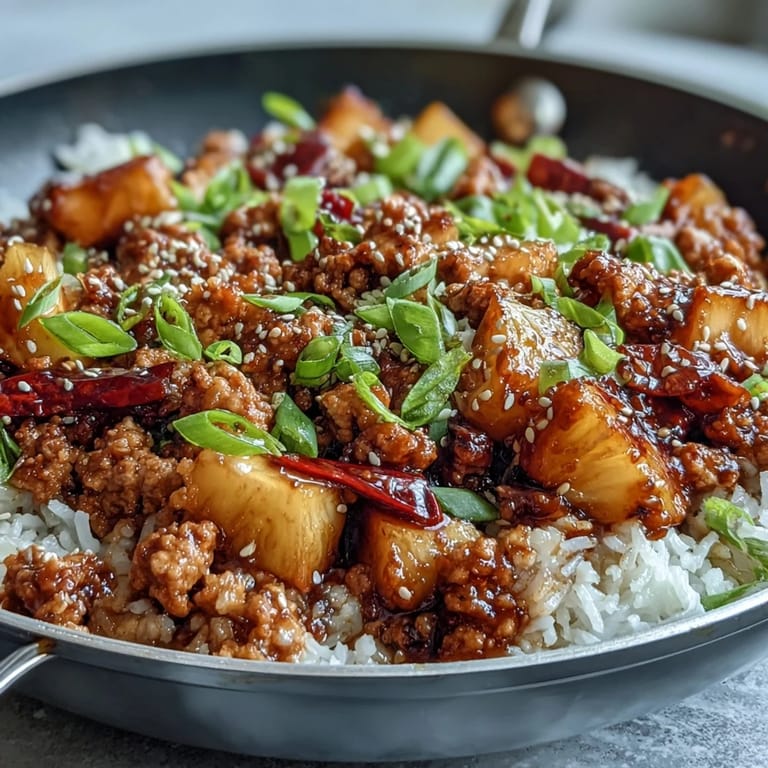
- In a small bowl, whisk together your soy sauce, rice vinegar, ketchup, gochujang, brown sugar, and sesame oil until completely smooth. Pour this into the skillet and toss everything until every piece is coated in that glossy, rust-colored sauce.
- Combine with rice:
- Add your day-old cooked rice, breaking up any clumps with the back of your spoon, and stir-fry for three to four minutes so the rice heats through and drinks up all those flavors. The whole skillet should smell like a Korean restaurant right now.
- Taste and adjust:
- Take a bite and add more salt, pepper, or gochujang if you feel it needs it. This is your dish, and your taste buds are the real authority here.
- Optional fried egg finish:
- If you want to add eggs, fry them sunny-side up in a separate nonstick pan and place one on top of each serving. The creamy yolk becomes an extra sauce of its own.
- Garnish like you mean it:
- Scatter scallions and toasted sesame seeds over the top right before serving, which adds texture and prevents the dish from feeling one-note.
 Save
Save There was this moment when my mom tasted it and said it reminded her of a restaurant she loved twenty years ago, and suddenly this simple weeknight dinner became the thing that connected us to a memory she thought she'd lost. That's when I realized this dish is more than just food—it's a conversation starter, a bridge between flavors and stories.
The Sweet-and-Sour Balance
Getting the sauce right is about understanding how these four ingredients play together: the salt of soy sauce, the brightness of rice vinegar, the sweetness of brown sugar and ketchup, and the heat of gochujang. Too much vinegar and you've got a pickle situation; too much sugar and it tastes like you're eating dessert with meat. The magic is in tasting as you go and trusting that your palate knows what it wants. I learned this by making it six times with slightly different ratios until I understood the language these flavors speak to each other.
Why This Works as a One-Pan Dinner
The entire cooking process happens in one skillet because each step builds on the last without requiring separate pans or complicated timing. The onion and garlic soften while you're getting the turkey browned, the peppers cook while you're whisking your sauce, and everything comes together in the same vessel where it all started. This isn't lazy cooking—it's efficient cooking, and there's a real difference. You're building layers of flavor and texture in a single space, which somehow makes the dish taste more cohesive and intentional.
Make It Yours
This recipe is a foundation, not a set of rules etched in stone. I've made it with ground chicken when turkey wasn't on sale, added snap peas for crunch when I had them, and cranked up the gochujang to dangerous levels when I needed something spicy enough to wake me up. The sauce is forgiving as long as you respect the basic ratios, and the rice is flexible enough to handle almost any addition you throw at it.
- Substitute ground chicken or pork if you want to swap proteins without changing the technique.
- Add snap peas, water chestnuts, or carrots for texture and extra vegetables.
- Increase the gochujang or add red pepper flakes if you want more heat and less sweetness.
 Save
Save This dish has become my answer to the question of what to make when I want something that tastes intentional but doesn't feel exhausting. It's comfort food that doesn't require guilt, and it leaves you wanting to make it again before you've even finished cleaning up.
Recipe FAQs
- → What makes the sauce Korean-inspired?
The sauce features gochujang, a Korean fermented chili paste that adds subtle heat and depth. Combined with rice vinegar and sesame oil, it creates authentic Korean flavors balanced with sweet elements from pineapple and brown sugar.
- → Why use day-old rice?
Day-old rice has dried slightly, preventing it from becoming mushy during stir-frying. The grains stay separate and absorb the sauce better, creating perfect texture in every bite.
- → Can I make this spicier?
Absolutely. Increase the gochujang to 2 tablespoons or add red pepper flakes while cooking the turkey. The sweet-and-sour base balances extra heat beautifully.
- → What proteins work as substitutions?
Ground chicken or pork work equally well. For a vegetarian version, use crumbled tofu or plant-based ground meat alternative. Adjust cooking time accordingly.
- → How should I store leftovers?
Store in an airtight container in the refrigerator for up to 3 days. Reheat in a skillet over medium heat, adding a splash of water if needed to refresh the rice.
- → Is this gluten-free?
Use gluten-free soy sauce (tamari) and check your gochujang label—some brands contain wheat. With these simple substitutions, the entire dish becomes gluten-free.