 Save
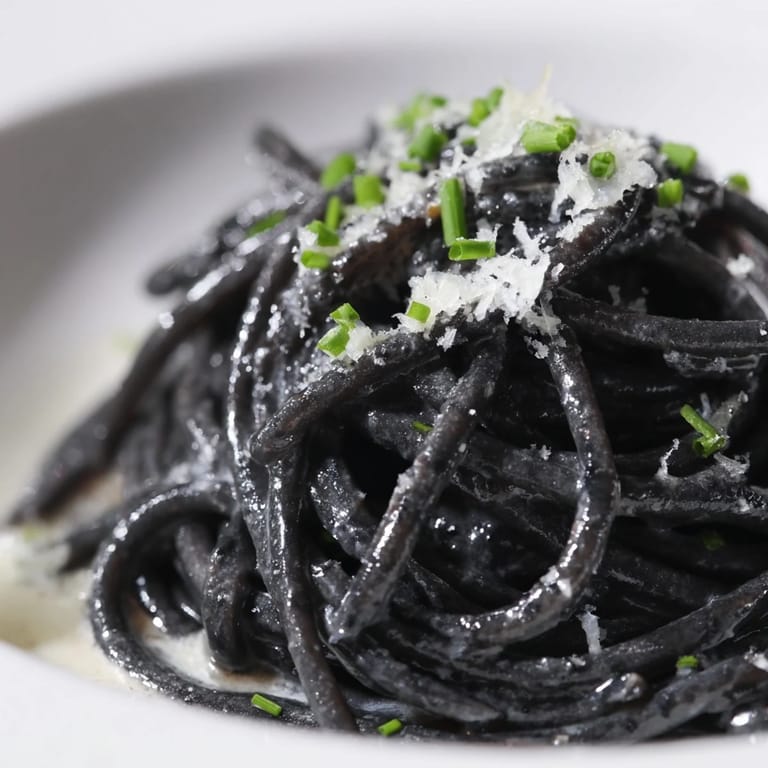
Save The skillet hissed as butter pooled into gold, and I stood there thinking how ridiculous it was to be this nervous over pasta. But squid ink pasta isn't just pasta, it's theater. It stains your cutting board, your fingertips, your confidence if you're not careful. I'd bought it on impulse after spotting it in a tiny Italian deli tucked between a dry cleaner and a coin laundry, the kind of place where the owner argues about flour like it's politics. That night, I wanted to prove to myself I could make something beautiful without a recipe in hand, just instinct and a bottle of wine I probably should have saved for drinking.
I made this for my sister's birthday once, thinking I'd surprise her with something dramatic. She walked into the kitchen, saw the black tangle on white plates, and went completely silent. For a second I thought I'd ruined it, but then she laughed, the good kind, and said it looked like something a witch would eat before casting a love spell. We ate it by candlelight with too much wine and not enough napkins, and she still brings it up every time I offer to cook for her. That's when I realized this dish doesn't just feed people, it gives them a story to tell later.
Ingredients
- Squid ink pasta: This is the star, jet black and slightly briny, with a delicate chew that holds sauce like a dream. Fresh is sublime, but dried works beautifully and keeps forever in the pantry.
- Unsalted butter: The foundation of the sauce, melting into something nutty and warm. I always use unsalted so I can control the seasoning, because once you've oversalted cream, there's no going back.
- Shallot: Milder and sweeter than onion, it dissolves into the butter without overwhelming the sauce. Mince it fine so it almost disappears into the background.
- Garlic: Just two cloves, enough to whisper rather than shout. I learned the hard way that burnt garlic in cream sauce tastes like regret.
- Dry white wine: It cuts through the richness and adds a bright, acidic backbone. I use whatever I'd actually drink, usually a Pinot Grigio or Vermentino.
- Heavy cream: This is what makes the sauce luxurious and cling to the pasta. Don't substitute milk, it won't thicken the same way and you'll end up with soup.
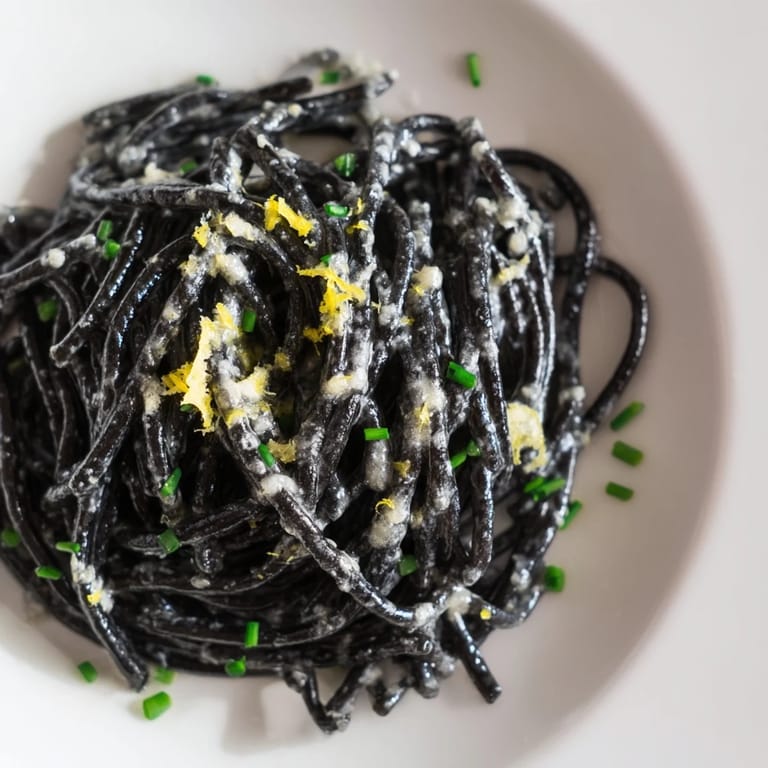
- Lemon zest: A teaspoon of sunshine that lifts the whole dish. Zest it right over the pan so the oils hit the cream while it's hot.
- Salt and black pepper: Season carefully, taste often. The pasta water and Parmesan will add salt too, so go easy at first.
- Parmigiano-Reggiano: Grate it fresh, the pre-shredded stuff doesn't melt the same and tastes like cardboard. A little goes a long way.
- Chives: A delicate, oniony brightness that looks elegant scattered over the top. Parsley works too, but chives feel more refined.
- Lemon wedges: Optional, but I always serve them. A squeeze at the table wakes up every bite.
Tired of Takeout? 🥡
Get 10 meals you can make faster than delivery arrives. Seriously.
One email. No spam. Unsubscribe anytime.
Instructions
- Boil the pasta:
- Bring a big pot of water to a rolling boil and salt it like the sea, then drop in the squid ink pasta. Cook it until it's al dente, with a little bite left in the center, and save half a cup of that starchy cooking water before you drain it.
- Start the sauce:
- While the pasta bubbles away, melt the butter in a large skillet over medium heat. Toss in the shallot and let it sizzle gently until it turns translucent and soft, about two or three minutes.
- Add the garlic:
- Stir in the minced garlic and cook just until it smells incredible, maybe thirty seconds. Don't let it brown or it'll turn bitter and ruin the whole thing.
- Deglaze with wine:
- Pour in the white wine and let it bubble and reduce for a few minutes, scraping up any browned bits from the bottom of the pan. The alcohol will cook off and leave behind a bright, clean flavor.
- Finish the sauce:
- Lower the heat and stir in the heavy cream and lemon zest. Let it simmer gently until it thickens just enough to coat the back of a spoon, then season it with salt and pepper to taste.
- Toss the pasta:
- Add the drained pasta to the skillet and toss everything together until every strand is glossy and coated. If it looks too thick, splash in a little pasta water, a tablespoon at a time, until it's silky and perfect.
- Serve immediately:
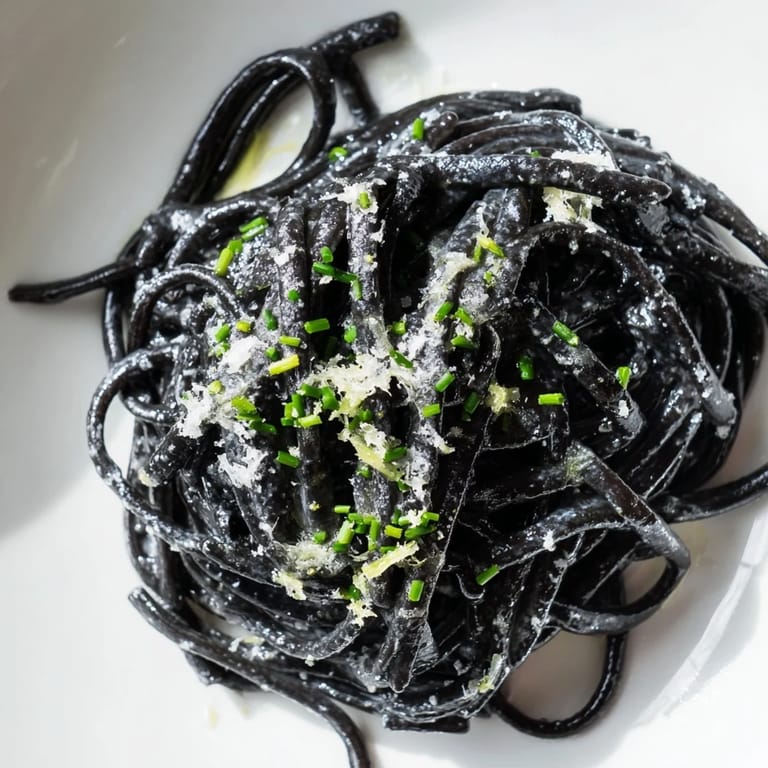
- Plate it up while it's hot, then shower it with grated Parmigiano-Reggiano and a scattering of chives. A wedge of lemon on the side is optional, but highly recommended.
 Save
Save There was a night when I served this to someone I was trying to impress, someone who claimed they didn't like cream sauces. They took one bite, paused, then silently finished the entire plate without looking up. When they finally did, they just said, okay, you were right. I didn't need anything else. That's the thing about this dish, it doesn't argue, it just wins.
What to Serve Alongside
This pasta is rich enough to stand on its own, but a simple arugula salad with lemon and olive oil cuts through the cream and keeps things balanced. I also love serving it with crusty bread for mopping up every last bit of sauce, because leaving any behind feels like a crime. A crisp white wine, something Italian and cold, is the only beverage that makes sense here.
How to Store and Reheat
Leftovers will keep in the fridge for up to two days, though the pasta will soak up some of the sauce as it sits. Reheat gently in a skillet over low heat with a splash of cream or pasta water to loosen it back up. Don't microwave it unless you enjoy rubbery noodles and separated sauce, because I've made that mistake and it's not worth it.
Making It Your Own
This recipe is a canvas. I've added sautéed shrimp, calamari, even scallops when I'm feeling flush. Sometimes I stir in a handful of baby spinach at the end for color and a little earthiness. If you want heat, a pinch of red pepper flakes in with the garlic works beautifully. The bones of the dish stay the same, but the details can shift with your mood or your market.
- Try finishing it with a handful of fresh herbs like basil or tarragon for a different aromatic layer.
- Swap the Parmigiano for Pecorino Romano if you want a sharper, saltier bite.
- Add a tablespoon of squid ink to the cream sauce itself if you want to go full gothic and deepen the color even more.
 Save
Save This is the kind of dish that makes you feel like you know what you're doing in the kitchen, even if you're winging it. Serve it with confidence, and people will believe you've been making it for years.
Recipe FAQs
- → Can I use regular pasta instead of squid ink pasta?
While you can substitute with regular pasta, the striking black color and subtle briny flavor of squid ink pasta are essential to this dish's character. The squid ink adds visual drama and a delicate oceanic note that complements the cream sauce beautifully.
- → What's the best way to prevent the cream sauce from breaking?
Keep the heat at medium-low once you add the cream to prevent it from separating. Stir constantly and avoid boiling vigorously. If the sauce appears to break, whisk in a tablespoon of cold cream or pasta water to emulsify it smoothly.
- → How do I know when the pasta is perfectly al dente?
Follow the package instructions for squid ink pasta timing, typically 8-12 minutes depending on whether it's fresh or dried. Test by tasting a strand—it should be tender outside with a slight firmness at the center, never mushy or hard.
- → What wine pairs best with this dish?
A crisp Italian white wine like Pinot Grigio, Vermentino, or Gavi complements the rich cream sauce and briny squid ink pasta beautifully. Avoid heavily oaked wines that would overpower the delicate flavors. The same wine works wonderfully for cooking.
- → Can I prepare this dish in advance?
The cream sauce can be prepared up to 2 hours ahead and gently reheated. However, cook the pasta and combine it with the sauce just before serving to maintain the silky texture and prevent the pasta from becoming mushy.
- → What proteins pair well with this pasta?
Sautéed shrimp, pan-seared scallops, or tender calamari enhance the seafood profile beautifully. Crispy pancetta or prosciutto adds savory richness. Simply sauté your protein before preparing the sauce and fold it in at the end for an elevated main course.