 Save
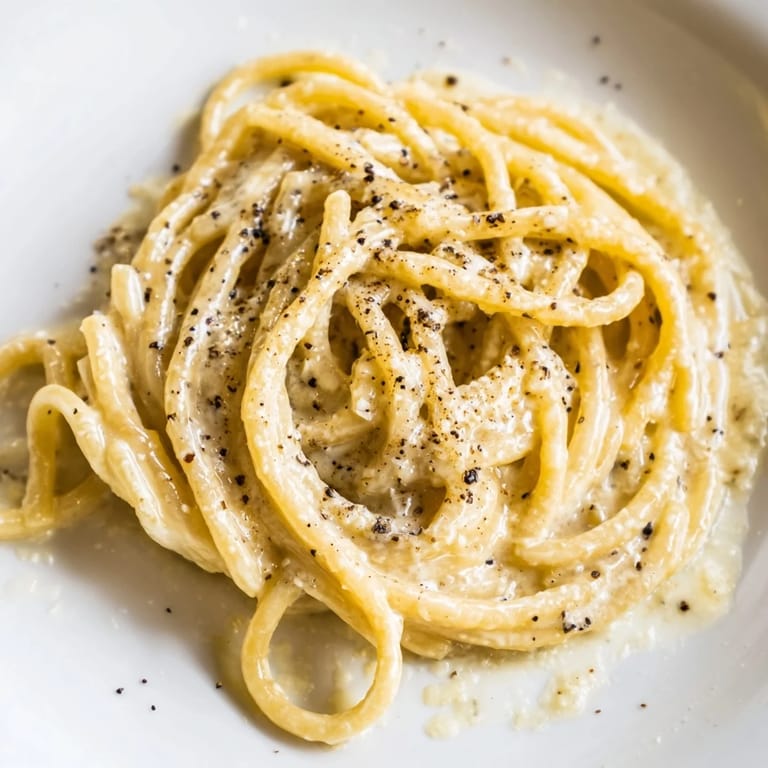
Save The smell of toasted pepper hit me before I even turned the stove to medium. I was standing in a cramped Roman apartment kitchen, watching my friend's nonna flick her wrist over a pan with nothing but pasta water and cheese in reach. No cream, no butter, just confidence. She told me the secret wasn't the ingredients, it was the motion, the heat, the respect for simplicity.
I made this for my partner on a Tuesday night when we were both too tired to think. The kitchen was a mess, the day had been long, but something about stirring that glossy, peppery sauce felt meditative. We ate it standing at the counter, twirling forkfuls straight from the pan. It became our reset meal after that, the thing we made when we needed to remember that good food doesn't have to be complicated.
Ingredients
- Spaghetti (400 g): The long strands are traditional and hold the sauce beautifully, but any pasta shape will work if that's what you have on hand.
- Pecorino Romano cheese (120 g, finely grated): This is the soul of the dish, sharp and salty with a slight funk that Parmesan just can't replicate, so grate it fresh for the creamiest result.
- Freshly cracked black pepper (2 tsp, plus extra): Toasting it releases oils that turn simple pepper into something fragrant and almost floral, so don't skip that step.
- Salt: Your pasta water should taste like the sea, salty enough that you notice it but not so much that it's unpleasant.
Tired of Takeout? 🥡
Get 10 meals you can make faster than delivery arrives. Seriously.
One email. No spam. Unsubscribe anytime.
Instructions
- Boil the pasta:
- Bring a large pot of salted water to a rolling boil and drop in the spaghetti, stirring occasionally so it doesn't stick. Pull it just before it's fully cooked, when it still has a little bite, and save a mugful of that starchy water before you drain.
- Toast the pepper:
- While the pasta bubbles away, add your pepper to a dry skillet over low heat and let it sizzle for a minute or two until it smells toasty and almost nutty. This step wakes up the pepper and makes the whole dish sing.
- Build the sauce base:
- Pour about half a cup of that hot pasta water into the skillet with the toasted pepper and let it simmer gently. The starch in the water is what will help the cheese turn creamy instead of clumpy.
- Toss the pasta:
- Add the drained spaghetti to the skillet and toss it around in the peppery water, letting it soak up the flavor. Keep the heat low so nothing seizes up on you.
- Add the cheese:
- Sprinkle the Pecorino in a little at a time, tossing constantly with tongs or a fork, and add splashes of pasta water as you go to keep everything moving. The sauce should look glossy and cling to every strand without turning gloppy.
- Serve:
- Plate it up immediately while it's still steaming, and finish with an extra shower of cheese and a few more cracks of pepper. Cacio e pepe waits for no one.
 Save
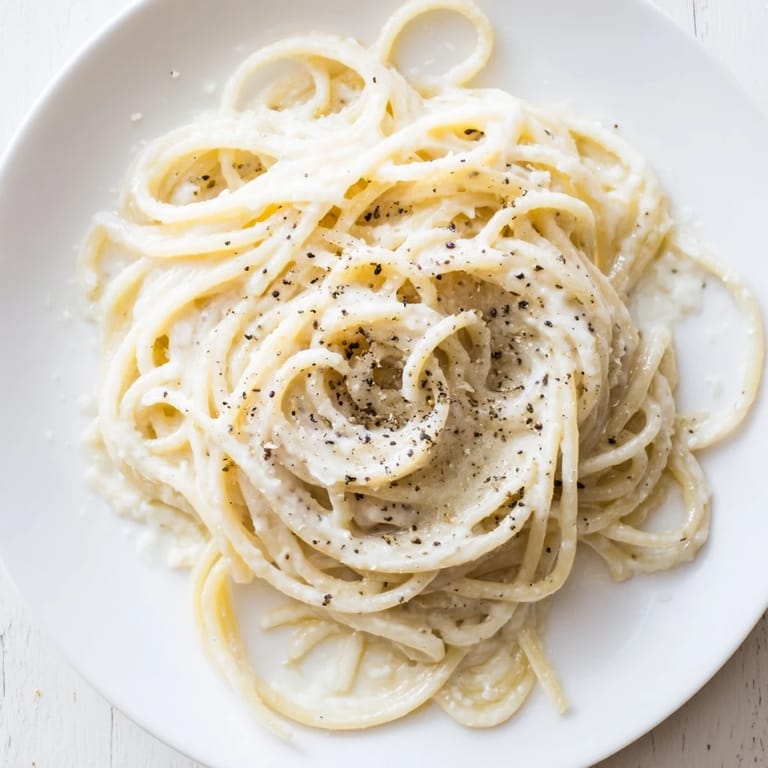
Save I remember plating this for a small dinner party and watching everyone go quiet after the first bite. Someone said it tasted like Rome, and even though I'd never been, I knew exactly what they meant. It's the kind of dish that feels like a place, a memory, a moment all at once.
Choosing the Right Cheese
Pecorino Romano is the traditional choice and brings a sharp, assertive flavor that defines the dish, but if you can't find it or want something gentler, Parmigiano Reggiano works too. I've also mixed half and half when I wanted a little more complexity. Just make sure whatever you use is freshly grated, because the pre-shredded stuff has anti-caking agents that will ruin your sauce.
Getting the Texture Just Right
The difference between a creamy cacio e pepe and a gloppy one comes down to temperature and motion. Keep your pan off direct high heat once the pasta goes in, and never stop moving it. The emulsion happens when starch, fat, and heat meet in just the right way, and standing still breaks the spell. If it starts to tighten up, a splash of pasta water and a few quick tosses will bring it back.
Serving and Pairing
This dish is best eaten the moment it's done, straight from the pan if you're feeling casual. I like to serve it in warm bowls with a little extra pepper on top and a cold, crisp white wine like Vermentino or Pinot Grigio on the side. It's rich enough to feel indulgent but light enough that you won't feel weighed down.
- A simple arugula salad with lemon brightens up the plate without competing for attention.
- Crusty bread is great for mopping up any sauce left in the bowl.
- Leftovers don't reheat well, so plan to finish what you make or halve the recipe for two.
 Save
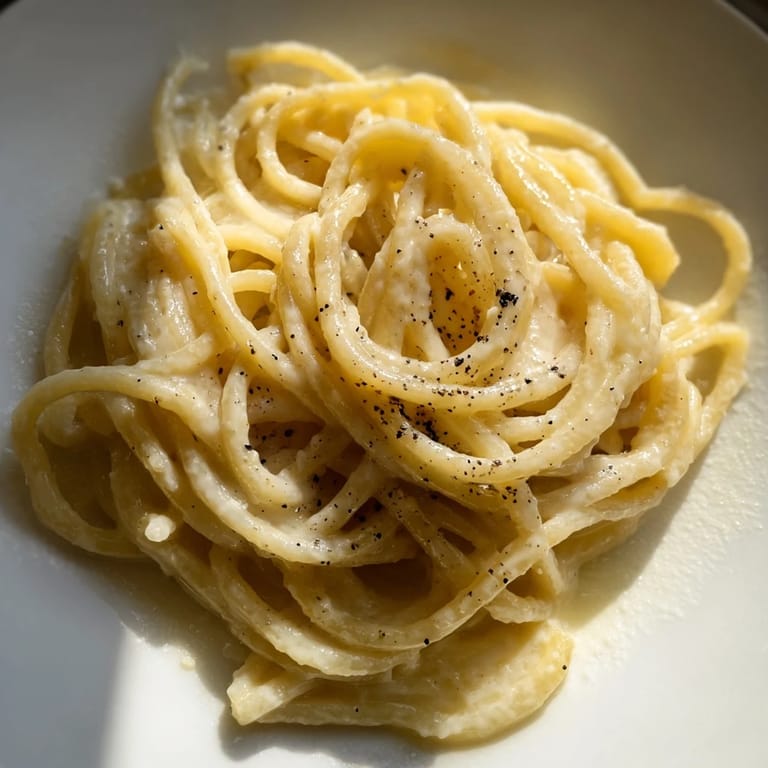
Save There's something honest about a dish that doesn't try to be more than it is. Cacio e pepe is proof that when you start with good ingredients and treat them with care, you don't need much else.
Recipe FAQs
- → What makes Cacio e Pepe creamy without cream?
The starch in reserved pasta water emulsifies with the melted Pecorino Romano cheese, creating a natural, silky sauce. The key is using hot water and working quickly while stirring vigorously.
- → Can I use Parmigiano Reggiano instead of Pecorino Romano?
Yes, Parmigiano Reggiano works as a substitute and will provide a milder, slightly less sharp flavor. However, Pecorino Romano is traditional and delivers the authentic salty, peppery profile.
- → How do I prevent the cheese from clumping?
Sprinkle the cheese gradually while tossing constantly over low heat. Add cheese in small batches and stir vigorously. If clumping occurs, add a splash of warm pasta water to help it melt smoothly.
- → What type of black pepper should I use?
Freshly cracked black pepper is essential for the best flavor and texture. Toast it briefly in the skillet to enhance its aroma before adding the pasta water.
- → How much pasta water should I reserve?
Reserve at least 1 cup of hot pasta cooking water before draining. You'll typically use about half for the sauce, but having extra on hand allows you to adjust the consistency to your preference.
- → Is this dish naturally vegetarian?
Yes, Cacio e Pepe is vegetarian. However, check cheese labels to ensure your Pecorino Romano is made with vegetarian rennet if strict vegetarian guidelines apply.