 Save
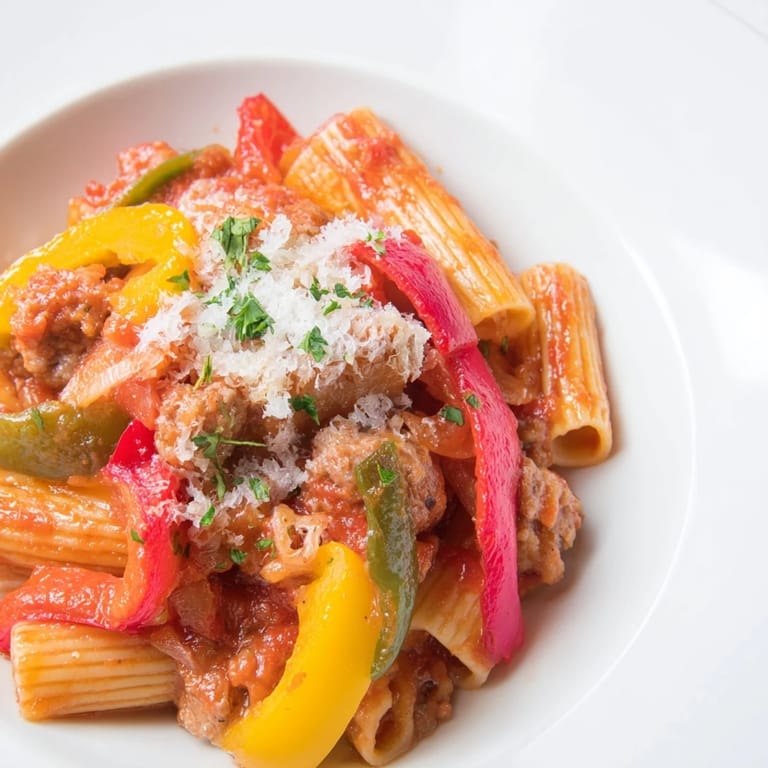
Save There's something about a crowded kitchen on a Sunday afternoon that makes everything taste better. I learned that the hard way when my neighbor Marco stopped by unannounced, caught the smell of sausage browning in my skillet, and suddenly my simple dinner plan became an impromptu cooking lesson. He watched me slice those peppers—red, yellow, green—and kept saying I was doing it all wrong until I realized he just wanted to help. By the time that tomatoey sauce hit the pan, we were laughing about how neither of us had measured anything, and somehow it turned into the best bowl of pasta I'd made in months.
I made this for my sister's book club once, and it was the first time I realized food could be a conversation starter instead of just something that fills your plate. Everyone wanted the recipe, but more than that, they wanted to know the story—why I added the peppers this way, what made me reach for the red pepper flakes. That's when I understood this dish isn't just Italian-American comfort food; it's a way of saying I made this with my hands and my attention, and that matters.
Ingredients
- Italian Sausage (1 lb): Remove it from the casings so it browns evenly and absorbs the flavor of everything around it—this is where the heartiness comes from.
- Red, Yellow, and Green Bell Peppers: The color combination isn't just pretty; each pepper brings a different sweetness, and together they balance the salt of the sausage.
- Large Onion (1): Slice it thin so it practically melts into the sauce and becomes invisible glue holding everything together.
- Garlic (3 cloves, minced): Don't skip the mincing—it lets the garlic distribute through every bite instead of hitting you all at once.
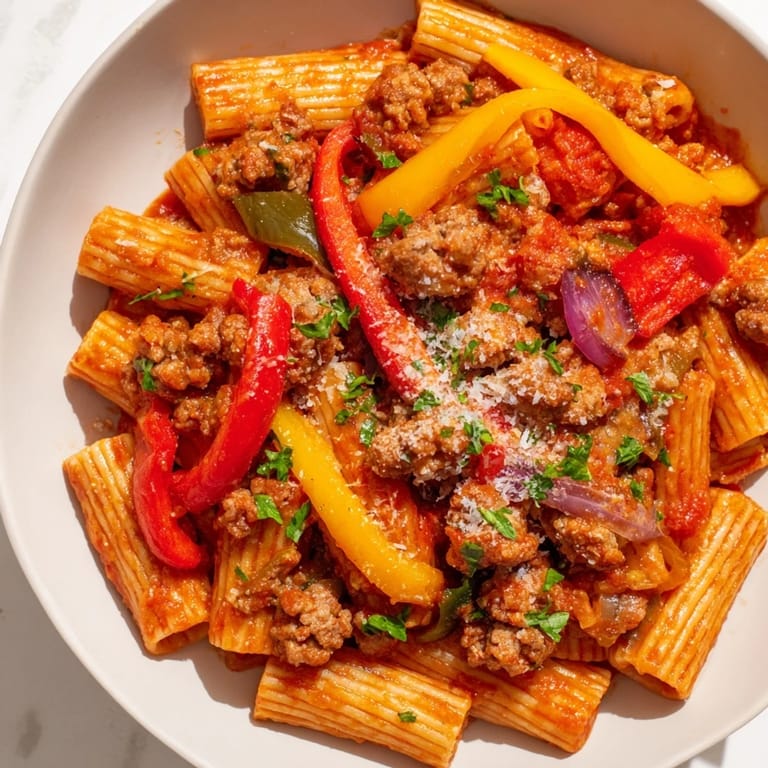
- Penne or Rigatoni Pasta (12 oz): The ridges and tubes catch the sauce, so you get a flavor-packed forkful every time.
- Crushed Tomatoes (1 can, 14 oz): Canned is better here than fresh or sauce; it's already concentrated and ready to work with you.
- Tomato Paste (2 tbsp): This deepens the sauce without watering it down, giving it body and richness.
- Dried Oregano and Basil (1 tsp and 1/2 tsp): Dried herbs actually shine in long-simmered sauces, so don't reach for fresh here.
- Red Pepper Flakes (1/2 tsp, optional): It's optional but worth it—a tiny pinch changes the flavor profile entirely.
- Olive Oil (2 tbsp): Use enough so the sausage browns instead of steams.
- Fresh Parsley and Parmesan: These are the final flourish that say you cared about how it looks on the plate.
Tired of Takeout? 🥡
Get 10 meals you can make faster than delivery arrives. Seriously.
One email. No spam. Unsubscribe anytime.
Instructions
- Boil your pasta first:
- Get that salted water going and set your timer according to the box, but fish out a piece a minute early to check—you want it al dente, not mushy. Save that pasta water before you drain; it's liquid gold for adjusting the sauce later.
- Brown the sausage until it's golden:
- Heat your skillet over medium heat, break the sausage into small crumbles with your spoon, and let it sit for a few minutes before stirring—that's how it gets those caramelized edges. You'll know it's done when there's no pink left and the smell fills your kitchen.
- Soften the peppers and onions together:
- Use the same skillet to cook them in the sausage fat for about five to six minutes, stirring occasionally so they get a little color. They should be tender and starting to look slightly caramelized at the edges.
- Add the garlic and let it bloom:
- Stir it in and count to sixty while the aroma shifts from sharp to sweet—that's the signal to move forward.
- Build the sauce with tomato paste first:
- Add it before the crushed tomatoes so it can caramelize slightly in the hot pan, which concentrates all that tomatoey flavor. Then pour in the crushed tomatoes, oregano, basil, and red pepper flakes if you're using it.
- Return the sausage and simmer everything:
- Let it bubble gently for three to four minutes so all the flavors start talking to each other. If it looks too thick, splash in some of that reserved pasta water until it coats the back of a spoon.
- Toss the pasta into the sauce:
- This is where it all comes together—add the drained pasta directly to the skillet and stir gently for a minute until everything is coated and warm.
- Finish with parsley and cheese:
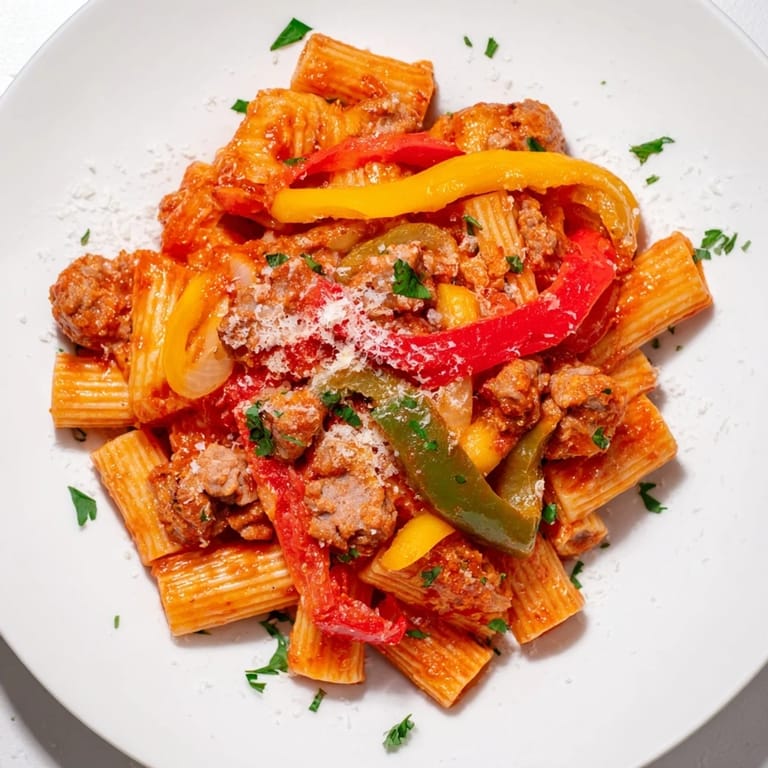
- A handful of fresh parsley lifts the whole dish, and grated Parmesan on top makes it feel finished.
 Save
Save The first time I really understood this dish was when my daughter came home from school and said the whole house smelled like a restaurant. She meant it as a compliment, and I realized then that the best recipes are the ones that announce themselves before you even taste them. That's what this pasta does—it fills a space, it makes people want to sit down, it makes them feel cared for.
The Sausage Question
You'll notice the recipe calls for Italian sausage, but this is where you get to make it your own. I've made it with spicy sausage when I wanted more heat, and mild sausage when I was cooking for people who prefer subtlety. The sausage is the anchor of the whole dish—it provides the savory depth that makes you keep coming back for another bite. One evening I tried fennel-forward sausage just to experiment, and it brought an unexpected sweetness that transformed the entire flavor profile. The lesson is that sausage isn't just an ingredient; it's a decision that shapes everything that comes after.
The Pepper Rainbow
There's a reason this recipe calls for three different colored peppers instead of just one. It's not just visual—red peppers are sweeter and roasted-tasting, yellow ones bring a bright citrusy note, and green peppers have a grassy, slightly bitter edge that balances everything out. When you cook them together, they create this complexity that most people can't quite identify but absolutely taste. I once tried making this with only red peppers because that's what I had, and while it was still good, it felt one-dimensional. Now I'm patient enough to wait until I have all three, because that's when the magic happens.
Wine and Other Secrets
The basic recipe is solid on its own, but here are the moments where things get interesting. A generous splash of red wine added right after the tomato paste brings an acidity and depth that balances the richness of the sausage. Fresh basil scattered on top at the very end—not stirred in, but sitting on top—adds brightness that dried basil never could. One more thing I learned the expensive way: buy good Parmesan and grate it yourself. The pre-grated stuff has cellulose in it so it doesn't clump, but it doesn't melt and integrate the way freshly grated cheese does.
- A squeeze of lemon juice at the very end brings out flavors you didn't know were there.
- If you have it, a pinch of nutmeg in the sauce is subtle but noticeable in the best way.
- Let everyone grate their own cheese at the table—it changes the whole experience somehow.
 Save
Save This is the kind of dinner that makes people feel less alone, even if it's just the two of you at the table. It's simple enough to make on a Tuesday night, but impressive enough to serve on a Friday when friends are coming over.
Recipe FAQs
- → What type of sausage works best?
Italian sausage, mild or spicy, works well to add flavorful richness to the dish.
- → Can I use different pasta shapes?
Penne or rigatoni are ideal as they hold the sauce well, but other firm pasta shapes can be used.
- → How do I prevent the sauce from getting too thick?
Reserved pasta water can be added while simmering to adjust the sauce consistency to your liking.
- → What vegetables complement the sausage in this dish?
Mixed colored bell peppers and onions provide sweetness and texture that balance the savory sausage.
- → Are there any suggested garnishes?
Fresh chopped parsley and grated Parmesan cheese enhance both flavor and presentation.