 Save
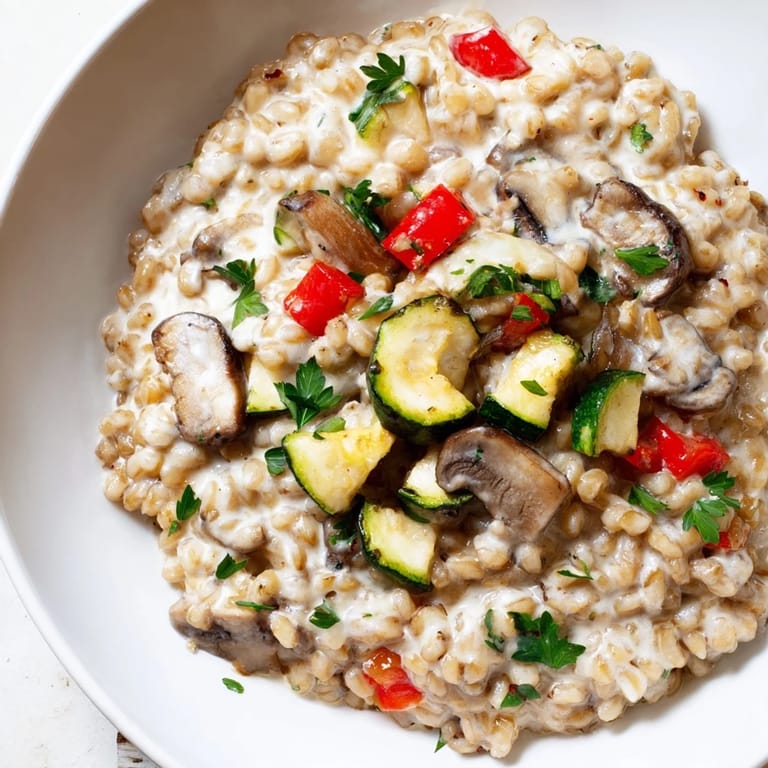
Save I was standing at the stove one rainy Tuesday, stirring a pot of barley I'd bought on a whim, unsure what I was actually making. The grains were bubbling away in broth, releasing this earthy, almost sweet smell that filled the whole kitchen. I remembered my neighbor once saying barley reminded her of her grandmother's soup, but I wanted something richer, creamier, something that could stand alone. So I added cream, a handful of Parmesan, and didn't look back. That bowl turned into one of my favorite weeknight rescues.
The first time I made this for friends, I panicked halfway through because the barley seemed too thick, almost like risotto gone wrong. But then I stirred in the cream and watched it loosen into this glossy, golden pool, and I knew it would be okay. When I set the bowls down, topped with those caramelized vegetables, one friend looked up and said it tasted like something you'd get at a cozy bistro. I've been making it ever since, tweaking the veggies based on what's in the crisper, and it always feels like a little victory.
Ingredients
- Pearled barley: This is the heart of the dish, it becomes tender and creamy as it simmers, releasing starch that thickens the broth naturally without any flour or cornstarch.
- Vegetable broth: Use a good quality broth here because the barley will absorb every bit of flavor, I learned this after using a bland store brand once and regretting it.
- Yellow onion and garlic: These build the base, sauteed until soft and fragrant, they add sweetness and depth that you taste in every spoonful.
- Heavy cream: This is what transforms the barley from a simple grain into something luxurious, you can swap it for coconut cream or oat cream if you want to keep it plant based.
- Parmesan cheese: A handful stirred in at the end adds a salty, nutty richness, or use nutritional yeast for a vegan option that still brings umami.
- Zucchini, red bell pepper, cherry tomatoes, and cremini mushrooms: Roasting these until they're golden and slightly charred brings out their natural sugars and gives the bowl texture and color.
- Olive oil: Used both for sauteing and roasting, it ties everything together with a fruity, peppery note.
- Dried thyme and oregano: These herbs add a subtle earthiness to the vegetables, but feel free to use fresh if you have them on hand.
- Fresh parsley: A bright, grassy finish that cuts through the creaminess and makes the dish feel lighter.
Tired of Takeout? 🥡
Get 10 meals you can make faster than delivery arrives. Seriously.
One email. No spam. Unsubscribe anytime.
Instructions
- Get the oven ready:
- Preheat your oven to 425 degrees F so it's hot enough to roast the vegetables quickly and develop those caramelized edges. This step is easy to forget, but it makes a big difference in timing.
- Roast the vegetables:
- Toss the zucchini, bell pepper, cherry tomatoes, and mushrooms with olive oil, thyme, oregano, salt, and pepper on a baking sheet, then spread them out in a single layer. Roast for 25 to 30 minutes, stirring halfway through, until they're golden and tender with crispy edges.
- Start the barley base:
- While the vegetables roast, heat 2 tablespoons of olive oil in a large saucepan over medium heat, then add the diced onion and cook until it's soft and translucent, about 4 minutes. Stir in the minced garlic and cook for another minute until it's fragrant and just starting to turn golden.
- Simmer the barley:
- Add the pearled barley to the pan and stir it around to coat it in the oil and aromatics, then pour in the vegetable broth. Bring it to a gentle boil, then reduce the heat to low, cover, and let it simmer for 30 to 35 minutes, stirring occasionally, until the barley is tender and creamy.
- Stir in the cream and cheese:
- Once the barley is cooked, stir in the heavy cream and grated Parmesan, or your plant based alternatives, and season with salt and pepper to taste. Let it simmer for 2 to 3 more minutes until everything is fully incorporated and the mixture is smooth and glossy.
- Assemble and serve:
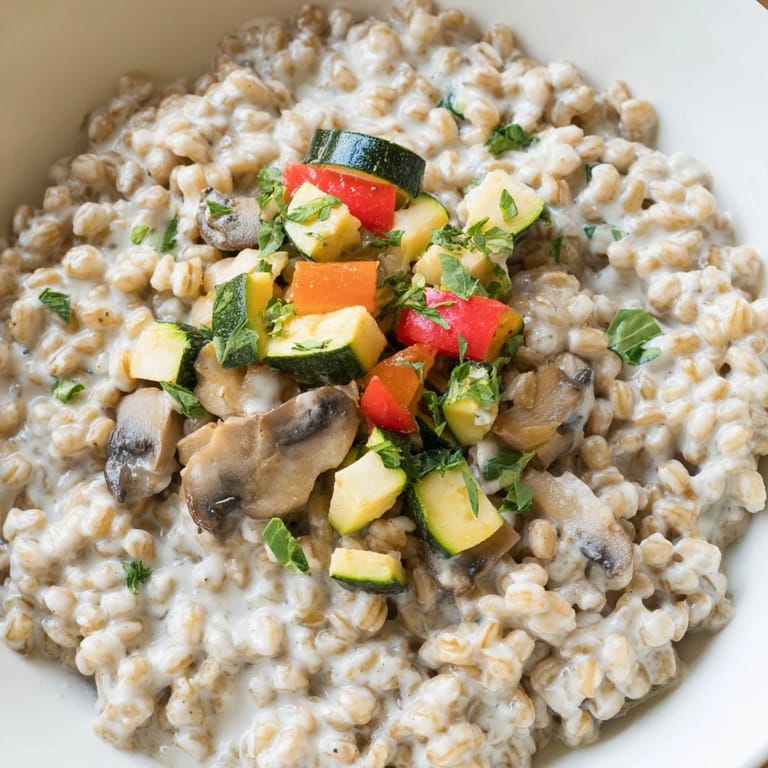
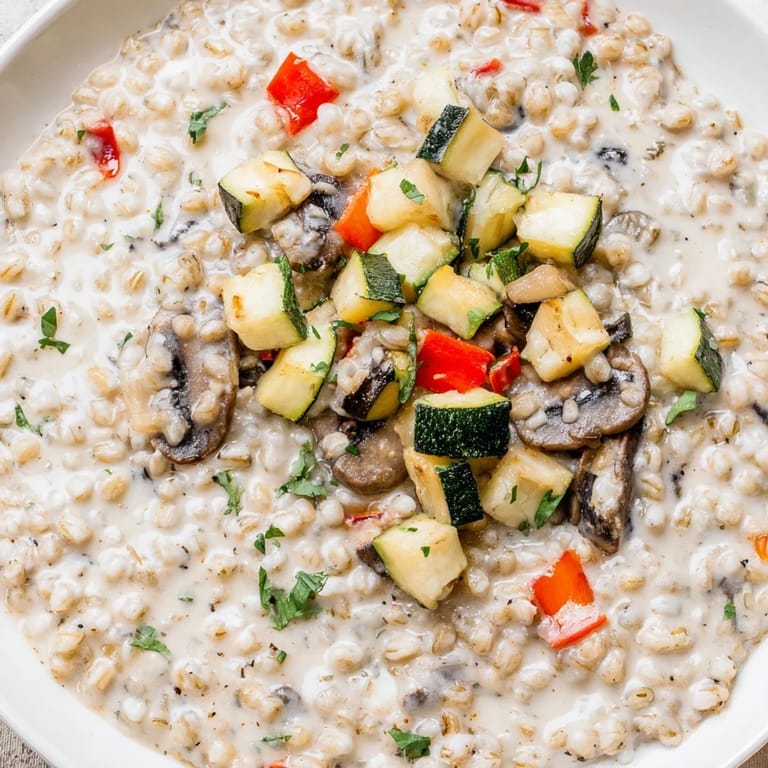
- Spoon the creamy barley into bowls, then top generously with the roasted vegetables. Garnish with fresh parsley and extra Parmesan or nutritional yeast if you like, and serve hot.
 Save
Save There was this one night when I was too tired to cook anything complicated, so I made this bowl with whatever vegetables I had wilting in the fridge. I sat down with it in front of the window, watching the streetlights flicker on, and realized how much comfort can come from something so simple. It wasn't fancy, but it was exactly what I needed, and that's when this recipe became more than just dinner.
Making It Your Own
This recipe is endlessly flexible, and that's part of why I keep coming back to it. Try swapping the vegetables for whatever's in season, like roasted carrots in the fall, charred broccoli in winter, or even cubes of butternut squash. I've also added toasted pine nuts on top for crunch, or stirred in a spoonful of pesto at the end for a bright, herby kick. Once you get the base down, you can make it feel completely different every time.
Storing and Reheating
Leftovers keep beautifully in the fridge for up to four days, though the barley will thicken as it sits and absorb more liquid. When you reheat it, add a splash of broth or water and stir it over low heat until it loosens up again. I actually think the flavors deepen overnight, so sometimes I make a double batch on purpose. The roasted vegetables can be stored separately and stirred in just before serving if you want to keep their texture intact.
Pairing and Serving Ideas
This bowl is hearty enough to be a main dish on its own, but it also pairs well with a simple green salad dressed with lemon and olive oil. I've served it alongside crusty bread for dipping into the creamy base, and it's always a hit. If you want to add protein, top it with roasted chickpeas, a soft poached egg, or even some crumbled feta.
- A crisp white wine like Sauvignon Blanc or a light Pinot Grigio complements the richness without overwhelming the vegetables.
- For a vegan version, use oat or coconut cream and nutritional yeast, and it tastes just as indulgent.
- Garnish with a drizzle of good quality olive oil and a crack of black pepper right before serving for an extra layer of flavor.
 Save
Save This bowl has saved me on more nights than I can count, and I hope it does the same for you. It's proof that simple ingredients, cooked with a little care, can turn into something truly satisfying.
Recipe FAQs
- → How do I achieve the perfect creamy texture in the barley?
Cook the barley low and slow in vegetable broth, stirring occasionally. The gradual release of starches naturally creates creaminess. The final addition of heavy cream enhances this silky texture. Avoid high heat, which can cause scorching.
- → Can I prepare this ahead of time?
Cook the barley mixture and roasted vegetables separately, then store both in the refrigerator for up to 3 days. Combine and warm gently on the stovetop before serving, adding a splash of broth if the barley has thickened too much.
- → What vegetables work best for roasting?
Any firm vegetables roast beautifully—try carrots, eggplant, broccoli, Brussels sprouts, or parsnips. Cut similarly-sized pieces for even cooking. Aim for higher moisture vegetables to be halved and firmer vegetables to be chunked.
- → How do I make this vegan-friendly?
Replace heavy cream with unsweetened plant-based cream and substitute Parmesan with nutritional yeast or cashew parmesan. All other components remain unchanged. The barley develops the same creamy character with plant-based alternatives.
- → What wine pairs well with this dish?
A crisp white wine like Sauvignon Blanc complements the earthy barley and roasted vegetables beautifully. The wine's acidity cuts through the cream and enhances the herbal notes from the thyme and oregano.
- → Can I add protein to this bowl?
Absolutely. Top with toasted pine nuts, roasted chickpeas, white beans, or grilled chicken. A poached egg nestled into the creamy barley also adds richness and protein for a more indulgent version.