 Save
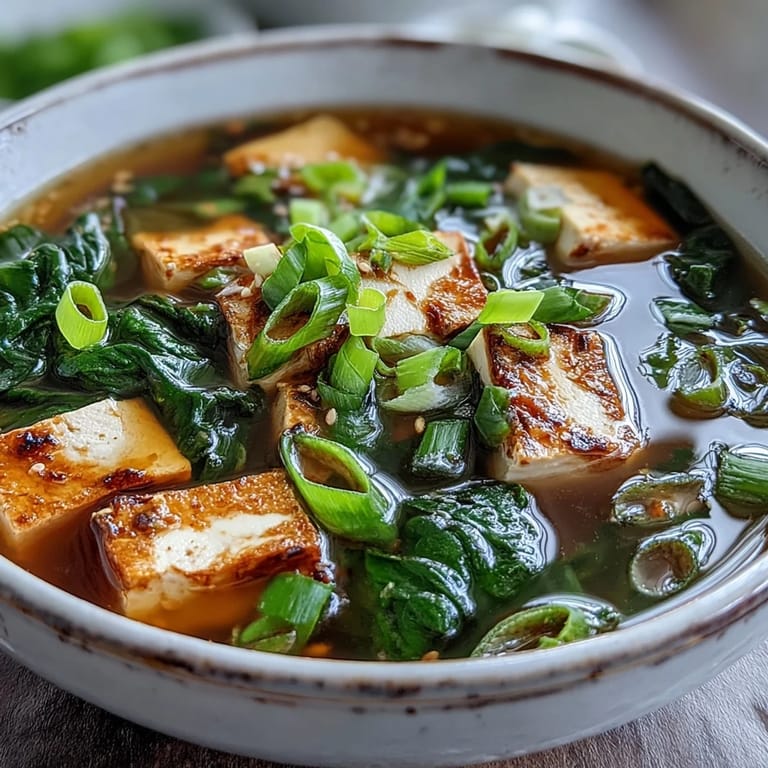
Save There's something deeply comforting about a bowl of miso soup—warm, nourishing, and elegantly simple. This classic Japanese soup brings together silky tofu cubes, tender spinach leaves, and fragrant green onions in a savory miso broth that soothes the soul with every spoonful. Ready in just 20 minutes, it's the perfect light meal or starter that delivers authentic Japanese flavors with minimal effort.
Save Miso soup is a staple of Japanese cuisine, traditionally served alongside rice and enjoyed at breakfast, lunch, or dinner. The key to perfect miso soup lies in respecting the miso paste—never letting it boil once added, which preserves its delicate umami flavor and beneficial probiotics. This recipe honors that tradition while making it accessible for home cooks everywhere.
Ingredients
Tired of Takeout? 🥡
Get 10 meals you can make faster than delivery arrives. Seriously.
One email. No spam. Unsubscribe anytime.
- Broth: 4 cups (1 liter) dashi stock (use kombu-based for vegetarian), 3 tablespoons white or yellow miso paste
- Vegetables & Tofu: 120 g (4 oz) firm tofu cut into 1/2-inch cubes, 2 cups (60 g) fresh spinach leaves washed and roughly chopped, 2 green onions (scallions) thinly sliced
Instructions
- Step 1: Heat the Dashi
- In a medium saucepan, bring the dashi stock to a gentle simmer over medium heat.
- Step 2: Dissolve the Miso
- Place the miso paste in a small bowl. Ladle about 1/2 cup of hot dashi into the bowl and whisk until the miso dissolves completely, then return the mixture to the saucepan. Do not let the soup boil after adding miso.
- Step 3: Add the Tofu
- Add the tofu cubes to the pot and simmer gently for 2–3 minutes until heated through.
- Step 4: Wilt the Spinach
- Stir in the spinach and cook for 1–2 minutes until just wilted.
- Step 5: Finish with Green Onions
- Remove the soup from heat. Stir in the sliced green onions.
- Step 6: Serve
- Ladle into bowls and serve immediately.
Zusatztipps für die Zubereitung
The most important technique in miso soup preparation is tempering the miso paste. By dissolving it in a small amount of hot broth first, you ensure it integrates smoothly without clumping. Never allow the soup to reach a rolling boil after adding miso, as high heat destroys the beneficial enzymes and can make the flavor bitter. Use a medium saucepan to give yourself plenty of room to work, and keep your heat at a gentle simmer. Fresh ingredients make all the difference—use the freshest spinach and tofu you can find for the best texture and flavor.
Varianten und Anpassungen
For a vegan version, ensure your dashi is made with kombu (kelp) and omit any fish-based ingredients. Try adding mushrooms such as shiitake or enoki for earthy depth, or stir in a handful of wakame seaweed for traditional flavor and texture. A dash of sesame oil adds richness and a nutty aroma. You can adjust the miso quantity to taste—use less for a milder broth or more for a saltier, more robust flavor. Red miso paste can be substituted for a deeper, more intense taste, though it will change the color and character of the soup.
Serviervorschläge
Miso soup is traditionally served as part of a Japanese meal alongside steamed rice, pickled vegetables, and a protein dish. It also makes a wonderful light lunch on its own, or serve it as an elegant starter for a multi-course dinner. For a complete meal, pair it with onigiri (rice balls), edamame, or a simple cucumber salad. The soup is best enjoyed immediately while hot, though leftovers can be gently reheated—just remember not to let it boil.
 Save
Save This miso soup with tofu, spinach, and green onions proves that simple ingredients can create something truly special. Each bowl delivers the authentic taste of Japan with minimal fuss—a gentle, nourishing soup that warms you from the inside out. Whether you're new to Japanese cooking or a seasoned pro, this recipe will become a cherished staple in your kitchen.
Recipe FAQs
- → What type of miso paste works best?
White or yellow miso paste provides a mild, savory flavor ideal for this broth.
- → Can I use other greens instead of spinach?
Yes, you can substitute with baby bok choy or kale, adjusting cooking time accordingly.
- → How do I keep tofu from crumbling in the broth?
Use firm tofu and gently simmer it briefly to maintain its shape and texture.
- → Why shouldn't the broth boil after adding miso?
Boiling can alter miso's delicate flavors and reduce its nutritional benefits.
- → What are good add-ins to enhance the flavor?
Mushrooms, wakame seaweed, or a dash of toasted sesame oil can add depth and variety.