 Save
Save The first time I bit into a sabich at a bustling Tel Aviv market stand, I understood immediately why this sandwich had survived generations of street food competition. The vendor assembled it with the precision of someone who'd done it ten thousand times, layering crispy eggplant and creamy tahini into warm pita like they were composing something sacred. I went back three days in a row, and by the last visit, I'd committed to recreating it at home, even though I knew my kitchen would never match that particular Tel Aviv heat and energy.
I made this for a group of friends on a hot summer evening, and what struck me most was watching everyone assemble their own sabich differently—some piled on the hot sauce, others skipped it entirely for extra tahini, one friend added pickles with an intensity I'd never seen before. That's when I realized sabich isn't really about following a strict formula; it's about what feels right in your mouth in that moment, on that day.
Ingredients
- Eggplant (2 medium, sliced into 1/2-inch rounds): Salting draws out moisture and bitterness, which I learned after one slightly soggy attempt—the twenty-minute wait is absolutely worth it.
- All-purpose flour (1/2 cup): A light coating gives you that delicate crispy exterior without a heavy breading that overwhelms the eggplant's natural flavor.
- Vegetable oil (1 cup): Use something neutral that won't smoke at medium-high heat, and don't skimp on the amount—shallow frying leads to greasy rather than golden eggplant.
- Eggs (4 large): Hard-boiled eggs become creamy little pockets of richness that balance the acidity of the salad and the earthiness of the eggplant.
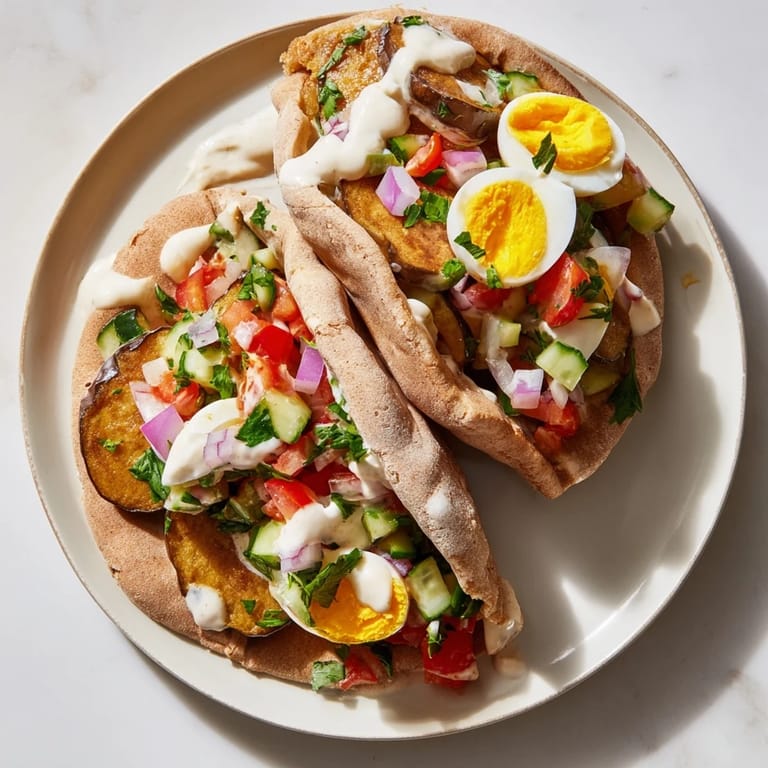
- Israeli salad (tomatoes, cucumber, red onion, parsley, lemon juice, olive oil): This vibrant chopped mixture is the soul of sabich—fresh, bright, and genuinely alive on your tongue.
- Tahini sauce (tahini paste, water, lemon juice, garlic, salt): The creamy binder that makes everything cohere; if it's too thick, add water tablespoon by tablespoon until it flows like silk.
- Pita breads (4 large): Warm them gently so they stay supple and don't tear when you're stuffing them.
- Amba (1/2 cup pickled mango sauce, optional): This adds a funky, tangy depth that's traditional but absolutely optional if you can't find it.
- Hot sauce, pickles, and cilantro (to taste): These are your finish line choices—season the final sandwich exactly how you want it.
Tired of Takeout? 🥡
Get 10 meals you can make faster than delivery arrives. Seriously.
One email. No spam. Unsubscribe anytime.
Instructions
- Salt and rest your eggplant:
- Sprinkle the rounds generously with salt and let them sit for 15 minutes—you'll see them weep out their moisture, which is exactly what you want. Pat them completely dry afterward; any water left behind will steam instead of fry.
- Flour and fry until golden:
- Dredge each slice lightly in flour, shaking off excess, then slide them into hot oil. They need about 2 to 3 minutes per side to turn deep golden and crispy on the outside while staying tender within; this is where the magic happens.
- Hard-boil your eggs:
- While the eggplant is frying, bring a pot of water to a rolling boil, add eggs, then reduce to a simmer for exactly 9 minutes. Transfer to ice water immediately to stop the cooking, which prevents that gray-green ring around the yolk.
- Build your Israeli salad:
- Dice everything small and fine—the tomatoes, cucumber, onion—then toss with parsley, lemon juice, olive oil, salt, and pepper. Do this while the other components are still warm so the flavors begin to marry.
- Blend your tahini sauce:
- Whisk tahini with water and lemon juice first, then add minced garlic and salt. The sauce will seem thick at first, but keep whisking and it will loosen into a pourable cream; add more water only if absolutely needed.
- Warm and pocket your pita:
- Heat the breads gently in a dry skillet or wrapped in foil in the oven just until they're pliable, then carefully slice each one open to create a pocket without tearing through to the other side.
- Assemble and serve immediately:
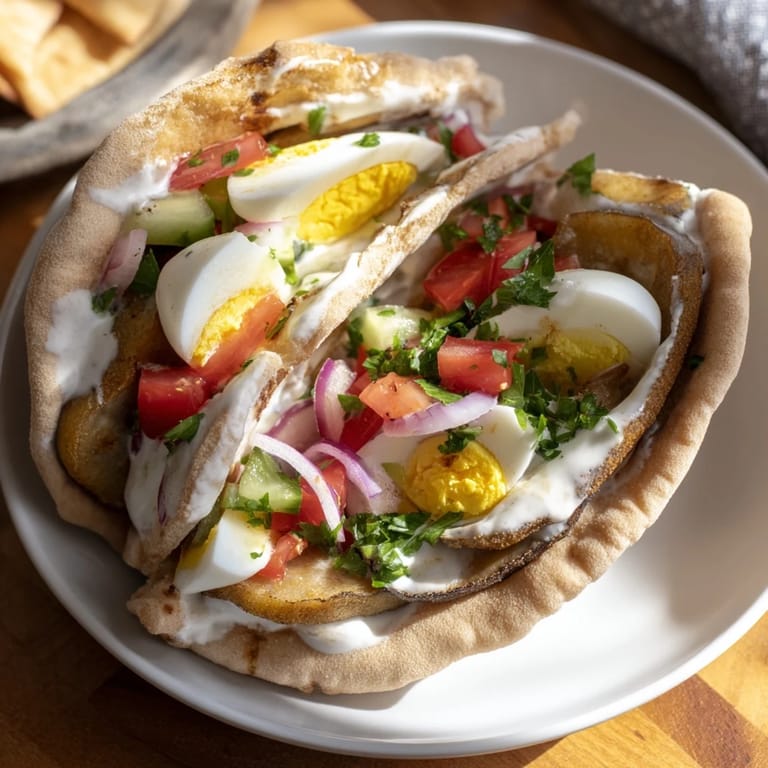
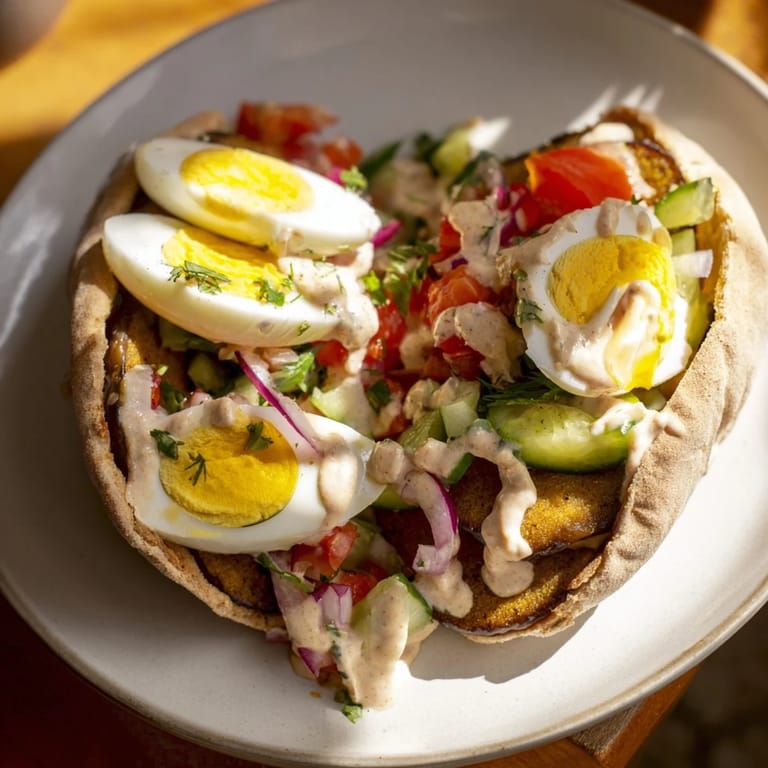
- Layer fried eggplant into each pita, add sliced eggs, spoon in Israeli salad, then drizzle generously with tahini sauce. Top with amba, pickles, hot sauce, and cilantro however you like, then eat it while everything is still warm and the eggplant hasn't started to soften.
 Save
Save There's a moment during assembly when you're holding a warm pita in one hand and looking at all these components—the golden eggplant, the vibrant salad, the creamy tahini—and you realize you're about to create something that tastes like pure happiness. That moment never gets old, no matter how many times you make it.
The Fried Eggplant Secret
I used to make eggplant dishes that turned into spongy sadness because I'd skip the salting step or use too much flour. Then I watched a street vendor work, and it clicked: eggplant is basically a sponge that wants to absorb oil, so you have to remove as much water as possible beforehand and coat it minimally. The first time I did it right, the eggplant had this incredible texture—crispy and golden outside, creamy and mild inside—and I realized that one small technique change had solved a problem I'd been carrying for years.
Why the Tahini Matters
Tahini gets a bad reputation because so many people have encountered versions that are either gritty or so thin they don't coat your mouth. The secret is that tahini and water need to be friends, not enemies—whisk them together slowly and the paste will gradually relax into something silky and luxurious. Add the lemon juice and garlic last, after the base is already smooth, or you'll disrupt the emulsion you've just worked so hard to create. A properly made tahini sauce doesn't just dress the sandwich; it becomes the thing that ties every other element together into something coherent and craveable.
Building Your Own Sabich
One of the things I love most about sabich is how forgiving it is to personal preference and improvisation. The base—eggplant, eggs, salad, tahini, warm bread—is sacred, but everything else is negotiable based on what you have, what you're craving, or what the season offers you. I've made it with roasted red peppers added to the salad, with berbere spice sprinkled on top, with pomegranate seeds when they were in season, and every version felt equally authentic because that's how street food works.
- If amba is unavailable or too funky for your taste, a spoonful of harissa mixed with yogurt creates a similar complexity.
- Pickles are optional but genuinely transformative—the acidity cuts through the richness of the tahini beautifully.
- Warm your pita in the skillet where you just fried the eggplant for an invisible boost of flavor.
 Save
Save Sabich is the kind of food that reminds you why home cooking matters—it takes humble ingredients and turns them into something that feels both deeply nourishing and genuinely exciting. Make it once and I promise you'll make it again.
Recipe FAQs
- → What is the best way to fry eggplant for Sabich?
Slice eggplant into rounds, salt them to remove excess moisture, pat dry, then dredge lightly in flour before frying in hot vegetable oil until golden and crisp.
- → How do you make the tahini sauce creamy?
Whisk tahini paste with water, lemon juice, minced garlic, and salt, adjusting the water to achieve a smooth, pourable consistency.
- → Can I prepare Sabich ahead of time?
Prepare components like the salad, tahini sauce, and boiled eggs in advance, but assemble just before serving to maintain freshness and texture.
- → What are good additions to customize the dish?
Traditional extras include pickled mango sauce (amba), sliced pickles, fresh cilantro, and hot sauce to enhance flavor and add variety.
- → Is this suitable for vegan diets?
For a vegan version, omit the eggs or substitute with tofu and use vegan-friendly pita bread to keep it plant-based.