 Save
Save The first time I made Iraqi kebab tikka, I was standing in my kitchen on a Friday evening, the smell of cumin and coriander filling the air as I kneaded the meat mixture by hand. My neighbor had just given me her family's recipe, passed down from Baghdad, and I was determined to get it right. The spice blend seemed almost musical in its precision—a pinch of cinnamon here, coriander there—and when I wrapped that first portion around a metal skewer, I realized I was holding something that had fed families for generations.
I'll never forget serving these at a small dinner party last summer—my friend took one bite and immediately asked for the recipe, then caught herself and said, 'Actually, no, just invite me over whenever you make them.' That's when I knew I'd nailed it. The way people reach for a second one before they've even finished the first is the real test of a recipe.
Ingredients
- Ground beef or lamb (500 g, 80% lean): The lean ratio matters because it keeps the kebabs from becoming greasy while maintaining that tender bite; a mix of both gives you deeper flavor, but either works beautifully.
- Medium onion, finely grated: Grating releases the juice that keeps everything moist, and the onion almost melts into the meat, creating flavor rather than texture.
- Garlic, minced (2 cloves): Fresh garlic here is non-negotiable; it turns sweet and mellow as it cooks, adding warmth without harshness.
- Fresh parsley, finely chopped (2 tbsp): This brings a bright green note that cuts through the richness and makes every bite feel fresh.
- Ground cumin (1 tsp): The backbone of the spice profile, earthy and warm, giving these kebabs their unmistakable Iraqi character.
- Ground coriander (1 tsp): Citrusy and subtle, it rounds out the cumin and prevents the spice blend from tasting one-dimensional.
- Ground paprika (1/2 tsp): A touch of sweetness and gentle smokiness that builds on the grill.
- Ground allspice (1/2 tsp): This is the secret that makes people ask what you put in them; it adds complexity without being obvious.
- Ground cinnamon (1/4 tsp): A whisper of warmth that shouldn't be skipped, even though it seems odd next to savory spices.
- Chili flakes (1/4 tsp, optional): Only if you want heat; I usually leave these out and let the spices shine.
- Salt and black pepper: Season generously; the meat is your foundation and deserves seasoning that tastes bold, not timid.
Tired of Takeout? 🥡
Get 10 meals you can make faster than delivery arrives. Seriously.
One email. No spam. Unsubscribe anytime.
Instructions
- Mix the meat into a flavorful paste:
- Combine everything in a large bowl and work it with your hands until the mixture feels slightly sticky and holds together; this is when you know the onion juice has distributed evenly and the spices are coating every bit of meat.
- Let it rest in the fridge:
- Thirty minutes might feel long, but this time in the cold allows the flavors to deepen and the mixture to firm up, making it easier to shape without falling apart on the skewer.
- Prepare your grill and skewers:
- If you're using wooden skewers, soak them now so they don't catch fire; bring your grill to medium-high heat and let it get properly hot—you want to hear a sizzle when the meat hits the grates.
- Shape the kebabs with damp hands:
- Divide into eight equal portions and press each one firmly around a skewer into a long, even sausage about 12 to 15 centimeters, compacting as you go so it holds together during cooking.
- Grill with patience and attention:
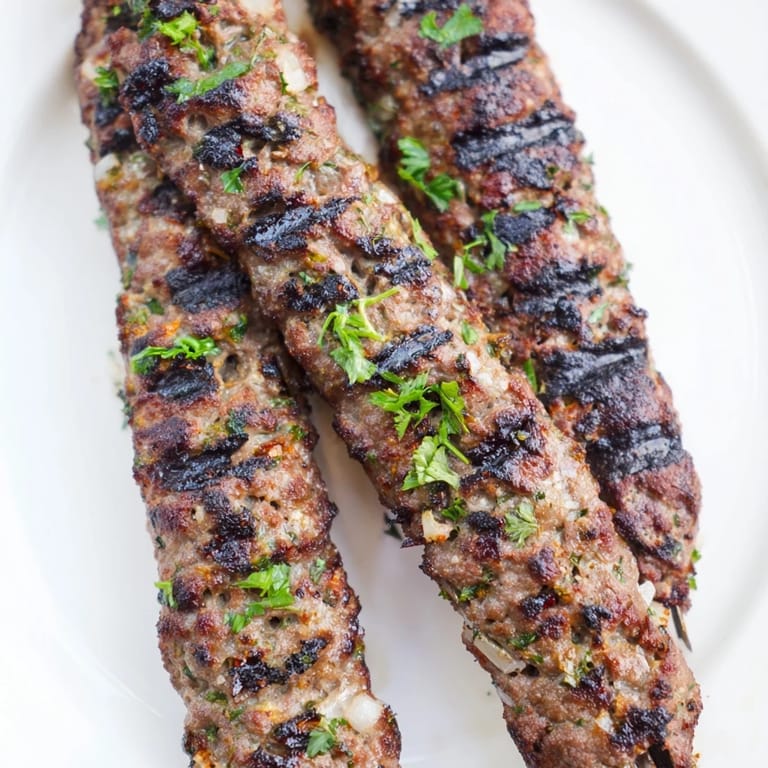
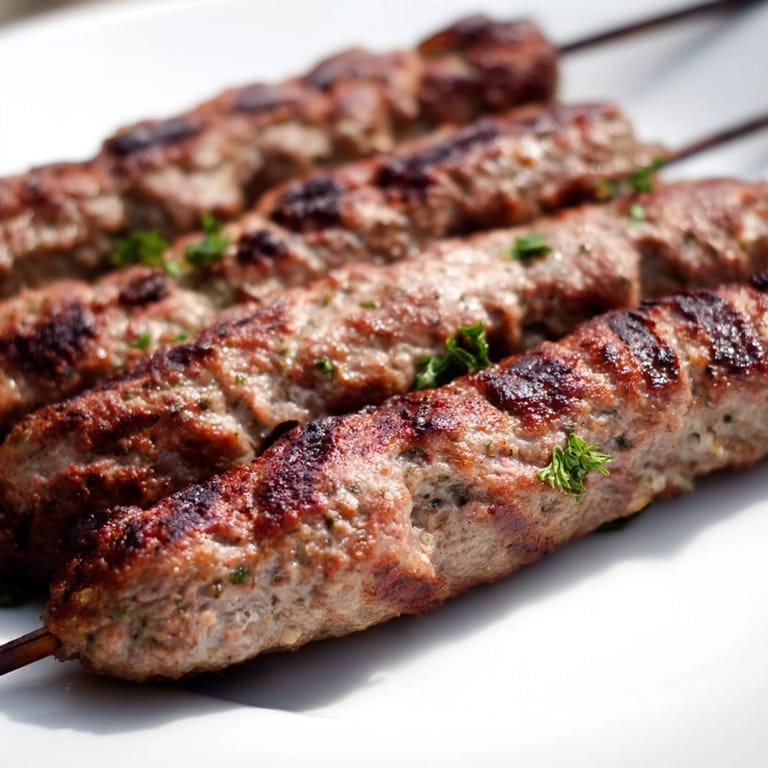
- Place them over the heat and turn every few minutes until the outside is richly browned with real char marks and the inside is cooked through; this takes about 12 to 15 minutes total, and you'll know it's done when you press one gently and it feels firm but still tender.
- Serve while they're hot:
- Transfer them immediately to flatbread, pile on the tomatoes and onions and parsley, squeeze lemon over everything, and eat before they cool down.
 Save
Save What struck me most about these kebabs wasn't just how they tasted, but how they brought people together in a simple, honest way. There's something about food cooked over fire that feels ancient and real, and these kebabs carry that feeling straight to the table.
The Spice Chemistry Behind These Kebabs
The spice combination here isn't random; it's built on balance. The cumin and coriander are the main players, warm and earthy, but that tiny bit of cinnamon and allspice prevents them from becoming heavy or one-note. I learned this by making them dozens of ways, and every time I skip even the quarter teaspoon of cinnamon, I miss it immediately. The paprika adds a visual warmth and a gentle sweetness that makes the whole blend feel cohesive rather than like spices thrown together.
Grilling Technique and Temperature
The most common mistake I see is cooking these over heat that's too high or not turning them often enough. Medium-high heat is the sweet spot—hot enough to create that beautiful brown exterior and char, but not so hot that the outside burns before the inside cooks through. I turn mine every two to three minutes, almost like I'm attending to them, and this constant movement ensures even cooking and prevents any one side from getting too dark.
Variations and Serving Ideas
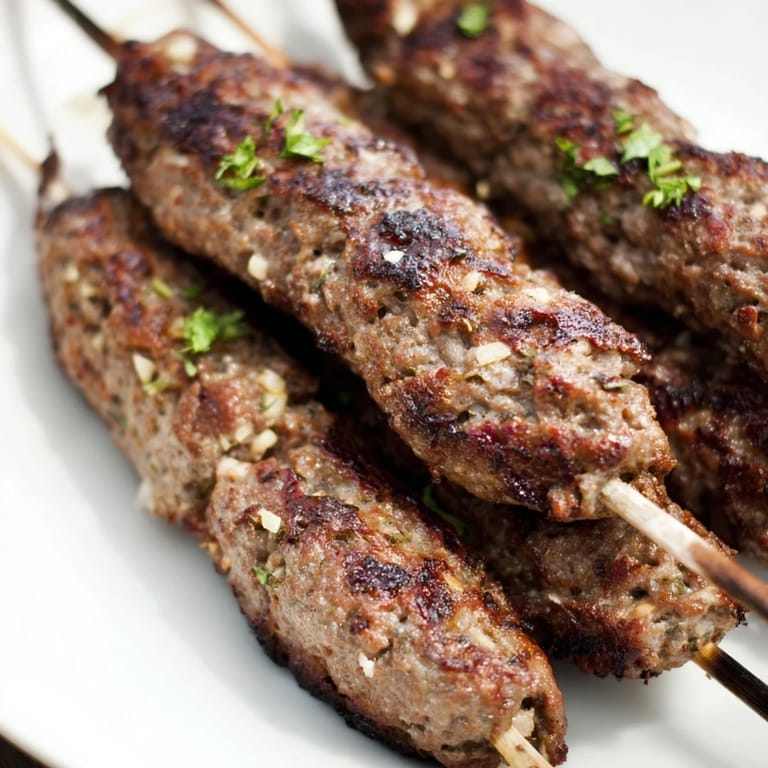
While the classic preparation is perfect as-is, I've found that a splash of pomegranate molasses or a sprinkle of sumac mixed into the meat before chilling adds another layer of complexity that feels like a gift to the palate. Some nights I make a simple yogurt sauce by mixing thick yogurt with garlic and salt, and other times I serve them with tahini mixed with lemon juice and a bit of water to make it pourable. The kebabs themselves are the star, but these additions are like giving them a spotlight.
- Try mixing in a tablespoon of pomegranate molasses for a subtle tang that deepens the spices.
- Serve them on warmed flatbread with plenty of fresh herbs and squeeze a lemon wedge over everything just before eating.
- A simple yogurt-garlic sauce on the side turns these into something even more special.
 Save
Save These kebabs have become my go-to when I want to cook something that tastes like care and tradition, something that makes people slow down and actually taste what they're eating. Once you master this recipe, you'll find yourself making it again and again.
Recipe FAQs
- → What type of meat is best for authentic flavor?
Using a mix of lean ground beef and lamb provides a juicy texture and deeper flavor characteristic of traditional Iraqi kebabs.
- → How to prevent the kebabs from drying out while grilling?
Refrigerate the spiced meat mixture before shaping to keep it firm. Turn kebabs regularly and grill over medium-high heat for even cooking and moisture retention.
- → Can wooden skewers be used safely on the grill?
Yes, soak wooden skewers in water for at least 30 minutes before grilling to prevent burning or charring.
- → What spices are essential for traditional Iraqi kebab tikka?
Cumin, coriander, paprika, allspice, and cinnamon create the signature warm and aromatic spice profile of this dish.
- → What are ideal side accompaniments to serve with these kebabs?
Flatbreads, fresh sliced tomatoes, onions, parsley, and lemon wedges enhance the flavor and balance the smoky meat.