 Save
Save There's something about the smell of ham and beans simmering in a Dutch oven that makes a kitchen feel like home, even if you're cooking somewhere unfamiliar. I discovered cassoulet not in France, but on a gray November afternoon when a friend handed me a worn cookbook and said, "Make this when you need to feel better." That first time, I was skeptical—white beans seemed plain, the ingredient list was long—but three hours later, the whole apartment smelled like a French farmhouse, and I understood why this dish has survived centuries.
I made this for a dinner party where half the guests were skeptical about "another bean dish," and by the second spoonful, the whole table went quiet in that good way. Someone asked for seconds before finishing their first bowl, and I caught myself smiling at the stove while ladling more into their bowl. That's when I realized cassoulet isn't just food—it's permission to slow down and feed people properly.
Ingredients
- Smoked ham, diced (400 g / 14 oz): This is your backbone—get good quality if you can, because the smokiness carries the whole dish; I learned this the hard way with budget ham that tasted like salt.
- Pork sausage, thickly sliced (200 g / 7 oz): Slice it thick so the pieces stay intact during the long cook and add real texture to each spoonful.
- Bacon or pancetta, diced (100 g / 3.5 oz): This renders down and seasons the entire pot with pure, savory fat.
- Dried white beans, soaked overnight and drained (500 g / 1 lb): Cannellini or Great Northern beans work equally well; the overnight soak isn't just tradition, it actually prevents the beans from breaking apart during cooking.
- Carrots, diced (2 medium): They sweeten the broth naturally and soften into almost nothing, which means their flavor becomes background music rather than a lead instrument.
- Celery stalks, diced (2): This is the secret nobody talks about—it adds a subtle earthiness that makes people wonder what that indefinable flavor is.
- Onion, finely chopped (1 large): The base of everything; I mince mine fine so it melts completely into the sauce.
- Garlic cloves, minced (4): Add this after the onions are soft, or it'll turn bitter and ruin the whole mood.
- Diced tomatoes, drained (1 can / 400 g / 14 oz): Draining them keeps the cassoulet from becoming too wet and watery.
- Chicken stock (1.2 L / 5 cups): Use something you'd actually drink—the broth becomes the soul of the dish.
- Tomato paste (2 tbsp): This concentrates flavor and adds depth that you can't fake with anything else.
- Olive oil (2 tbsp): Good oil, nothing fancy, just good.
- Bay leaf and fresh thyme sprigs (1 bay leaf and 4 sprigs, or 1 tsp dried): Fresh herbs make a noticeable difference here, but dried works if that's what you have.
- Smoked paprika (1 tsp): This is where the dish gets its character—it whispers smoke through every bite.
- Salt and black pepper to taste: Don't skip the final adjustment; taste as you go.
- Fresh breadcrumbs for topping, optional (1 cup / 60 g): These create a golden crust that catches the spoon in the most satisfying way.
- Fresh parsley for garnish (2 tbsp chopped): A small green note at the end that makes it feel finished.
Tired of Takeout? 🥡
Get 10 meals you can make faster than delivery arrives. Seriously.
One email. No spam. Unsubscribe anytime.
Instructions
- Heat your oven and prepare your vessel:
- Set your oven to 160°C (325°F) so it's ready when you need it. Pull out your Dutch oven or largest, heaviest casserole dish—this is where the magic happens for the next several hours.
- Render the bacon until it sings:
- Heat olive oil in your Dutch oven over medium heat, then add the diced bacon or pancetta. Let it cook until the edges are golden and crispy, and the fat starts releasing into the pot—this takes about 5 minutes and fills your kitchen with the smell of promise.
- Build your aromatic base:
- Add the onion, carrots, and celery to the bacon fat and let them soften for 5 to 7 minutes, stirring occasionally. You'll hear the sizzle quiet down as the vegetables release their moisture; that's when you know they're ready.
- Wake up the garlic:
- Stir in the minced garlic and cook for just 1 minute—any longer and it bitters, any shorter and it doesn't release its aroma.
- Brown the ham and sausage:
- Add the diced ham and sausage slices to the pot and let them cook until lightly browned, about 3 to 4 minutes. You're not looking for deep color here, just enough to let the meat warm through and mingle with the vegetables.
- Deepen the flavor with tomato and spice:
- Stir in the tomato paste, smoked paprika, and drained diced tomatoes. Cook this mixture for 2 minutes, stirring constantly, so the tomato paste loses its raw taste and the paprika blooms into the oil.
- Add the beans and liquid:
- Pour in the soaked and drained beans, followed by the chicken stock, bay leaf, and thyme. Season generously with salt and pepper—remember, the beans will absorb this seasoning, so don't be shy.
- Bring everything to a gentle simmer:
- Let the pot come to a simmer on the stovetop, then cover it and transfer it to your preheated oven. The low, steady heat transforms everything into something cohesive and complex.
- Let time do the work:
- Bake for 1 hour and 30 minutes, stirring once or twice so nothing sticks to the bottom. When the beans are tender and the broth has thickened into something glossy and rich, you're getting close.
- Optional: Add a crackling top:
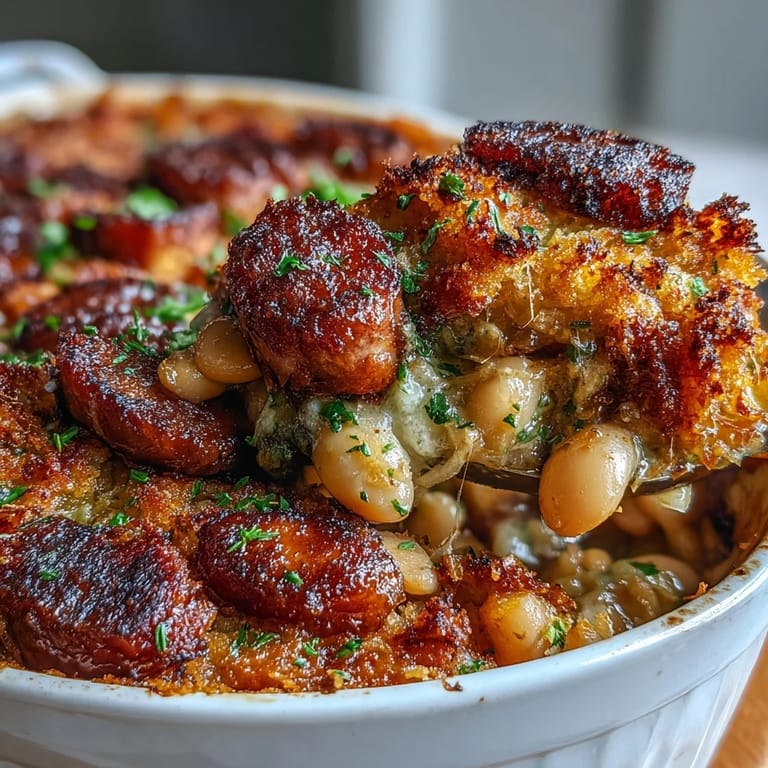
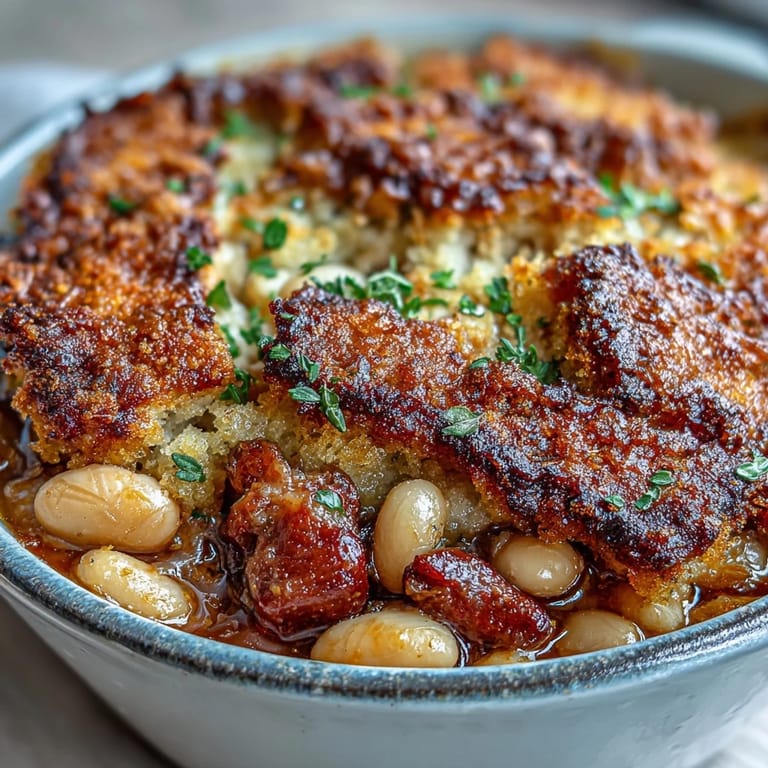
- If you want that golden breadcrumb crust, sprinkle the fresh breadcrumbs over the top in the last 15 minutes of cooking and let them bake uncovered until they're golden brown and crispy.
- Finish and serve:
- Remove the bay leaf and thyme sprigs, taste everything, and adjust the salt and pepper one more time. Scatter fresh parsley over the top and ladle it into deep bowls while it's still steaming.
 Save
Save My grandmother used to say that cassoulet was peasant food elevated by patience, and she was right. The first time I made it for her, she tasted it and closed her eyes for a long moment, then looked up and said, "You understand now," and somehow I knew she wasn't just talking about cooking.
Why This Dish Lasts
Cassoulet has survived centuries because it solves a problem that every kitchen faces: how do you make something magnificent from humble ingredients and time? There's no fancy technique here, no precision that requires a culinary degree—just good ingredients, a hot oven, and the willingness to wait. The beauty is in the watching, the occasional stir, the way the kitchen gradually fills with a smell that makes everyone stop what they're doing.
Serving and Pairing
Cassoulet wants crusty bread beside it, something substantial enough to soak up the broth without falling apart. I always serve it in deep, wide bowls so people can build each spoonful with bean, meat, and broth in perfect proportion. A robust red wine like Cahors or Côtes du Rhône isn't just a nice idea—it's the dish's conversation partner, cutting through the richness while echoing the earthiness back at you.
Making It Your Own
This recipe is a foundation, not a prison. I've made it with a ham bone instead of diced ham and watched the broth turn even richer and deeper. I've added extra thyme when I was feeling French, and I've stirred in red wine when I had an open bottle. The wonderful truth about cassoulet is that it's forgiving enough to welcome your changes and confident enough that they won't break it.
- Make it a day ahead—the flavors actually improve overnight, and you'll just reheat it gently before serving.
- For a vegetarian version, skip the meats entirely and increase the smoked paprika to compensate for the smokiness you're losing.
- Save any leftovers and reheat them slowly on the stovetop with a splash of stock, and they'll taste even better than the day before.
 Save
Save There's nothing complicated about cassoulet, only something worth doing slowly. Make it for people you want to feed well, pour everyone a glass of wine, and listen to the quiet that settles over the table when good food arrives.
Recipe FAQs
- → What types of beans work best in this dish?
Dried white beans such as cannellini or Great Northern soak overnight and provide a creamy texture once cooked, ideal for slow simmering in this dish.
- → Can it be prepared ahead of time?
Yes, making it a day ahead allows the flavors to meld and deepen, enhancing the overall taste when reheated.
- → How do I achieve a crispy topping?
Sprinkle fresh breadcrumbs over the dish in the last 15 minutes of baking and uncover the casserole for a golden, crunchy crust.
- → Which herbs best complement the flavors?
Fresh thyme and bay leaf add aromatic depth, while smoked paprika enhances the smoky richness of the ham and sausage.
- → Is there a vegetarian alternative?
Omit all meats and increase smoked paprika for depth. This maintains a rich, smoky character using only plant-based ingredients.
- → What equipment is needed to make this dish?
A heavy Dutch oven or casserole dish is preferred for even heat and slow cooking, along with basic tools like a chef’s knife and wooden spoon.