 Save
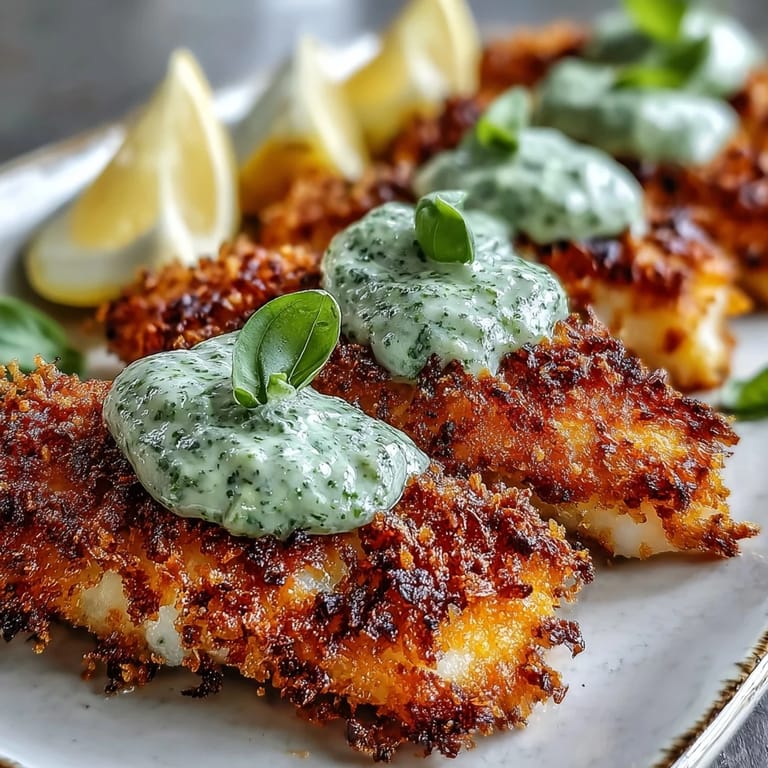
Save The smell of Parmesan browning in the oven always takes me straight back to a rainy Thursday when I was determined to make something better than frozen fish fingers. I had fresh haddock from the fishmonger, a block of good Parmesan, and a bag of peas that needed using. What started as a simple dinner experiment turned into something my family now requests by name. These goujons are crispy, cheesy, and just fancy enough to feel like a treat without any fuss.
I made these for friends once when I was nervous about cooking for other people. They arrived just as I pulled the tray from the oven, and the kitchen smelled like a bistro. We ate them straight off the baking sheet with the pesto in a bowl in the middle, passing lemon wedges and laughing. One friend said it tasted like the posh fish and chips she had on holiday in Cornwall, and I have never forgotten that compliment.
Ingredients
- Skinless haddock fillets: Haddock is mild and flaky, perfect for goujons, but cod or pollock work just as well if that is what you find fresh.
- Plain flour: The first coating helps the egg stick, creating a base for the crust to cling to.
- Eggs: Beaten eggs act as the glue between flour and breadcrumbs, sealing in moisture.
- Panko breadcrumbs: These Japanese breadcrumbs stay crispier than regular ones and give a really satisfying crunch.
- Parmesan cheese: Finely grated Parmesan melts into the crust and adds a nutty, salty depth that makes these special.
- Black pepper, sea salt, smoked paprika: Simple seasoning with a hint of smokiness if you want a little extra warmth.
- Frozen peas: Blanched and blitzed, they become the vibrant base of the pesto, sweet and soft.
- Fresh basil leaves: Basil brings that classic pesto aroma and a peppery freshness.
- Garlic clove: Just one small clove is enough to give the pesto a gentle kick without overpowering the peas.
- Pine nuts: They add richness and a buttery texture, but sunflower seeds work beautifully too.
- Extra virgin olive oil: Use good quality oil here, it carries all the flavors together.
- Lemon juice: Brightens the pesto and balances the richness of the cheese and oil.
Tired of Takeout? 🥡
Get 10 meals you can make faster than delivery arrives. Seriously.
One email. No spam. Unsubscribe anytime.
Instructions
- Prepare the oven and tray:
- Preheat your oven to 200°C (180°C fan) and line a baking sheet with parchment paper. This stops the goujons from sticking and makes cleanup so much easier.
- Set up your coating station:
- Arrange three shallow bowls in a row with flour in the first, beaten eggs in the second, and the panko mixed with Parmesan, salt, pepper, and paprika in the third. Having everything ready makes the coating process smooth and quick.
- Coat the haddock strips:
- Take each haddock strip and dip it first into the flour, shaking off any excess, then into the egg, and finally press it into the Parmesan breadcrumb mixture until fully coated. Lay each one on the prepared baking sheet as you go.
- Bake until golden:
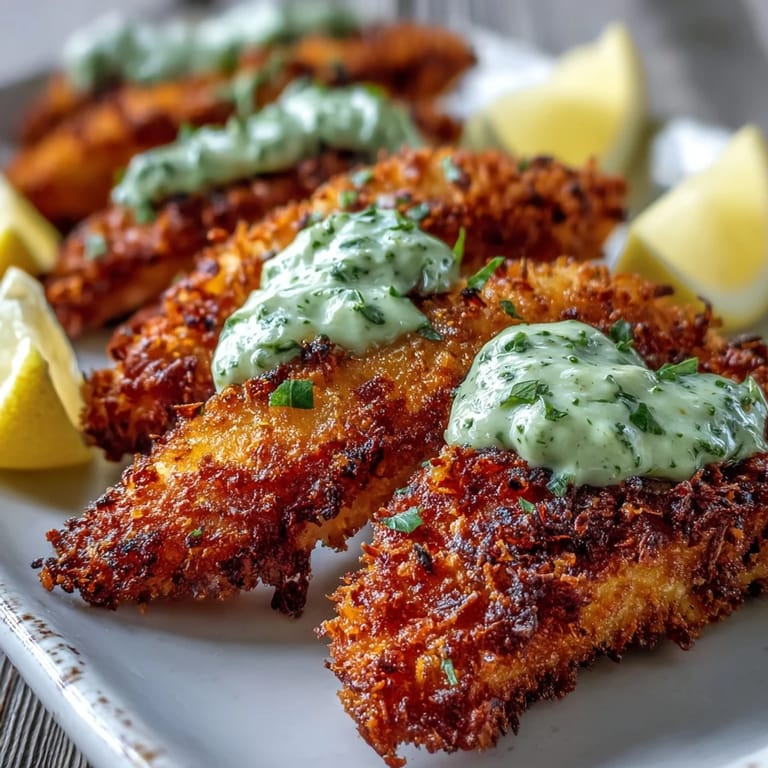
- Lightly spray or drizzle the goujons with a little olive oil, then bake for 15 to 20 minutes, turning them halfway through. You want them golden, crisp, and cooked through with no translucent bits left.
- Make the pea pesto:
- While the fish bakes, blanch the peas in boiling water for 2 minutes, drain, and run them under cold water to keep them bright green. Tip them into a food processor with basil, Parmesan, garlic, pine nuts, olive oil, and lemon juice, then blitz until you have a textured, creamy pesto.
- Season and serve:
- Taste the pesto and add salt and pepper as needed. Serve the hot goujons with a generous spoonful of pesto on the side, lemon wedges for squeezing, and a handful of salad leaves if you like.
 Save
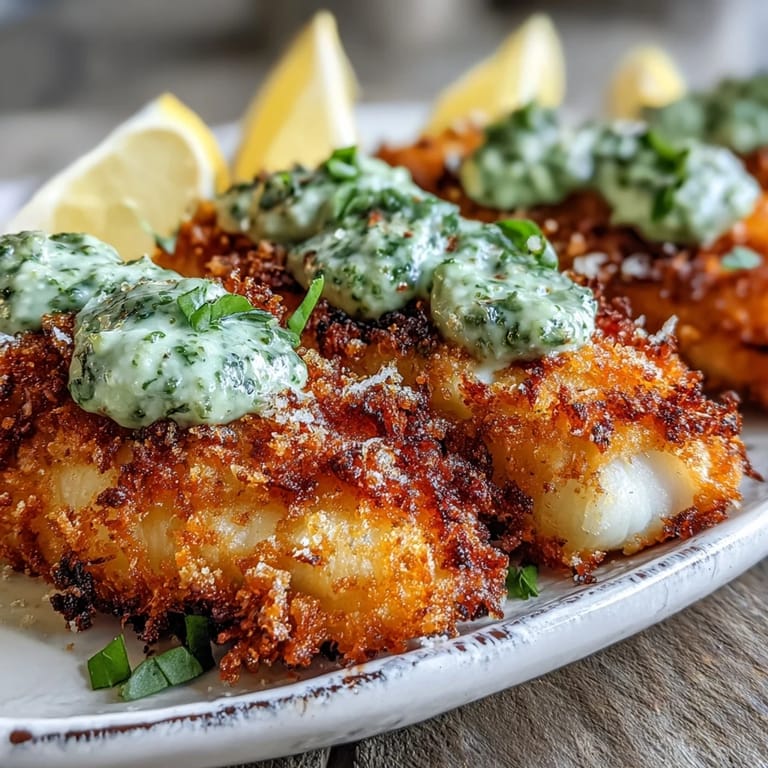
Save There is something about breaking open a hot goujon and seeing the steam rise from the flaky white fish inside that feels like a small victory. The first time I served these with the pea pesto, I worried it might be too much green for my youngest, but she dipped every single piece in it and asked if we could have it again the next day. That is when I knew this recipe was a keeper.
Choosing Your Fish
Haddock is my go to because it has a delicate flavor and firm texture that holds up well when cut into strips. Cod is a great swap if you prefer something a bit meatier, and pollock is a more sustainable and affordable option that works just as well. Ask your fishmonger to remove the skin if it is still on, and check for any small bones before you slice.
Making It Gluten Free
Swap the plain flour for a gluten free blend and use gluten free panko breadcrumbs, which are now easy to find in most supermarkets. The coating still crisps up beautifully, and no one will know the difference. I have made these for a friend with coeliac disease and she said they were the best fish goujons she had eaten in years.
Storing and Reheating
These are best eaten fresh from the oven when the crust is at its crispiest. If you have leftovers, store them in an airtight container in the fridge for up to two days. Reheat them in a hot oven at 200°C for about 8 minutes to bring back some of that crunch.
- The pea pesto can be made a day ahead and kept covered in the fridge.
- You can freeze the uncooked coated goujons on a tray, then transfer to a bag once solid.
- Bake from frozen, adding an extra 5 minutes to the cooking time.
 Save
Save These goujons have become one of those recipes I make when I want something comforting but still a bit special. Serve them with the pea pesto, a squeeze of lemon, and watch them disappear.
Recipe FAQs
- → Can I use a different type of fish?
Yes, cod or pollock work excellently as substitutes for haddock. Choose firm white fish fillets that hold their shape when cut into strips.
- → How do I make this gluten-free?
Simply replace the plain flour with gluten-free flour and use gluten-free breadcrumbs instead of panko. The rest of the preparation remains the same.
- → Can I prepare the pea pesto in advance?
Absolutely. The pesto can be made up to 2 days ahead and stored in an airtight container in the refrigerator. Drizzle a little olive oil on top to prevent browning.
- → What can I use instead of pine nuts?
Toasted sunflower seeds make an excellent nut-free alternative. You can also use walnuts or cashews if tree nuts aren't an issue.
- → Can I fry these instead of baking?
Yes, you can shallow fry the goujons in vegetable oil over medium-high heat for 3-4 minutes per side until golden and cooked through.
- → How do I know when the haddock is fully cooked?
The fish should be opaque throughout and flake easily with a fork. The internal temperature should reach 63°C (145°F) and the coating should be golden brown.