 Save
Save There's something about the sound of a blender whirring on a quiet Sunday morning that makes everything feel possible. I discovered smoothie bowls years ago when a friend casually mentioned she'd started eating her breakfast with a spoon instead of a straw, and I remember thinking that sounded unnecessarily complicated until I actually tried one. That first bite of creamy green base giving way to the crunch of granola and the burst of fresh fruit changed how I approached mornings entirely. Now it's become my go-to when I want something that feels both indulgent and genuinely good for me, without any of the guilt.
I made this for my sister one morning when she was visiting from out of town, and she spent the entire time asking what was making it taste so bright and alive. Watching someone genuinely surprised that they were eating spinach—that they couldn't even taste it beneath the mango and pineapple—reminded me why this bowl became such a permanent fixture in my kitchen. It's become my secret weapon for feeding people something nutritious without any of the performance of healthy eating.
Ingredients
- Fresh spinach leaves: The foundation of everything here, and the best version uses leaves that are actually tender and sweet-tasting rather than bitter, so taste yours before committing if it's been sitting around.
- Frozen banana: This is what makes the whole thing creamy without any dairy, so don't skip the freezing step or use a fresh one expecting the same result.
- Frozen mango and pineapple chunks: These are doing the heavy lifting flavor-wise, so buying decent quality frozen fruit matters more than you'd think since they're the stars here.
- Unsweetened almond milk: The liquid backbone that lets everything blend together smoothly, though honestly any milk works if you have it on hand.
- Chia seeds: They add a subtle texture and actual nutritional punch without making the bowl feel heavy or dense.
- Nut butter: Optional but genuinely transformative if you want that velvety texture that makes you close your eyes while eating.
- Honey or maple syrup: Just a teaspoon balances everything if your frozen fruit isn't naturally sweet enough for your taste.
- Granola: Choose one that actually has texture and doesn't dissolve the second it touches the bowl base, and check the ingredients if you're avoiding gluten.
- Mixed fresh fruit for topping: The more colorful your selection, the more excited you'll be to eat it, so pick things that appeal to you beyond just what's practical.
- Shredded coconut and extra seeds: These are the flourishes that make the bowl feel intentional rather than like you just threw things together.
Tired of Takeout? 🥡
Get 10 meals you can make faster than delivery arrives. Seriously.
One email. No spam. Unsubscribe anytime.
Instructions
- Gather your frozen fruits and get them ready:
- Measure out your spinach, banana, mango, and pineapple, spreading them on the counter so you can see exactly what's going into the blender. This prevents you from halfway through realizing you forgot something or accidentally doubling an ingredient.
- Blend until smooth and creamy:
- Combine everything in your blender and go high until the texture is completely uniform with no visible spinach pieces. If it's resisting the blade or seems too thick, add almond milk a splash at a time until it reaches that perfect spoonable consistency.
- Pour into your bowls with purpose:
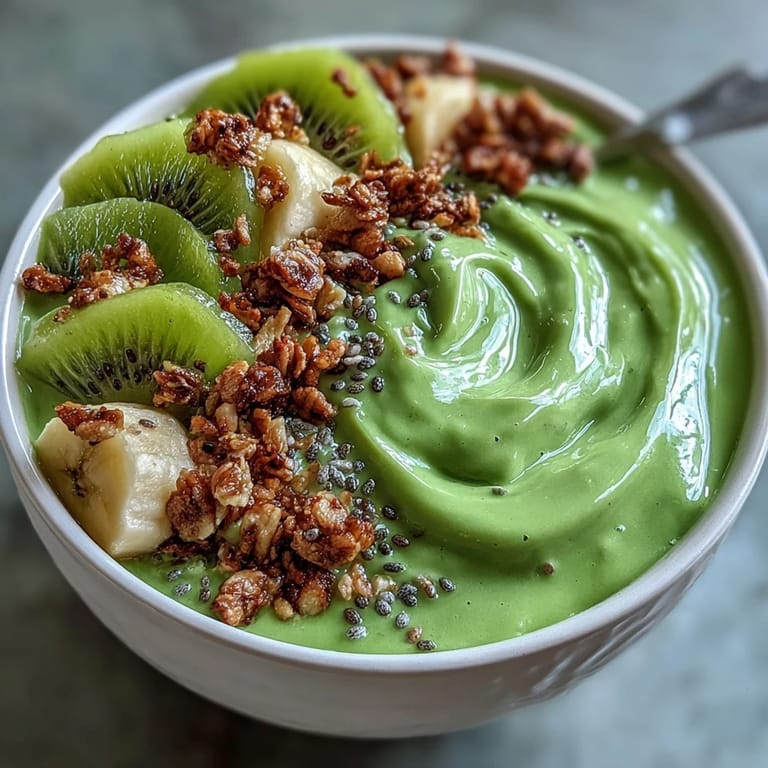
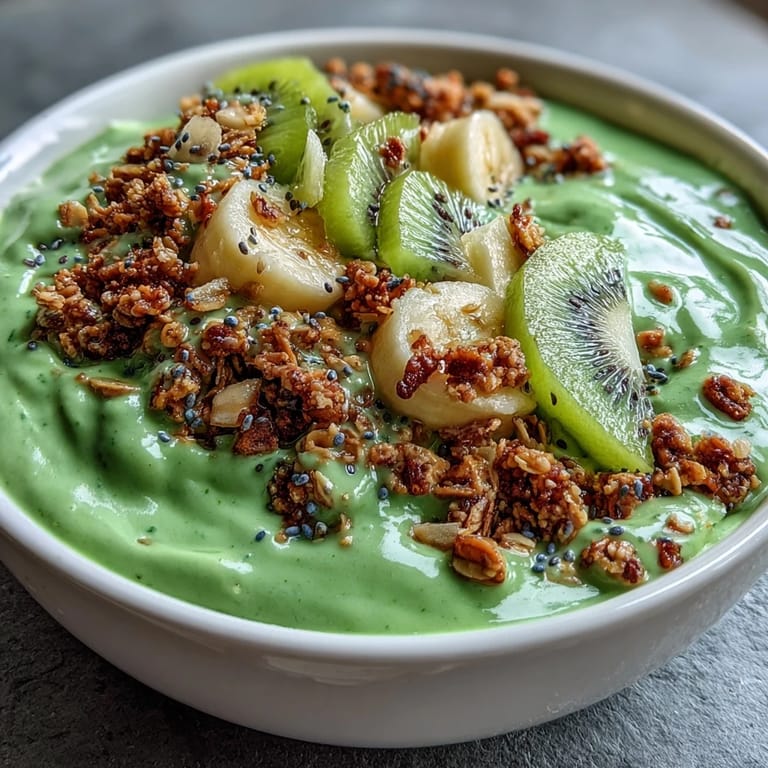
- Divide the smoothie base evenly between two bowls, pouring it gently so you can see the color you've created. The vibrant green should feel like proof that you did something good for yourself.
- Build your bowl with toppings:
- Start with granola since it needs the crunch factor, then add your fresh fruit in whatever arrangement feels pleasing to your eye. Finish with coconut and seeds if you're using them, treating it like you're plating something special rather than just assembling breakfast.
- Eat it fresh, with a spoon:
- Serve immediately while the granola is still crispy and the fruit is still cold. The entire point is that contrast between creamy and crunchy, so don't let it sit.
 Save
Save My partner walked into the kitchen once while I was making these and asked why I looked so satisfied about eating something healthy, and I realized it was because there's something deeply comforting about a bowl of food that looks like a garden and tastes like summer. That moment shifted how I think about nutrition—it stopped being something you endure and became something you actually look forward to.
Making It Work With What You Have
The real beauty of this recipe is that it's infinitely flexible, so you're never stuck with it as written. Don't have mango? Use frozen berries or peaches instead and adjust the sweetener to taste. If spinach feels too assertive, try arugula or even frozen broccoli florets, which sounds strange until you realize they virtually disappear into the fruity sweetness. The formula is simply frozen fruit plus something green plus a liquid, so once you understand that, you can improvise confidently.
The Texture Game
The secret to loving smoothie bowls is understanding that every element exists for a reason—the base is there to be spoonable and creamy, the granola is there to be crunchy, the fresh fruit is there to be fresh and bright. When all three textures hit your mouth at once, it changes how your taste buds receive the whole thing. I learned this the hard way by making them too thick, too thin, with soggy granola, or with no fresh fruit contrast, and each mistake taught me something about what actually matters.
Customizations and Swaps That Actually Work
Once you've made this a few times, you start understanding which changes enhance it and which ones just make it different. Adding protein powder works beautifully if you want this to be more substantial, while adding a scoop of yogurt shifts it into completely different territory. Experimenting with different nut butters—almond, peanut, tahini—creates subtle flavor shifts that keep it interesting if you make these regularly.
- Swap nut butter for tahini or seed butter if nuts aren't your thing or you're cooking for someone with allergies.
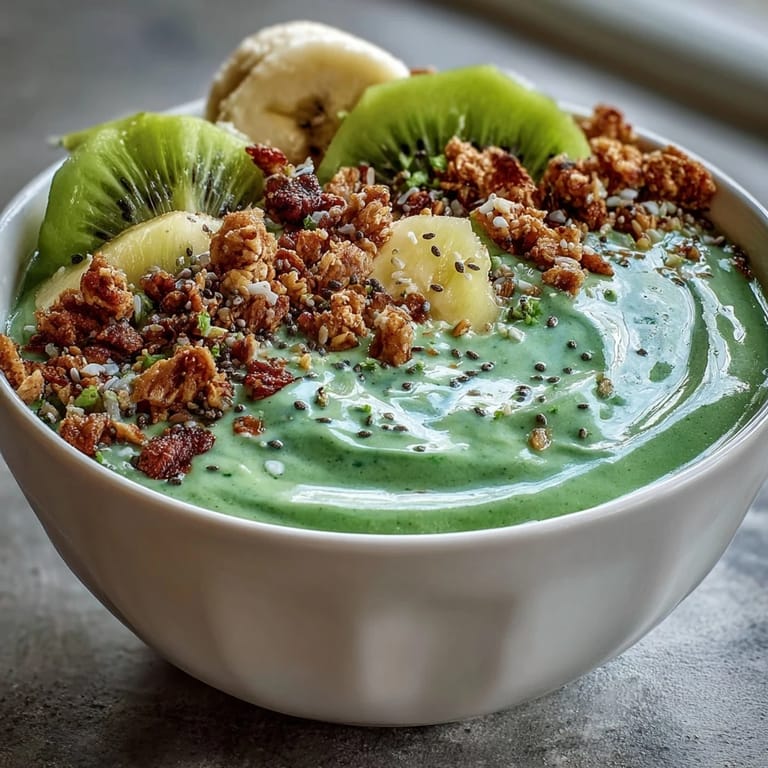
- Layer the toppings in a specific order rather than scattering them randomly so every spoonful gets a balanced combination of textures.
- Make the smoothie base slightly thicker if you prefer a more substantial texture, or thinner if you like it sippable when you're in a rush.
 Save
Save This bowl has become my answer to mornings when I want something that tastes like I'm treating myself while also feeling genuinely nourishing. It's the rare breakfast that makes you happy while you're eating it and proud of yourself afterwards.
Recipe FAQs
- → Can I make this ahead of time?
It's best enjoyed immediately after blending to maintain the creamy texture and prevent separation. The smoothie base can be prepared the night before and stored in the refrigerator, though you may need to blend it again before serving.
- → What liquid alternatives work well?
Any milk variety works including oat, coconut, soy, or dairy milk. Coconut milk adds extra richness, while oat milk provides a mild taste that lets the fruit flavors shine through.
- → How can I increase the protein content?
Add a scoop of your favorite protein powder, Greek yogurt, or extra nut butter. Hemp seeds and chia seeds already provide some protein, but you can double these portions for an additional boost.
- → Can I use fresh fruit instead of frozen?
Frozen fruit is recommended for the thick, creamy texture. If using fresh fruit, add ice cubes or reduce the liquid amount to achieve the same consistency. The bowl may be slightly less thick but still delicious.
- → What toppings work best?
Sliced bananas, berries, kiwi, and mango complement the green base beautifully. For crunch, try granola, toasted coconut flakes, chopped nuts, or extra seeds. Drizzle with nut butter or honey if desired.