 Save
Save There's something about summer that makes you crave cold noodles—I learned this the hard way when my air conditioning broke during a heatwave and I found myself standing in front of an open fridge at midnight, desperate for anything cooling. That's when I grabbed a package of soba noodles and started throwing together whatever vegetables looked promising, then whisked up a ginger-sesame sauce that changed everything. One bite and I understood why this dish shows up on tables across Southeast Asia, and now it's my answer to any "it's too hot to cook" moment.
I made this for my neighbors one evening when they brought over homemade mango sorbet, and we ended up eating on the back porch until the sun disappeared, trading bites and talking about nothing important. Watching them work through those noodles while the sesame aroma hung in the warm air—that's when I knew this recipe had staying power beyond just being a quick meal.
Ingredients
- Soba noodles: These buckwheat noodles have a subtle nutty flavor that pairs beautifully with sesame, though rice noodles work just as well if that's what you have—I've used both and neither lets you down.
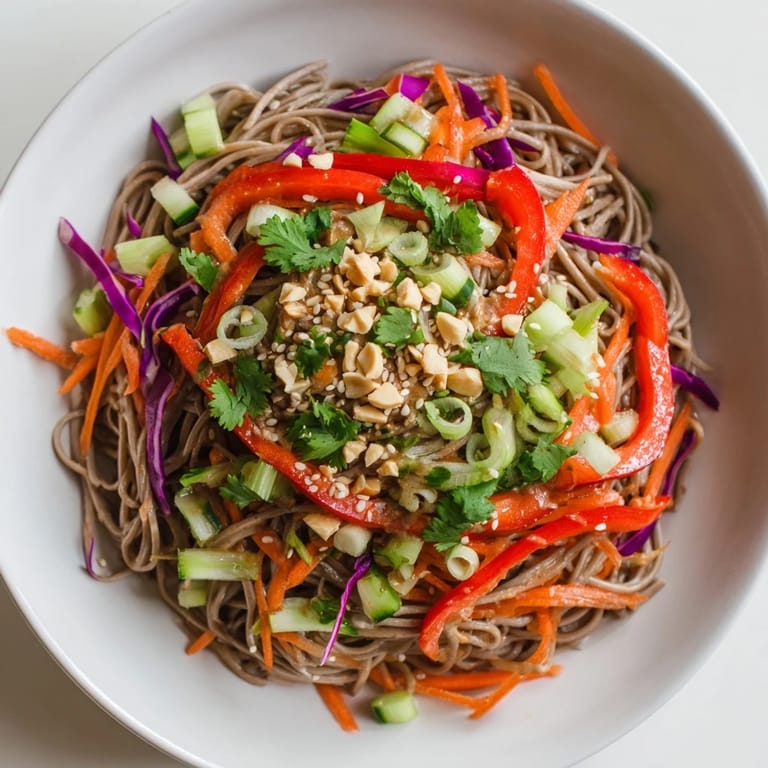
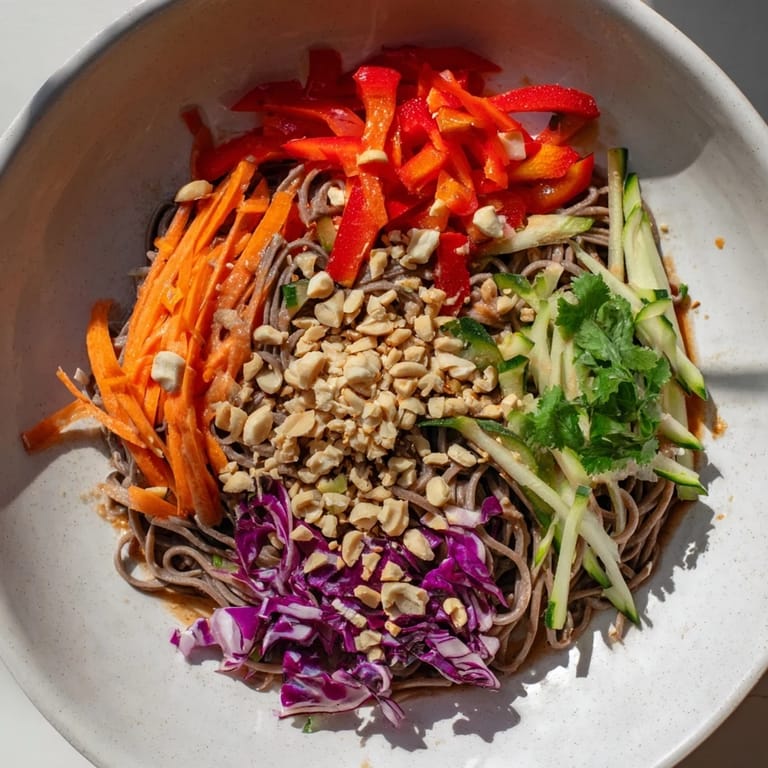
- Carrot and bell pepper: The carrot's natural sweetness balances the savory dressing, while the red pepper adds brightness and a crisp snap that survives the dressing without getting soggy.
- Cucumber: Seed it thoroughly to avoid watering down the salad, then cut it into thin matchsticks so it absorbs the dressing evenly.
- Spring onions and red cabbage: These provide sharpness and texture—the spring onions add a gentle bite while the cabbage stays pleasantly crunchy even after sitting with the dressing for hours.
- Fresh cilantro: Some people skip this and it's fine, but a handful of cilantro elevates everything with a fresh, almost cooling quality that makes the whole dish feel lighter.
- Sesame oil: Use the toasted kind—it's darker and has that unmistakable nutty aroma that makes people ask what smells so good the moment you walk in the kitchen.
- Soy sauce and rice vinegar: These form the backbone of the dressing, the salty and tangy foundation that lets the ginger and sesame shine.
- Fresh ginger: Grate it finely so it distributes evenly through the dressing—this is where you taste the brightness and warmth that makes cold noodles feel like comfort food even in summer.
- Roasted peanuts or cashews: These are the textural finale, the thing that makes you reach for another bite.
Tired of Takeout? 🥡
Get 10 meals you can make faster than delivery arrives. Seriously.
One email. No spam. Unsubscribe anytime.
Instructions
- Boil the noodles until just tender:
- Follow the package timing exactly—usually 8-10 minutes for soba—then drain and run them under cold water while stirring gently with your fingers until they're completely cool and no longer clumping together. This moment matters because warm noodles will absorb the dressing too quickly and turn mushy.
- Arrange all your vegetables in neat little piles:
- Having everything prepped and ready changes the energy of assembly—you're not chopping while hunger builds, you're simply combining. This is also the moment where your mise en place becomes your meditation.
- Whisk the dressing into a cohesive sauce:
- Combine the soy sauce, rice vinegar, sesame oil, honey, ginger, garlic, sriracha if you're using it, and sesame seeds in a small bowl, stirring until the honey dissolves completely and everything tastes balanced—it should be equally salty, tangy, and sweet with a gentle heat underneath.
- Combine everything in one large bowl:
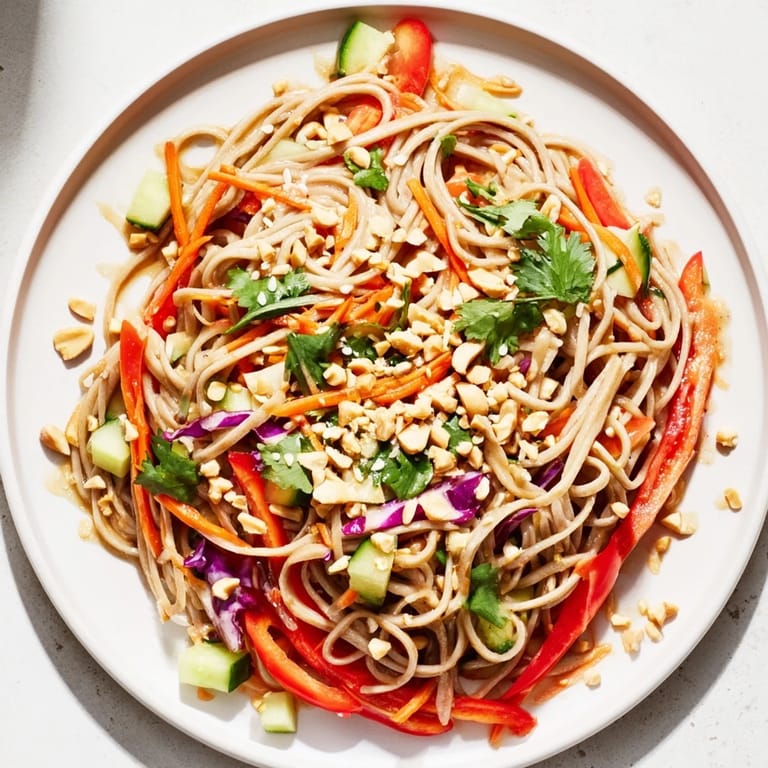
- Toss the cooled noodles with all the vegetables and cilantro, pour the dressing over everything, and use salad tongs or two forks to coat each strand and vegetable piece evenly. The noodles might look like they're swimming in dressing at first, but they'll absorb most of it.
- Taste and adjust before serving:
- This is your moment to decide if you need more sesame oil for richness, more vinegar for brightness, or more ginger for punch—trust your instincts because seasoning is personal.
- Garnish with nuts and sesame seeds:
- Top each serving with a scatter of roasted peanuts and extra sesame seeds for texture and visual appeal, or let guests add their own.
 Save
Save My favorite version of this memory is my daughter asking for thirds, then asking to make it herself the next day because she wanted to know where the magic was hiding. There's something deeply satisfying about passing along a recipe that feels like yours but somehow also belongs to everyone who eats it.
Make It Your Own
This recipe is built to adapt—I've served it with grilled chicken on top, scattered with shrimp, layered with crispy tofu, and even topped with a fried egg when someone suggested it. The vegetables are just suggestions too; I've swapped in thinly sliced green beans, shredded purple cabbage, julienned daikon radish, and sliced avocado depending on what looked good at the market. The foundation—the noodles and the dressing—stays constant, but everything else is an invitation to improvise.
The Dressing's Secret
I learned by accident that whisking the dressing well before adding it makes a difference—when everything is properly emulsified, it coats the noodles more evenly and the flavors feel more balanced. If you have time, make the dressing 30 minutes ahead and let the ginger and garlic settle into it; the flavors deepen and become more rounded. Some people also add a touch of lime juice at the end, and if you do, reduce the rice vinegar slightly so it doesn't become too sour.
Serving and Storage
Serve this immediately after tossing if you like your vegetables with maximum crunch, or refrigerate it for an hour if you prefer everything slightly softened and marinated together. It keeps well in the refrigerator for two days, though the vegetables gradually lose their snap. If you're making it ahead, keep the dressing separate until you're ready to serve, and toss everything together fresh.
- For a gluten-free version, swap soy sauce for tamari and use rice noodles instead of soba.
- If nut allergies are a concern, replace peanuts with sunflower seeds or pumpkin seeds—they'll give you the same satisfying crunch.
- This pairs beautifully with chilled white wine, sparkling water with lime, or iced green tea on a warm evening.
 Save
Save This salad has become my summer answer to everything—to heat, to time pressure, to wanting something that tastes restaurant-quality without the restaurant energy. It's proof that simple ingredients, when treated with attention and respect, can become something people come back for again and again.
Recipe FAQs
- → What noodles work best for this salad?
Soba or rice noodles are ideal due to their texture and ability to absorb the dressing well.
- → Can I make the dressing ahead?
Yes, the sesame-ginger dressing can be prepared in advance and stored refrigerated for up to three days.
- → How do I keep the noodles from sticking?
After cooking, rinse the noodles under cold water thoroughly and toss with a small amount of sesame oil to prevent sticking.
- → Are there alternatives for nuts in the topping?
Yes, roasted seeds like pumpkin or sunflower seeds can replace nuts for those with allergies.
- → Can protein be added to this dish?
Adding cooked shrimp, grilled chicken, or tofu works well to increase protein content while maintaining balance.