 Save
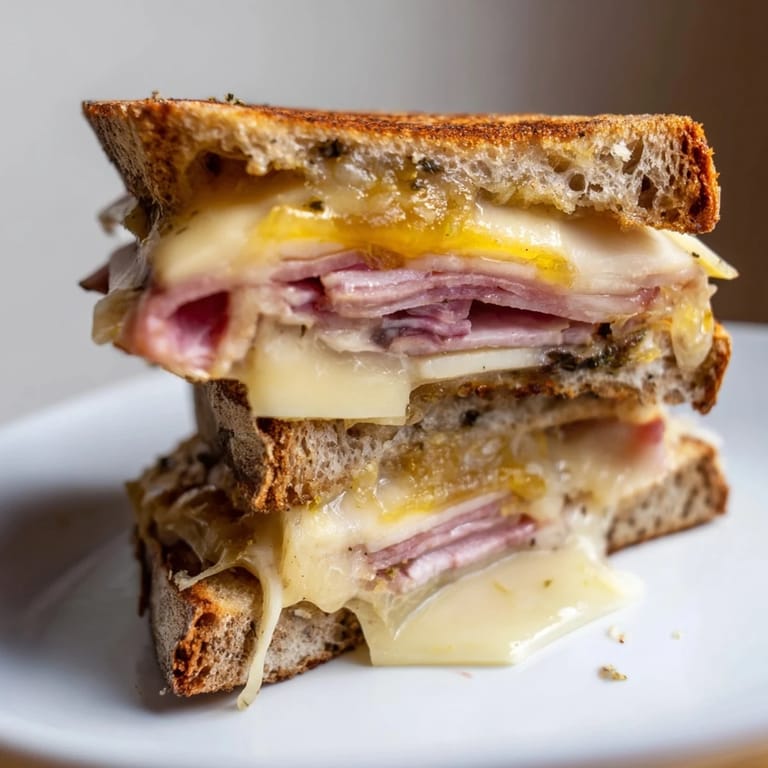
Save There's something about the combination of melted cheese and salty cured meats that stops me mid-conversation—like a moment demanding to be savored. I stumbled onto this version of grilled cheese almost by accident, pairing leftovers from a charcuterie board with fig jam one weeknight, and suddenly realized I'd been missing this entire flavor universe. The way the sweet jam cuts through the richness, how the cured meats crisp just slightly at the edges, the Gruyère turning silky while the brie softens into surrender—it became the sandwich I kept making when I wanted to feel like I'd done something special without any real effort.
I made these for my sister when she was going through a rough week, and she actually teared up—not because of emotion, but because she bit into the warm jam and it just hit different. That's when I realized this wasn't just a sandwich; it was proof that ordinary weeknight dinner could feel like someone really cared. Now whenever I'm cooking for people who deserve a little extra, this is what I reach for.
Ingredients
- Rustic sourdough or country bread: Use thick-cut slices—thin bread falls apart and you lose the structural integrity you need for pressing. I've learned the hard way that the bread is half the battle.
- Unsalted butter, softened: Softened butter spreads evenly and toasts golden without burning, which is exactly the opposite of what cold butter does.
- Fig jam: This is your sweet counterpoint, the thing that makes people wonder what's happening on their tongue. Any good quality fig jam works; it doesn't need to be expensive, just real.
- Gruyère cheese: It melts smoothly and brings a subtle nuttiness that sits under everything else, holding the whole thing together.
- Aged cheddar: This adds sharpness and helps the cheese layer taste less one-note.
- Creamy brie: The wild card that makes everything luxurious, soft, almost buttery in texture.
- Prosciutto: Thin, delicate, it becomes nearly crispy as you cook, adding that salty punch without overwhelming the cheese.
- Salami: Use whatever style you love most—it contributes spice and fat that enriches every bite.
- Coppa or speck: Either one brings depth and a slight smokiness that anchors the sweet jam.
Tired of Takeout? 🥡
Get 10 meals you can make faster than delivery arrives. Seriously.
One email. No spam. Unsubscribe anytime.
Instructions
- Prep your bread canvas:
- Spread softened butter generously on one side of each slice, then lay them buttered-side down on your work surface. This is your promise to yourself of golden, crispy bread.
- Jam the moment:
- Take two bread slices and spread about 1 tablespoon of fig jam on the unbuttered side of each. Don't be shy—you want enough that it actually tastes like something.
- Build your cheese tower:
- Layer the Gruyère first (it's the workhorse), then cheddar, then brie on top of each jam-covered slice. The order matters because you're creating a gradient of melt.
- Distribute the meats:
- Lay your prosciutto, salami, and coppa or speck across the cheese with actual thought, making sure every bite will have all three if possible. This isn't about covering space—it's about balance.
- Close the sandwich:
- Top each one with a remaining bread slice, buttered side facing out. Press down gently, like you're greeting something fragile.
- Get the pan ready:
- Heat your skillet or grill pan over medium heat. You're looking for medium—high heat will burn the bread before the cheese even starts thinking about melting.
- Toast to golden:
- Once the pan is hot, place both sandwiches in and let them sit undisturbed for 3–5 minutes until the bread turns golden and crisp. You'll hear it sizzling, smell the butter browning, and know it's working. Gently press down with your spatula once, then flip and repeat on the other side.
- The rest:
- Remove from heat and let the sandwiches rest for just one minute—this lets the cheese set slightly so it doesn't ooze everywhere when you slice. Then cut diagonally if you want to feel fancy about it, and eat while it's still warm enough to matter.
 Save
Save I remember the first time I actually tasted the full potential of this sandwich, and it changed how I think about simple food. The flavors weren't fighting—they were having a conversation, and the fig jam was the thread connecting all of them. That's when I understood that good cooking is sometimes just knowing which good things to put together and then getting out of the way.
Why This Sandwich Works
The magic happens because you're layering flavors that were meant to live together on a board, but you're applying heat that transforms them. The butter toasts into something golden and a little crispy. The cheese melts from multiple angles of texture—nutty, sharp, creamy. The meats warm and release their oils into everything around them. The fig jam, which seemed sweet and innocent, suddenly becomes a bridge between salty and rich. It's the same ingredients doing what they always do, but the skillet is your accomplice in making it feel special.
Customizing Your Version
The beauty of this sandwich is that it's actually a template, not a mandate. Some nights I swap the brie for taleggio because I want something earthier. Sometimes I add soppressata or pancetta if that's what I have. I've pressed arugula between the layers when I wanted something green and peppery, and it changed everything in the best way. The only rule is to respect the ratio—you want enough cheese to melt, enough meat to add flavor, and enough bread to hold it all together.
Timing and Service
This is the kind of sandwich that demands to be eaten immediately, while the cheese is still yielding and warm. If you let it cool, it becomes stiff and loses the whole point. I usually pair it with something acidic—a crisp white wine, sparkling water with lemon, or even just a simple arugula salad with vinaigrette to cut through the richness. The contrast is what makes you want another bite.
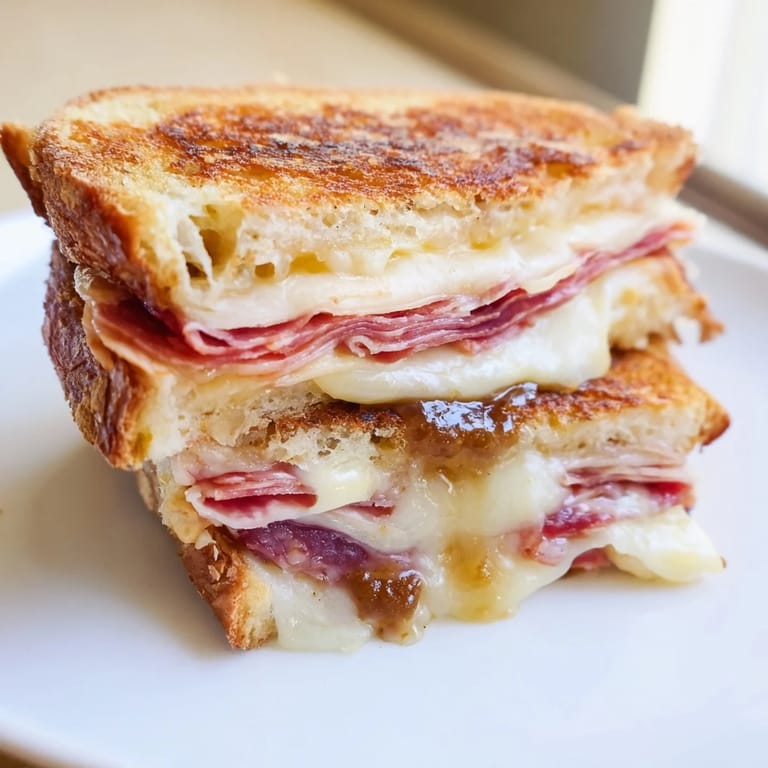
- Slice it diagonally before serving because somehow that makes it taste better.
- Have napkins ready because the cheese will try to escape, and that's part of the experience.
- Make these in pairs because one is never enough, and someone will always want half of yours.
 Save
Save This sandwich is proof that sometimes the best food comes from knowing which good things belong together and having the patience to let heat do the rest. Make it, eat it warm, and let it remind you why simple things, done well, are worth celebrating.
Recipe FAQs
- → What bread type works best for this sandwich?
Rustic sourdough or country bread is ideal for its sturdy texture and tangy flavor that holds the fillings well.
- → Can I substitute the cured meats?
Yes, you can swap salami, prosciutto, or coppa with similar cured meats like soppressata or speck to suit your taste.
- → How do I achieve a golden crust on the sandwich?
Cook the sandwich on medium heat in a buttered skillet, pressing gently for 3–5 minutes per side until golden brown.
- → What cheeses provide the best flavor combination?
A blend of Gruyère, aged cheddar, and creamy brie offers a rich, melty texture with balanced sharpness and softness.
- → Is fig jam necessary in this preparation?
Fig jam adds a subtle sweetness that complements the savory meats and cheeses, but other fruit preserves can work as well.