 Save
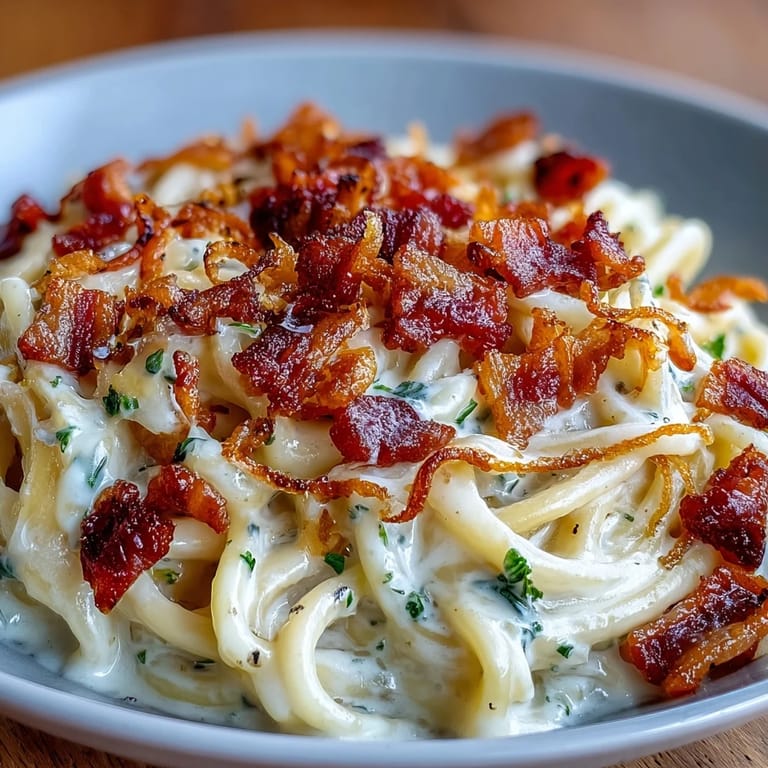
Save I bought a spiraliser on a whim during a January health kick and it sat in the cupboard for weeks before I actually used it. One evening, staring at a knobby celeriac I'd grabbed at the market, I thought: what if I treated it like pasta? The idea seemed odd at first, but once I tossed those pale ribbons with crispy pancetta and a silky egg sauce, I couldn't believe how well it worked. It tasted indulgent, almost sinful, yet somehow virtuous at the same time.
The first time I made this for friends, they were skeptical when I mentioned celeriac noodles. But the moment they twirled those creamy strands onto their forks and tasted the smoky pancetta mingling with sharp cheese, the room went quiet. One friend even asked for the recipe before she'd finished her plate. That night, I realized this dish had earned its place in my regular rotation.
Ingredients
- Celeriac: This gnarly root vegetable spiralises into surprisingly sturdy noodles that hold sauce beautifully and bring a mild, celery-like sweetness to the dish.
- Pancetta: The rendered fat is liquid gold here, adding depth and a gentle smokiness that bacon can replicate if you can't find pancetta.
- Eggs and egg yolks: The extra yolks create that luxurious, clinging sauce without any cream, just like a proper Roman carbonara.
- Parmesan cheese: Freshly grated is non-negotiable; the pre-shredded stuff won't melt the same way and often contains anti-caking agents that ruin the texture.
- Unsalted butter: It helps the celeriac soften and adds a glossy richness that ties everything together.
- Olive oil: Just enough to get the pancetta started without it sticking to the pan.
- Black pepper and sea salt: Pepper is a key player in carbonara, so be generous; salt should be added carefully since the pancetta and Parmesan are already salty.
Tired of Takeout? 🥡
Get 10 meals you can make faster than delivery arrives. Seriously.
One email. No spam. Unsubscribe anytime.
Instructions
- Prep the celeriac:
- Peel away the tough outer skin and feed the celeriac through your spiraliser to create long, noodle-like strands. Set them aside on a clean towel to absorb any excess moisture.
- Crisp the pancetta:
- Heat the olive oil in a large skillet over medium heat, then add the diced pancetta and let it sizzle until golden and crispy, about 5 to 7 minutes. Transfer the pancetta to a plate, but leave all that beautiful rendered fat in the pan.
- Make the egg mixture:
- In a bowl, whisk together the whole eggs, egg yolks, grated Parmesan, a generous grinding of black pepper, and just a pinch of salt. The mixture should look thick and creamy, almost like a custard.
- Cook the celeriac noodles:
- Add the butter to the same skillet with the pancetta fat and let it melt over medium heat. Toss in the spiralised celeriac and sauté for 4 to 6 minutes, stirring often, until the noodles are tender but still have a slight bite.
- Combine and toss:
- Pull the skillet off the heat immediately, then quickly pour in the egg-Parmesan mixture and add the crispy pancetta. Toss everything vigorously with tongs so the residual heat gently cooks the eggs into a silky sauce that clings to each strand; if it seems too thick, add a tablespoon or two of hot water to loosen it up.
- Serve:
- Divide the carbonara among four plates and finish with extra Parmesan and a good twist of black pepper. Serve right away while it's still steaming.
 Save
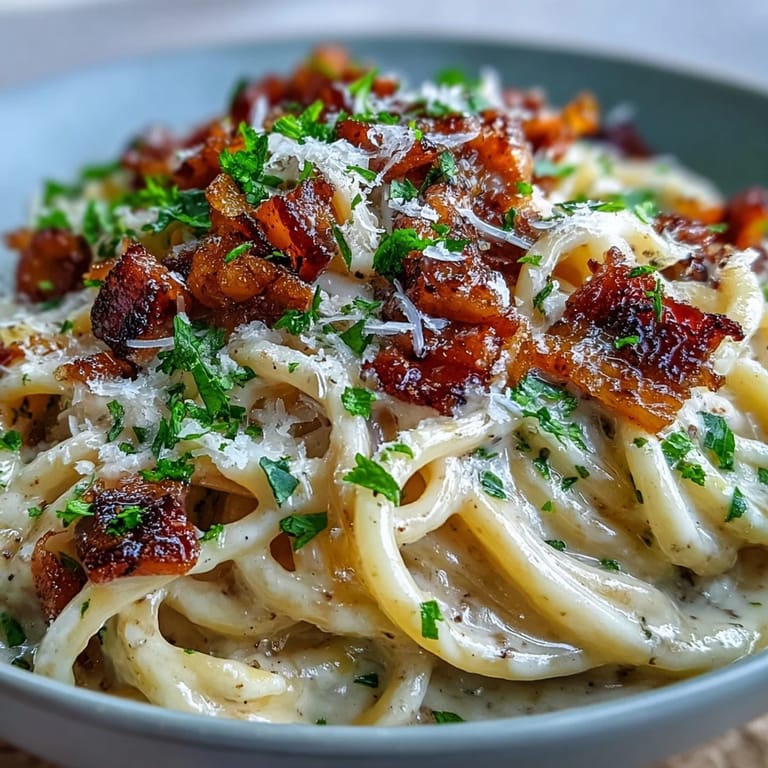
Save There's something deeply satisfying about twirling a forkful of this and realizing you don't miss the pasta one bit. It happened on a rainy Tuesday when I needed comfort food but didn't want to feel heavy afterward. I sat at my kitchen table with a glass of cold Pinot Grigio, and every bite felt like a small celebration of flavor and ingenuity.
Choosing and Prepping Celeriac
Look for firm, heavy celeriac with minimal soft spots or sprouting roots. The skin is thick and knobbly, so don't be shy with your peeler or a sharp knife to cut away the tough exterior. Once peeled, the flesh should be pale ivory and smell faintly sweet and earthy, almost like a cross between celery and parsley root.
Getting the Sauce Just Right
The key is temperature control and timing. If the pan is too hot when you add the eggs, they'll scramble; too cool, and the sauce won't thicken. I've learned to trust the residual heat completely and work quickly, tossing the noodles almost like I'm flipping a stir-fry. A splash of the starchy cooking water (or just hot tap water) is your insurance policy if the sauce seizes up.
Variations and Swaps
If you want a richer version, whisk a tablespoon of heavy cream into the egg mixture. For a vegetarian take, swap the pancetta for cubed smoked tofu or even sautéed mushrooms with a pinch of smoked paprika. You can also add a handful of fresh peas or sautéed spinach for color and a bit of sweetness.
- Try using guanciale instead of pancetta for a more authentic Roman touch.
- Add a pinch of nutmeg to the egg mixture for a subtle warm note.
- Garnish with fresh parsley or chives if you want a pop of green and brightness.
 Save
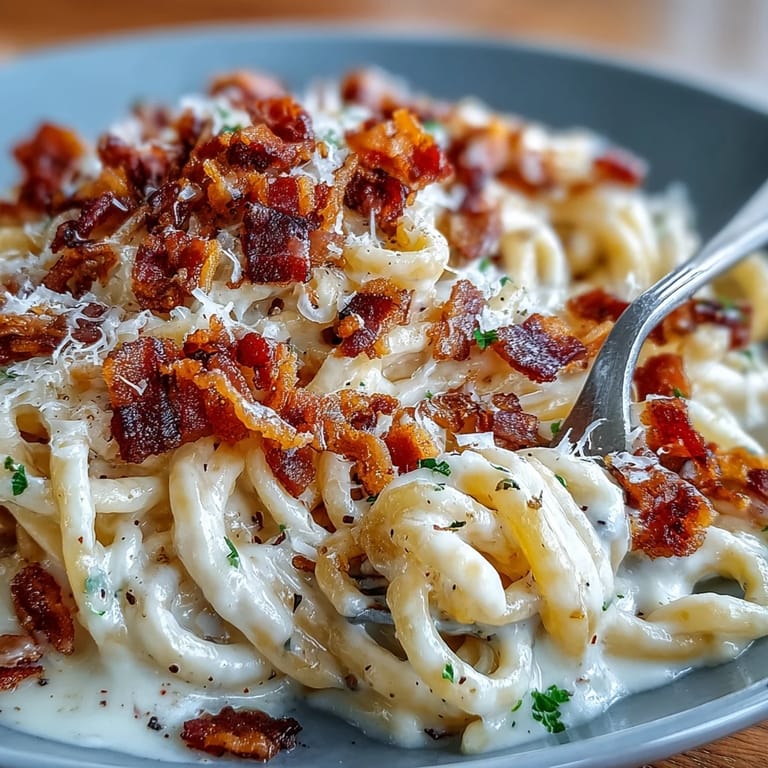
Save This dish has become my go-to when I want to impress without stress, and every time I make it, I'm reminded that sometimes the best recipes are born from curiosity and a willingness to experiment. Give it a try, and I think you'll find yourself craving these noodles more than the wheat kind.
Recipe FAQs
- → Can I prepare the celeriac noodles ahead of time?
Yes, you can spiralize the celeriac up to 24 hours in advance. Store the noodles in an airtight container in the refrigerator. Pat them dry with paper towels before cooking to remove excess moisture.
- → How do I prevent the eggs from scrambling?
The secret is removing the skillet from heat completely before adding the egg mixture. Toss vigorously and continuously so the residual heat gently cooks the eggs into a creamy sauce rather than scrambled curds. Work quickly and confidently.
- → What can I use instead of pancetta?
Streaky bacon works beautifully as a direct substitute. For a vegetarian version, try smoked tofu or mushrooms sautéed until crispy. Guanciale, the traditional carbonara meat, also makes an excellent choice if available.
- → Why is my celeriac watery after cooking?
Celeriac releases moisture when cooked. Avoid overcooking by sautéing just until tender with some bite remaining, about 4-6 minutes. If needed, drain excess liquid before adding the egg mixture to maintain a creamy consistency.
- → Can I make this dairy-free?
While Parmesan is essential to authentic carbonara flavor, you can substitute nutritional yeast for a dairy-free option, though the taste will differ significantly. Use olive oil instead of butter and ensure your pancetta contains no milk products.
- → What wine pairs best with this dish?
A crisp, acidic white wine like Pinot Grigio, Vermentino, or Sauvignon Blanc complements the rich, creamy sauce and cuts through the fatty pancetta beautifully. A light-bodied Italian white enhances the dish's Italian-inspired character.