 Save
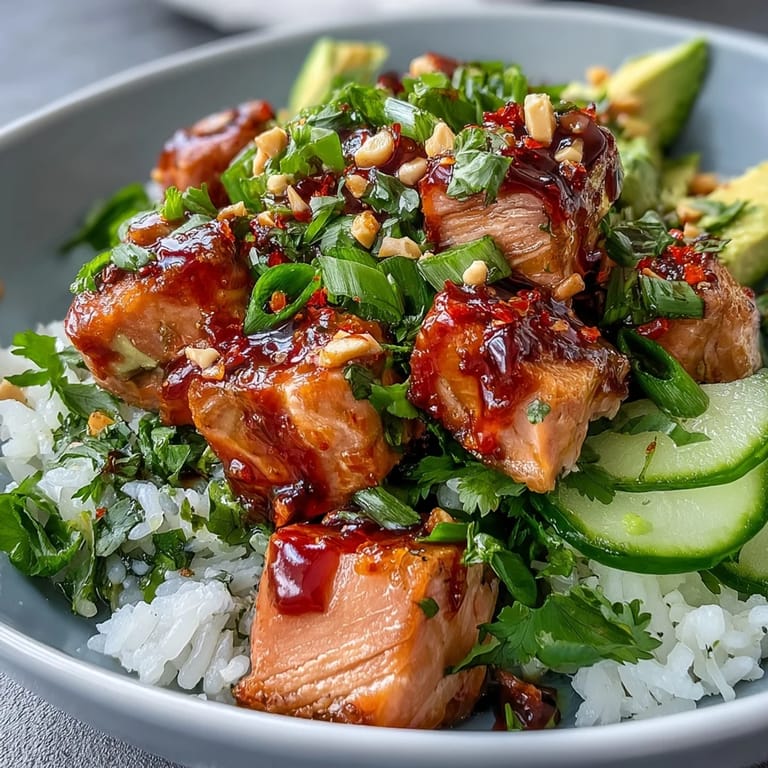
Save There's something almost meditative about assembling this bowl on a Tuesday afternoon when the kitchen felt too quiet. I'd picked up the most buttery avocado at the market, and the salmon practically glowed under the light—one of those moments where you realize the ingredients are practically begging to become something special. My friend texted asking what I was making for lunch, and honestly, I just started layering things that felt right together: the tangy rice, the silky fish, the heat of wasabi cutting through everything like a small revelation.
I made this for my partner on a Friday when we were both too tired to go out but hungry enough to demand something that felt like a treat. Watching them discover that perfect spoonful where every component landed together—the salmon still warm from marinating, the sesame seeds catching the light—that's when I knew this bowl had staying power beyond just being convenient.
Ingredients
- Fresh salmon fillet, 250g, skinless and cubed: The quality here genuinely matters because the fish speaks for itself once it hits the marinade. I learned to ask the fishmonger to remove the skin and cut it myself into slightly uneven chunks—they don't need to be perfect, and the variation actually catches the sauce better.
- Tamari sauce, 2 tbsp: This is where the umami anchor lives, and using tamari instead of regular soy gives you that clean, slightly deeper flavor without the wheat. If you can't find it, low-sodium soy works, though you might want to reduce the salt elsewhere.
- Toasted sesame oil, 1 tsp: A little goes a long way here—this is not the time to be generous or your bowl will taste like a perfume shop. Make sure it's toasted, not the pale refined version, because that nuttiness is everything.
- Rice vinegar, 2 tsp total (1 tsp for marinade, 1 tsp for rice): This keeps everything bright and prevents the bowl from feeling heavy, no matter how rich the avocado and peanuts are.
- Honey or agave syrup, 1 tsp: Just enough sweetness to balance the salty-savory elements and help the marinade coat the salmon like a glaze.
- Cooked sushi rice, 200g or about 1 cup uncooked: The starch here is your foundation, and seasoning it properly makes the difference between a bowl and *the* bowl. Short-grain rice holds the sauces better than long-grain ever could.
- Salt and sugar for the rice: These two work together to season the rice subtly, making every grain taste intentional rather than like a blank canvas.
- Ripe avocado, 1 large: Slice it just before assembly or it'll oxidize and look sad—I've learned to keep a lemon nearby just in case, though if you're eating this immediately, you're fine.
- Roasted peanuts, 2 tbsp roughly chopped: The crunch is non-negotiable here; they're what keeps this from being just another soft bowl. Rough chopping means you get different sizes, which creates better texture variance.
- Chili oil, 1 tbsp: Adjust this to your courage level, but don't skip it entirely—the heat brings everything into focus and prevents the bowl from tasting one-dimensional.
- Wasabi paste, 1 tsp: A little dab goes so far; this is your secret weapon for making people do that thing where they go quiet for a second because something just surprised their palate.
- Nori sheets, 1 cut into strips: The umami boost is real, and the slight chew adds yet another textural layer that matters more than you'd think.
- Cucumber, 1 small, thinly sliced: This brings coolness and crunch that balances the richness of the salmon and avocado, keeping the bowl from feeling too decadent.
- Spring onions, 2, sliced: The mild allium bite here adds sharpness that prevents the bowl from being one-note, and the green color doesn't hurt the presentation either.
- Toasted sesame seeds, 1 tbsp: Sprinkle these last so they stay crispy and don't absorb moisture from the other components.
- Fresh cilantro or microgreens for garnish: This is where you add personality; cilantro brings herbaceousness, while microgreens add delicate visual interest and a peppery bite.
- Lime wedges: Essential for squeezing over at the end—the acidity ties everything together and brightens flavors you didn't even know were hiding.
Tired of Takeout? 🥡
Get 10 meals you can make faster than delivery arrives. Seriously.
One email. No spam. Unsubscribe anytime.
Instructions
- Make the marinade and coat the salmon:
- In a medium bowl, whisk tamari, toasted sesame oil, rice vinegar, and honey until the honey dissolves completely and everything looks glossy. Add your salmon cubes and toss gently so each piece gets coated—you want them swimming in flavor, not bruised. Cover and slide the bowl into the refrigerator for 10 to 15 minutes while you do everything else; even this brief rest makes the salmon absorb the flavors better than if you skipped it.
- Season the sushi rice:
- In a separate bowl, combine your cooked sushi rice with rice vinegar, sugar, and salt while it's still warm, stirring gently so you don't smash the grains into mush. The warmth helps everything absorb evenly, and you'll notice the rice takes on this subtle shimmer that's oddly satisfying. Keep it at room temperature so it stays fluffy and doesn't firm up too much before assembly.
- Prepare all your toppings:
- Slice the avocado lengthwise around the pit, twist gently, scoop out with a spoon, then slice the flesh without cutting all the way through so it fans slightly. Chop your peanuts into rough, uneven pieces rather than uniform chunks—the variation in size creates more interesting texture. Slice your cucumber into thin half-moons, cut nori into strips with clean scissors (they dull less than knife cuts), and slice spring onions on a bias so they look intentional.
- Build your bowls:
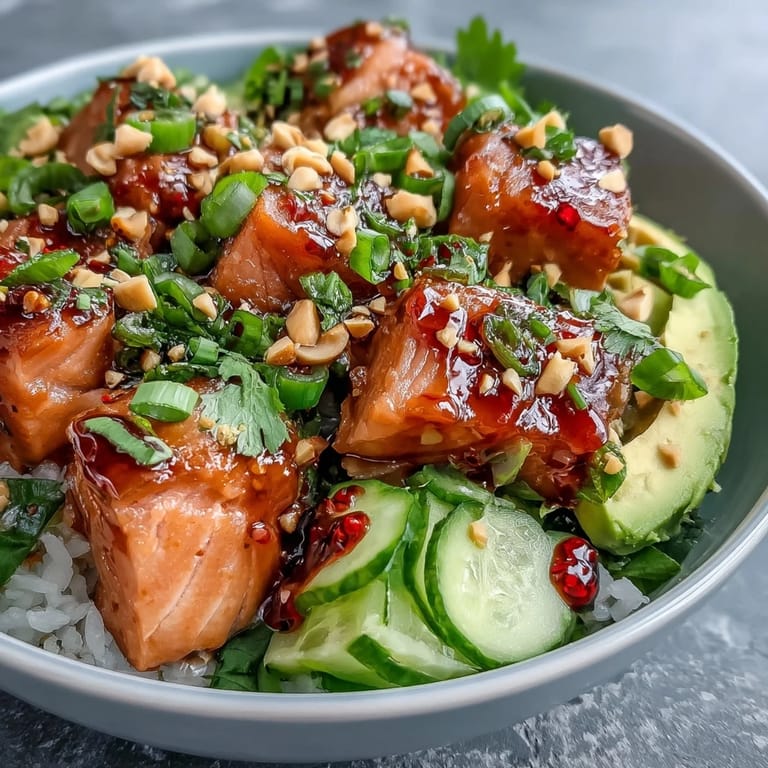
- Divide the seasoned rice between two serving bowls, pressing it down gently into an even layer as your base. Arrange the marinated salmon pieces on top first, then create little sections with avocado slices, cucumber, and spring onions so each spoonful could theoretically have everything in it.
- Add the heat and finishing touches:
- Drizzle chili oil in a gentle spiral or scattered pattern depending on how you're feeling, then place small dabs of wasabi paste at different spots so people can choose their heat level with each bite. Sprinkle roasted peanuts for crunch, sesame seeds for nuttiness, and nori strips for umami, then garnish with whatever green you chose and serve with lime wedges on the side for people to squeeze as they eat.
 Save
Save There was a moment when my sister took a spoonful of this and closed her eyes, and I realized this bowl had become something beyond efficient lunch—it was the kind of thing that made people slow down and actually taste their food. That's when I knew I'd struck something genuine here.
Building the Perfect Bite
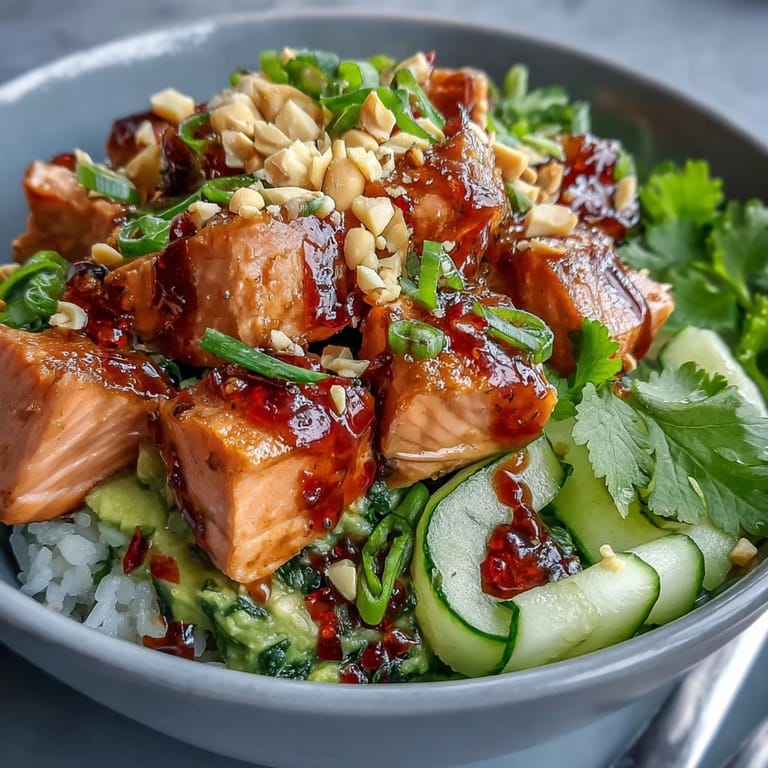
The secret to this bowl is understanding that every spoonful should be an experience, not an accident. I used to just dump everything on top randomly, but I learned that the order matters—rice first, protein second, then the cool vegetables, then the crispy elements last—because it protects the textures and ensures that when you scoop through all the layers, you're hitting every flavor and textural note at once. When you eat it, you're not just consuming food; you're negotiating between the warm and cool, the soft and crunchy, the spicy and sweet, and that conversation in your mouth is what makes it worth putting together instead of just buying something generic.
Temperature Matters More Than You Think
The first time I made this, I chilled everything because I thought it would be refreshing, and it was pleasant but flat somehow. The next time, I kept the rice warm and brought everything else cool, and suddenly the bowl had presence—the contrast between the warm grain absorbing the marinade and the cool avocado cutting through felt intentional rather than accidental. Now I think of this as a warm-based, cool-topped situation, where the warmth of the rice actually helps the salmon continue absorbing flavors even as you're eating, and the cool elements prevent it from ever feeling heavy or one-dimensional.
Why This Works as a System
What makes this bowl genuinely clever is that it's less a recipe and more a framework—you can swap proteins, adjust heat levels, substitute ingredients for allergies, and somehow it still works because the balance of elements is solid. I've made it with tofu when friends were visiting and it was just as satisfying as the salmon version; I've cranked the chili oil for people who like pain with their meals and dialed it back for people who find wasabi already aggressive; I've even thrown in pickled ginger when I had it on hand and it only improved things. The point is that once you understand why each component is there—the acid, the heat, the crunch, the richness, the herbaceousness—you can play within that structure however you need to.
- Keep extra lime wedges handy because people often want more acidity than you anticipated.
- Make the marinade first while you're gathering everything else, so the salmon has maximum time to absorb flavors without slowing down assembly.
- Taste a tiny piece of the marinated salmon before serving; if it needs more soy or sesame oil, you still have time to adjust.
 Save
Save This bowl has become my answer to the question of what to make when I want something that tastes impressive but doesn't require hours of labor. It's proof that simple ingredients, when they're good quality and treated with intention, don't need elaborate technique—they just need respect.
Recipe FAQs
- → Can I make this bowl ahead of time?
Prepare components separately in advance. Marinate salmon up to 4 hours before cooking. Seasoned rice keeps well refrigerated for 2 days. Assemble bowls just before serving to maintain texture and freshness of toppings.
- → What other proteins work in this bowl?
Marinated tofu or tempeh make excellent vegetarian alternatives. Shrimp, seared tuna, or even chicken breast can replace salmon while maintaining the bowl's character. Adjust marinade time accordingly for different proteins.
- → How do I adjust the spice level?
Start with less chili oil and wasabi, then add gradually to taste. The heat builds quickly, so it's easier to add more than to dilute. Serve extra chili oil on the side so diners can customize their preferred spice level.
- → Can I use regular rice instead of sushi rice?
Short-grain white rice or jasmine rice work as substitutes. Sushi rice's sticky texture helps toppings stay put, but any properly cooked rice will be delicious. Add slightly extra vinegar to mimic seasoned sushi rice flavor.
- → What substitutions work for peanuts?
Cashews, almonds, or sunflower seeds provide similar crunch. Toasted coconut flakes add a different texture while maintaining the bowl's appeal. For nut allergies, simply increase sesame seeds or add crispy fried shallots.